
A Democratic bill with 10 Democratic cosponsors · See all 11 cosponsors
Last activity — Read twice and referred to the Committee on Banking, Housing, and Urban Affairs.
In committee
Introduced and handed to a committee in the chamber it started in.
The committee holds it, and most bills are never heard from again. A hearing or a committee vote would be news; silence is the usual outcome, and it kills the bill without anyone voting against it.
Its path through Congress
- Introduced
- In Committee
What this bill would do
The SAFE Lending Act of 2025 aims to amend the Truth in Lending Act and the Electronic Fund Transfer Act to better regulate consumer credit. It introduces new limitations on remotely created checks and enhances protections for electronic fund transfers used for small-dollar credit. The bill requires lenders of small-dollar consumer credit transactions to register with the Bureau. It also mandates that certain small-dollar loans comply with state laws regarding interest and fees. Additionally, the act prohibits specific fees on prepaid accounts and restricts how sensitive financial information is used for lead generation. Finally, it directs a study on capital availability and the impact of small-dollar credit on Indian Tribes.
Yes· 3 of 7
- Scored +7
Does this give people more protection from unfair business practices?
The bill enhances consumer protections by regulating remotely created checks, prohibiting overdraft fees on prepaid accounts, and restricting unauthorized lead generation of sensitive financial data.
- Scored +6
Would households on low incomes be better off under this?
Low-income households benefit from protections against overdraft fees on prepaid accounts and stricter regulations on small-dollar credit.
- Scored +5
Would Native Americans be better off under this?
The bill mandates a study on the availability of capital and the impact of small-dollar credit on the economic opportunity of Indian Tribes.
The opposite
No question was scored the opposite.
Who it would affect, and how
Potential Positive Impacts for People
-
Increased control over bank accounts: Consumers can limit the use of remotely created checks by providing a written designation to their financial institution, and they retain the right to revoke that designation at any time (Section 2(a)).
-
Enhanced protections for electronic transfers: Electronic fund transfers used to repay small-dollar consumer credit will be treated as preauthorized, providing specific legal protections (Section 2(b)).
-
Increased transparency for small-dollar loans: Lenders of small-dollar consumer credit transactions must register with the Bureau before issuing credit (Section 3(a)(1)(B)).
-
Protection against unfair state-level variations: Small-dollar credit transactions conducted via electronic means or by national banks must comply with the laws of the consumer's home state regarding interest and fees (Section 3(a)(1)(A)).
-
Prevention of overdraft fees on prepaid accounts: It is unlawful to charge consumers a fee for an overdraft on a prepaid account, and transactions exceeding the account balance may be declined instead (Section 3(b)(2)(A)-(B)).
-
Stronger privacy and lead generation rules: The bill prevents people from gathering sensitive personal financial information for lead generation unless they are the ones directly providing the credit (Section 4(b)).
Potential Negative Impacts for People
-
Restrictions on fund transfers: The bill imposes limitations on how remotely created checks can be issued, requiring a written designation from the consumer (Section 2(a)).
-
Compliance burdens for lenders: Small-dollar lenders are required to register with the Bureau before providing credit (Section 3(a)(1)(B)).
Groups and Interests Ranking
Every group the model scored this bill for, from -10 to +10. Tap or hover a score for the reason it gave.
- Demographic And Interest Groups
- Would households on low incomes be better off under this? — Low-income households benefit from protections against overdraft fees on prepaid accounts and stricter regulations on small-dollar credit. Would Native Americans be better off under this? — The bill mandates a study on the availability of capital and the impact of small-dollar credit on the economic opportunity of Indian Tribes. Would middle-income households be better off under this? — The bill provides increased control over bank accounts regarding remotely created checks. Would people in cities be better off under this? — The bill provides broader protections for consumer financial transactions which can impact urban residents using electronic payment methods.
- Economy And Finance
- Does this give people more protection from unfair business practices? — The bill enhances consumer protections by regulating remotely created checks, prohibiting overdraft fees on prepaid accounts, and restricting unauthorized lead generation of sensitive financial data.
- Governance And Ideology
- Does this make what the government does easier for the public to see? — The bill increases transparency by requiring small-dollar lenders to register with the Bureau and mandating disclosures for those handling sensitive financial information.
- Social Issues And Justice
- Is this likely to lift people out of poverty? — The bill may help reduce poverty by preventing predatory overdraft fees and ensuring small-dollar loans comply with state interest and fee laws.
- 4/1/2025
- 1 Cosponsor added.
- 3/25/2025
- 1 Cosponsor added.
- 2/27/2025
- Read twice and referred to the Committee on Banking, Housing, and Urban Affairs.
- 9 Cosponsors added.
- Introduced in Senate
One bill Congress.gov lists as related to this one — companions in the other chamber, earlier versions, and bills this one absorbed or was folded into.
 Tammy Baldwin
Democrat · Wisconsin
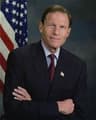 Richard Blumenthal
Democrat · Connecticut
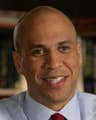 Cory Booker
Democrat · New Jersey
 Richard Durbin
Democrat · Illinois
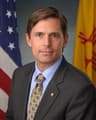 Martin Heinrich
Democrat · New Mexico
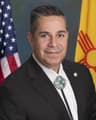 Ben Luján
Democrat · New Mexico
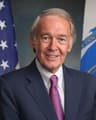 Edward Markey
Democrat · Massachusetts
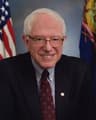 Bernie Sanders
Independent · Vermont
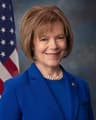 Tina Smith
Democrat · Minnesota
 Chris Van Hollen
Democrat · Maryland
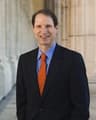 Ron Wyden
Democrat · Oregon