
Amy Klobuchar (D-MN)
Conrad State 30 and Physician Access Reauthorization Act
A Democratic bill with 5 Republican cosponsors · See all 7 cosponsors
Last activity — Read twice and referred to the Committee on the Judiciary.
In committee
Introduced and handed to a committee in the chamber it started in.
The committee holds it, and most bills are never heard from again. A hearing or a committee vote would be news; silence is the usual outcome, and it kills the bill without anyone voting against it.
Its path through Congress
- Introduced
- In Committee
What this bill would do
This bill, titled the "Conrad State 30 and Physician Access Reauthorization Act," aims to provide incentives for physicians to practice in rural and medically underserved communities. It extends the Conrad State 30 program for three years and establishes rules for retaining physicians who have served in these areas. The legislation modifies employment protections, including requirements for employment agreements and exceptions to the two-year foreign residency requirement. It also adjusts how visa waivers are allotted among the states. Finally, it includes clarifications regarding physician immigration status and professional qualifications.
Yes· 3 of 6
- Scored +7
Would people in rural areas be better off under this?
The extension of the Conrad State 30 program specifically targets increasing physician availability in rural communities.
- Scored +7
Does this make health care easier to get in general?
The bill extends the Conrad State 30 program to increase the number of physicians in underserved and rural areas.
- Scored +6
Would immigrants be better off under this?
The bill provides clearer pathways to status adjustment and protections for physicians and their families.
The opposite
No question was scored the opposite.
Who it would affect, and how
Potential Positive Impacts for People
-
Increased Physician Access via Program Extension: The bill extends the Conrad State 30 program for three years, which helps provide incentives for physicians to work in underserved areas (Section 2).
-
Pathways to Permanent Residency: The bill allows certain alien physicians who completed service requirements, including their spouses and children, to file petitions for classification or adjustment of status (Section 3).
-
Employment Protections and Flexibility: Physicians can demonstrate a bona fide offer of full-time employment at a health facility in a shortage area to receive exceptions to the two-year foreign residency requirement (Section 4).
-
Workplace Safety and Clarity: Employment agreements must now specify maximum on-call hours, compensation for that time, and details regarding medical malpractice liability protection (Section 4).
-
Increased Waiver Allotments: All states may be allotted a total of 35 waivers, with potential increases if specific usage thresholds are met (Section 5).
-
Support for Academic Medical Centers: State agencies can request waivers for physicians to practice in or serve on the faculty of an academic medical center (Section 5).
-
Easier Transition for Training: Physicians completing graduate medical education have their nonimmigrant status automatically extended under certain conditions to ensure continuity (Section 6).
Potential Negative Impacts for People
-
Employment Restrictions: An alien granted a waiver must enter into an employment agreement that specifies certain limitations, such as work locations (Section 4).
-
Service Requirements: Physicians are generally required to work for a total of not less than 3 years in the authorized status (Section 4).
-
Strict Agreement Constraints: Employment agreements are prohibited from including non-compete provisions (Section 4).
-
Potential for Reduced Waivers: The number of waivers allotted to all states may be decreased by 5 if the total number of waivers granted falls by 5 percent compared to a previous year (Section 5).
Groups and Interests Ranking
Every group the model scored this bill for, from -10 to +10. Tap or hover a score for the reason it gave.
- Demographic And Interest Groups
- Would people in rural areas be better off under this? — The extension of the Conrad State 30 program specifically targets increasing physician availability in rural communities. Would immigrants be better off under this? — The bill provides clearer pathways to status adjustment and protections for physicians and their families. Would households on low incomes be better off under this? — Increased physician access can improve the quality and availability of care for low-income populations in underserved areas.
- Healthcare
- Does this make health care easier to get in general? — The bill extends the Conrad State 30 program to increase the number of physicians in underserved and rural areas.
- Social Issues And Justice
- Does this make it easier for immigrants already here to become citizens? — The bill allows certain alien physicians and their families to file petitions for permanent residency after completing service.
- Economy And Finance
- Is this likely to create jobs? — The bill provides incentives for physicians to enter the workforce in underserved areas.
- 2/25/2026
- 1 Cosponsor added.
- 10/21/2025
- 2 Cosponsors added.
- 10/14/2025
- 1 Cosponsor added.
- 2/25/2025
- Read twice and referred to the Committee on the Judiciary.
- 3 Cosponsors added.
- Introduced in Senate
2 bills Congress.gov lists as related to this one — companions in the other chamber, earlier versions, and bills this one absorbed or was folded into.
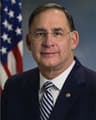 John Boozman
Republican · Arkansas
 Richard Blumenthal
Democrat · Connecticut
 Susan Collins
Republican · Maine
 Joni Ernst
Republican · Iowa
 Roger Marshall
Republican · Kansas
 Jacky Rosen
Democrat · Nevada
 Thomas Tillis
Republican · North Carolina