
Michael Bennet (D-CO)
Segal AmeriCorps Education Award Tax Relief Act of 2026
A Democratic bill with 4 Republican cosponsors · See all 7 cosponsors
Last activity — Read twice and referred to the Committee on Finance.
In committee
Introduced and handed to a committee in the chamber it started in.
The committee holds it, and most bills are never heard from again. A hearing or a committee vote would be news; silence is the usual outcome, and it kills the bill without anyone voting against it.
Its path through Congress
- Introduced
- In Committee
What this bill would do
This bill is called the Segal AmeriCorps Education Award Tax Relief Act of 2026. It was introduced in the Senate to change the Internal Revenue Code of 1986. The main goal is to exclude AmeriCorps educational awards from a person's gross income. It also excludes the discharge of certain student loan debt under national service educational award programs from gross income. These changes apply to taxable years ending after the date the Act is enacted.
Yes· 3 of 6
- Scored +5
Does this reduce what student borrowers owe or repay?
The bill excludes the discharge of certain student loan debt under national service educational award programs from gross income.
- Scored +4
Would students be better off under this?
Students and national service participants benefit from tax relief on educational awards and student loan debt discharge.
- Scored +3
Would people in their twenties and thirties be better off under this?
Young adults participating in AmeriCorps benefit directly from the exclusion of educational awards and student loan discharges from income taxes.
The opposite
No question was scored the opposite.
Who it would affect, and how
Potential Positive Impacts for People
-
Section 2(a) excludes national service educational awards from gross income under section 117(c) of the Internal Revenue Code. This is a positive outcome because individuals who earn these awards will not have to pay federal income tax on them, letting them keep more of their hard-earned benefits for education.
-
Section 2(b) excludes payments under national service educational award programs from gross income when dealing with the discharge of student loan debt under section 108 of the Internal Revenue Code. This helps everyday people by ensuring they are not hit with a surprise tax bill when their student loans are paid off through their national service.
Potential Negative Impacts for People
- The provided text does not contain any specific sections or provisions that outline negative consequences or burdens for individuals or groups of people in the United States.
Groups and Interests Ranking
Every group the model scored this bill for, from -10 to +10. Tap or hover a score for the reason it gave.
- Demographic And Interest Groups
- Would students be better off under this? — Students and national service participants benefit from tax relief on educational awards and student loan debt discharge. Would people in their twenties and thirties be better off under this? — Young adults participating in AmeriCorps benefit directly from the exclusion of educational awards and student loan discharges from income taxes. Would households on low incomes be better off under this? — Lower-income individuals who earn AmeriCorps educational awards will not have to pay federal income tax on them. Would middle-income households be better off under this? — Middle-income participants in national service programs receive tax relief on their educational awards and loan discharges.
- Education And Technology
- Does this reduce what student borrowers owe or repay? — The bill excludes the discharge of certain student loan debt under national service educational award programs from gross income.
- Economy And Finance
- Does this cut taxes for middle-income families? — The bill excludes AmeriCorps educational awards and related student loan discharges from gross income, reducing tax burdens for participants.
- 9/29/2026
- 2 Cosponsors added.
- 9/24/2026
- Read twice and referred to the Committee on Finance.
- 5 Cosponsors added.
- Introduced in Senate
4 bills Congress.gov lists as related to this one — companions in the other chamber, earlier versions, and bills this one absorbed or was folded into.
 Susan Collins
Republican · Maine
 Shelley Capito
Republican · West Virginia
 Bill Cassidy
Republican · Louisiana
 Christopher Coons
Democrat · Delaware
 Catherine Cortez Masto
Democrat · Nevada
 Andy Kim
Democrat · New Jersey
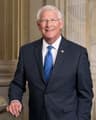 Roger Wicker
Republican · Mississippi