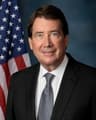
Bill Hagerty (R-TN)
End Housing Welfare for Illegal Aliens Act
A bill to prohibit sanctuary jurisdictions from receiving community development block grants, and for other purposes.
A Republican bill with 1 Republican cosponsor · See the cosponsor
Last activity — Read twice and referred to the Committee on Banking, Housing, and Urban Affairs.
In committee
Introduced and handed to a committee in the chamber it started in.
The committee holds it, and most bills are never heard from again. A hearing or a committee vote would be news; silence is the usual outcome, and it kills the bill without anyone voting against it.
Its path through Congress
- Introduced
- In Committee
What this bill would do
This bill, titled the "End Housing Welfare for Illegal Aliens Act," aims to change how housing assistance and community grants are distributed. It prohibits "sanctuary jurisdictions" from receiving community development block grants. A sanctuary jurisdiction is defined as a state or political subdivision that restricts sharing citizenship or immigration status information or refuses to comply with certain Department of Homeland Security requests. Additionally, the bill changes rules for housing assistance to ensure eligibility is established for all family members before funds are provided. Finally, it restricts the eligibility of certain noncitizens for various housing programs.
Yes
- Scored +5
Does this give the federal government more power?
The bill expands federal control over how local jurisdictions receive community development grants.
The opposite· 3 of 9
- Scored -8
Would immigrants be better off under this?
The bill directly restricts housing assistance eligibility and financial aid for non-citizens.
- Scored -7
Would Hispanic Americans be better off under this?
The bill specifically targets non-citizens, a group that disproportionately includes Hispanic-origin residents.
- Scored -6
Would households on low incomes be better off under this?
The bill restricts access to crucial housing assistance programs for many low-income, non-citizen residents.
Who it would affect, and how
Potential Positive Impacts for People
- Protection for Victims and Witnesses: Under Section 2, a state or political subdivision is not considered a sanctuary jurisdiction if its officials refuse to comply with a detainer for an individual who comes forward as a victim or a witness to a criminal offense. (Section 2)
Potential Negative Impacts for People
- Loss of Community Development Grants: Jurisdictions that follow sanctuary policies—specifically those that restrict sharing immigration status information or decline certain Department of Homeland Security requests—will be ineligible to receive community development block grants. (Section 2)
- Changes to Housing Assistance Payments: For families where some members are eligible and others are not, the Secretary is prohibited from providing financial assistance on a prorated basis until eligibility is established for every member of the family, regardless of age. (Section 3)
- Increased Verification Requirements: Public housing agencies are required to affirmatively establish and verify citizenship before providing financial assistance. (Section 4)
- Restricted Housing Program Access: The bill expands the scope of programs that certain noncitizens may be restricted from accessing. (Section 5)
Groups and Interests Ranking
Every group the model scored this bill for, from -10 to +10. Tap or hover a score for the reason it gave.
- Demographic And Interest Groups
- Would immigrants be better off under this? — The bill directly restricts housing assistance eligibility and financial aid for non-citizens. Would Hispanic Americans be better off under this? — The bill specifically targets non-citizens, a group that disproportionately includes Hispanic-origin residents. Would households on low incomes be better off under this? — The bill restricts access to crucial housing assistance programs for many low-income, non-citizen residents. Would people in cities be better off under this? — Sanctuary cities, which are often urban, may see a loss of community development block grants. Would children be better off under this? — The restriction on prorated assistance for families with ineligible members could impact children in mixed-status households.
- Social Issues And Justice
- Does this make housing cost less? — The bill restricts access to housing assistance and community development grants, which may reduce overall housing availability and support. Is this likely to lift people out of poverty? — By restricting housing assistance to specific groups, the bill may negatively impact poverty reduction efforts for vulnerable non-citizens. Is this likely to reduce homelessness? — The restrictions on housing assistance and community grants could increase the risk of homelessness for ineligible residents.
- Governance And Ideology
- Does this give the federal government more power? — The bill expands federal control over how local jurisdictions receive community development grants. Does this leave more decisions to the states? — The bill penalizes states that exercise their right to set certain immigration-related information policies.
- 9/17/2026
- 1 Cosponsor added.
- 8/5/2026
- Read twice and referred to the Committee on Banking, Housing, and Urban Affairs.
- Introduced in Senate
 Bernie Moreno
Republican · Ohio