
A Democratic bill with 1 Republican cosponsor · See all 2 cosponsors
Last activity — Read twice and referred to the Committee on Health, Education, Labor, and Pensions.
In committee
Introduced and handed to a committee in the chamber it started in.
The committee holds it, and most bills are never heard from again. A hearing or a committee vote would be news; silence is the usual outcome, and it kills the bill without anyone voting against it.
Its path through Congress
- Introduced
- In Committee
What this bill would do
This bill allows the Secretary of Health and Human Services to give out grants for career support to health care professionals who were educated in other countries. These grants help these professionals integrate into the United States health care workforce. The Secretary must consult with the Secretary of Labor and the Secretary of Education before awarding the grants. Priority is given to projects that help recruit and retain these professionals in rural areas or communities with health care workforce shortages. Grant recipients must use the funds for system-level improvements and individual-level improvements to support these workers.
Yes· 3 of 14
- Scored +8
Would immigrants be better off under this?
The bill directly targets internationally educated professionals—including permanent residents, refugees, and asylees—helping them integrate into the U.S. workforce.
- Scored +7
Does this make health care easier to get in general?
By expanding the pool of credentialed healthcare professionals, especially in rural and shortage areas, the legislation improves overall healthcare access.
- Scored +6
Would people in rural areas be better off under this?
Priority is explicitly given to projects supporting the recruitment and retention of healthcare professionals in rural communities.
The opposite
No question was scored the opposite.
Who it would affect, and how
Potential Positive Impacts for People
-
Section 779(d)(1)(C)(ii) provides funding and access to accelerated courses for English as a second language and board or licensure exam preparation, which helps internationally educated health care professionals pass required tests and enter the workforce.
-
Section 779(d)(1)(C)(v) provides individualized work-readiness supports, clinical experience, and training, which helps workers gain the practical skills needed for employment in the United States.
-
Section 779(d)(1)(C)(vii) provides individualized supportive services such as help with living expenses, health care, or transportation, which directly assists workers with the costs of daily living while pursuing career advancement.
Potential Negative Impacts for People
- The provided text does not contain any specific sections or provisions that outline negative consequences or burdens for individuals or groups of people in the United States.
Groups and Interests Ranking
Every group the model scored this bill for, from -10 to +10. Tap or hover a score for the reason it gave.
- Demographic And Interest Groups
- Would immigrants be better off under this? — The bill directly targets internationally educated professionals—including permanent residents, refugees, and asylees—helping them integrate into the U.S. workforce. Would people in rural areas be better off under this? — Priority is explicitly given to projects supporting the recruitment and retention of healthcare professionals in rural communities. Would households on low incomes be better off under this? — The bill supports career advancement and supportive services for individuals seeking to enter the healthcare workforce, aiding upward mobility. Would people over 65 be better off under this? — Increased healthcare staffing in underserved and rural areas benefits older adults who frequently require medical services. Would students be better off under this? — The program provides preparatory classes, language training, and educational resources to help candidates pass board exams. Would business owners be better off under this? — Hospitals and healthcare employers benefit from an expanded pool of qualified professionals to fill open positions.
- Economy And Finance
- Is this likely to create jobs? — The bill provides grants to integrate internationally educated professionals into the domestic health care workforce. Is this likely to grow the economy? — Integrating skilled workers into the healthcare sector helps address workforce shortages and supports local economies.
- Healthcare
- Does this make health care easier to get in general? — By expanding the pool of credentialed healthcare professionals, especially in rural and shortage areas, the legislation improves overall healthcare access.
- Social Issues And Justice
- Is this likely to lift people out of poverty? — Providing career support and living expense assistance helps internationally educated professionals achieve financial stability. Does this narrow racial gaps in how people are treated? — The legislation aids immigrants and internationally educated professionals, many of whom are people of color, supporting equity in professional advancement.
- Environment Energy And Infrastructure
- Does this invest in rural communities? — Priority is given to projects that recruit and retain healthcare professionals in rural communities experiencing workforce shortages.
- Governance And Ideology
- Does this make what the government does easier for the public to see? — The legislation requires annual evaluations and comprehensive reports to Congress regarding grant outcomes and demographics. Does this give the federal government more power? — The bill authorizes federal grant programs administered by the Department of Health and Human Services.
- 11/9/2026
- 1 Cosponsor added.
- 7/16/2026
- Read twice and referred to the Committee on Health, Education, Labor, and Pensions.
- 1 Cosponsor added.
- Introduced in Senate
One bill Congress.gov lists as related to this one — companions in the other chamber, earlier versions, and bills this one absorbed or was folded into.
 Mark Kelly
Democrat · Arizona
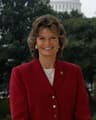 Lisa Murkowski
Republican · Alaska