
A Democratic bill with 4 Republican cosponsors · See all 7 cosponsors
Last activity — Read twice and referred to the Committee on Environment and Public Works. (Sponsor introductory remarks on measure: CR S2895)
In committee
Introduced and handed to a committee in the chamber it started in.
The committee holds it, and most bills are never heard from again. A hearing or a committee vote would be news; silence is the usual outcome, and it kills the bill without anyone voting against it.
Its path through Congress
- Introduced
- In Committee
What this bill would do
The FIRE SMART Act of 2026 requires the EPA Administrator to update regulations regarding drinking water State revolving funds. The bill defines specific terms for rural areas and communities at high risk from wildfires. It expands the use of these funds to include water infrastructure improvements that aid in fire suppression. Priority for these projects will be given to communities with wildfire protection plans or those that encourage private property owners to reduce fire risk.
Yes· 3 of 26
- Scored +9
Would people in rural areas be better off under this?
Specifically targets rural areas for critical water and fire suppression infrastructure improvements.
- Scored +7
Does this invest in rural communities?
Directly provides for the enhancement of water infrastructure and fire suppression in rural and exurban areas.
- Scored +6
Would farmers be better off under this?
Directly benefits rural land managers and farmers by improving fire suppression infrastructure.
The opposite
No question was scored the opposite.
Who it would affect, and how
Potential Positive Impacts for People
-
Fire Suppression Support: By defining "water infrastructure for fire suppression" and allowing funds for the enhancement of delivery, distribution, and storage capacity, the bill helps protect public health, safety, and property from wildfire in high-risk rural areas (Section 2(a)(1)(C) and Section 2(a)(2)(A)).
-
Priority for Proactive Communities: Projects that provide both drinking water and fire suppression benefits will be prioritized if the community has a wildfire protection plan or takes measures to reduce fire risk on private property (Section 2(a)(2)(B)).
-
Improved Infrastructure Access: The bill allows the priority system for funding to include projects that improve both drinking water infrastructure and fire suppression infrastructure in high-risk rural areas (Section 2(a)(3)).
Potential Negative Impacts for People
- No negative impacts for individuals or groups are explicitly stated in the provided text.
Groups and Interests Ranking
Every group the model scored this bill for, from -10 to +10. Tap or hover a score for the reason it gave.
- Demographic And Interest Groups
- Would people in rural areas be better off under this? — Specifically targets rural areas for critical water and fire suppression infrastructure improvements. Would farmers be better off under this? — Directly benefits rural land managers and farmers by improving fire suppression infrastructure. Would households on low incomes be better off under this? — Provides critical infrastructure funding to rural areas that may otherwise lack resources for fire suppression. Would billionaires be better off under this? — Protects property values and safety in high-risk rural areas. Would business owners be better off under this? — Protects local businesses from wildfire destruction. Would children be better off under this? — Increases safety and health protections for children living in high-risk wildfire areas. Would high-income households be better off under this? — Protects property and safety for high-income homeowners in high-risk areas. Would people with substantial wealth be better off under this? — Protects property values and safety in high-risk rural areas. Would people in middle age be better off under this? — Increases safety and health protections for middle-aged adults living in high-risk wildfire areas. Would middle-income households be better off under this? — Protects property and safety for middle-class homeowners in high-risk areas. Would Native Americans be better off under this? — Beneficial for those living in high-risk rural or tribal lands affected by wildfires. Would retired people be better off under this? — Protects seniors and retirees living in rural fire-prone areas. Would people over 65 be better off under this? — Increases safety and health protections for seniors living in high-risk wildfire areas. Would the very wealthiest people be better off under this? — Protects property values and safety in high-risk rural areas. Would people in their twenties and thirties be better off under this? — Increases safety and health protections for young adults living in high-risk wildfire areas. Would union members be better off under this? — Potential for increased construction work on water infrastructure projects.
- Environment Energy And Infrastructure
- Does this invest in rural communities? — Directly provides for the enhancement of water infrastructure and fire suppression in rural and exurban areas. Does this improve help for people hit by a disaster? — Improves disaster mitigation and preparedness by integrating fire suppression into water infrastructure. Does this better protect air, water and wildlife? — Enhances protections against wildfire damage to rural environments and public health. Does this better protect public land such as parks and forests? — Encourages proactive measures to reduce fire risk on private and potentially adjacent public lands.
- Economy And Finance
- Is this likely to create jobs? — Infrastructure improvements for water systems may lead to increased construction and engineering jobs. Is this likely to grow the economy? — Protecting rural communities from wildfire damage helps preserve local economic stability.
- Governance And Ideology
- Does this leave more decisions to the states? — Utilizes State revolving funds to implement local infrastructure projects. Does this give the federal government more power? — Gives the EPA Administrator a mandate to modify regulations.
- Healthcare
- Does this make health care easier to get in general? — Ensures the continued safety and accessibility of drinking water infrastructure during wildfire events.
- Social Issues And Justice
- Is this likely to reduce homelessness? — Reducing the risk and impact of wildfires helps prevent the loss of homes in high-risk rural areas.
- 6/17/2026
- Read twice and referred to the Committee on Environment and Public Works. (Sponsor introductory remarks on measure: CR S2895)
- 7 Cosponsors added.
- Introduced in Senate
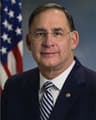 John Boozman
Republican · Arkansas
 Mike Crapo
Republican · Idaho
 John Curtis
Republican · Utah
 Mark Kelly
Democrat · Arizona
 Jeff Merkley
Democrat · Oregon
 Adam Schiff
Democrat · California
 Tim Sheehy
Republican · Montana