
A Republican bill with 2 Republican cosponsors · See all 2 cosponsors
Last activity — Committee on Energy and Natural Resources Subcommittee on Public Lands, Forests, and Mining. Hearings held.
In committee
Introduced and handed to a committee in the chamber it started in.
The committee holds it, and most bills are never heard from again. A hearing or a committee vote would be news; silence is the usual outcome, and it kills the bill without anyone voting against it.
Its path through Congress
- Introduced
- In Committee
What this bill would do
The CLOSE THE GAP Act aims to modernize and streamline the permitting process for broadband infrastructure on Federal land. It directs the Secretary concerned to create uniform regulations to standardize application processes across various organizational units. The bill mandates the tracking of application data and the establishment of online portals for electronic submissions. It also provides for minimum lease terms of at least 30 years for communications facilities. Additionally, the Act creates a new categorical exclusion to improve public safety through existing communications infrastructure. Finally, it establishes a Federal Land Management Agency Working Group to coordinate efforts and identify unserved locations.
Yes· 3 of 8
- Scored +8
Does this get reliable internet to more people?
The bill directly aims to modernize and expedite the deployment of broadband infrastructure on Federal land.
- Scored +7
Would people in rural areas be better off under this?
The bill's focus on identifying unserved locations and streamlining permits specifically aids the expansion of broadband in rural areas.
- Scored +6
Does this make what the government does easier for the public to see?
The bill mandates a publicly available website to track the status and number of broadband permit applications.
The opposite
No question was scored the opposite.
Who it would affect, and how
Potential Positive Impacts for People
-
Streamlined Permitting Processes: The bill requires regulations to ensure the process is uniform and standardized across organizational units (Section 3(a)(1)). This could help by making the application process more predictable and efficient.
-
Fair and Non-Discriminatory Access: Applications must be considered on a competitively neutral, technology neutral, and nondiscriminatory basis (Section 3(a)(2)). This ensures that different types of technology and companies have an equal chance to provide services.
-
Increased Stability for Infrastructure: The bill provides for minimum lease terms of not less than 30 years (Section 3(b)(2)). This long-term stability can encourage more investment in broadband infrastructure.
-
Improved Public Safety: The Act directs agencies to establish a new categorical exclusion for projects that improve public safety, such as providing backup power or more reliable connections (Section 6).
-
Enhanced Transparency: Regulations will include procedures for tracking applications on a publicly available website, showing the number of applications received, approved, and denied (Section 3(b)(1)(A)). This allows the public to see how the process is working.
-
Cost-Effective Fees: Cost recovery fees must be based solely on the costs incurred by the organizational unit for processing and oversight (Section 3(a)(3)(B)). This prevents agencies from overcharging applicants.
Potential Negative Impacts for People
-
No New Authorities: The bill explicitly states that it does not provide any executive agency or organizational unit with any new leasing or other real property authorities that did not exist before the date of enactment (Section 3(e)(1)). This means existing legal limits on land use remain in place.
-
Potential Impact on Land Disposal: The bill notes that no agreement entered into under this Act obligates the Federal Government to hold or retain real property that might otherwise be deemed as excess, surplus, or available for sale (Section 3(e)(2)(B)).
Groups and Interests Ranking
Every group the model scored this bill for, from -10 to +10. Tap or hover a score for the reason it gave.
- Demographic And Interest Groups
- Would people in rural areas be better off under this? — The bill's focus on identifying unserved locations and streamlining permits specifically aids the expansion of broadband in rural areas. Would households on low incomes be better off under this? — Improved broadband infrastructure can enhance access to essential digital services for low-income families. Would middle-income households be better off under this? — Expanding broadband access provides greater utility and connectivity for middle-income families.
- Education And Technology
- Does this get reliable internet to more people? — The bill directly aims to modernize and expedite the deployment of broadband infrastructure on Federal land.
- Governance And Ideology
- Does this make what the government does easier for the public to see? — The bill mandates a publicly available website to track the status and number of broadband permit applications.
- Economy And Finance
- Does this make it easier to run a small business? — The bill reduces administrative barriers and cost recovery fees for companies seeking to install communications infrastructure.
- Social Issues And Justice
- Is this likely to lift people out of poverty? — By expanding broadband access through streamlined permitting, the bill helps bridge the digital divide that impacts economic opportunity.
- Environment Energy And Infrastructure
- Does this improve buses, trains and other public transport? — While primarily broadband, the streamlining of federal land use can improve digital connectivity for transit-adjacent infrastructure.
- 7/15/2026
- Committee on Energy and Natural Resources Subcommittee on Public Lands, Forests, and Mining. Hearings held.
- 6/9/2026
- 1 Cosponsor added.
- 5/19/2026
- Read twice and referred to the Committee on Energy and Natural Resources. (text: CR S2375-2377)
- 1 Cosponsor added.
- Introduced in Senate
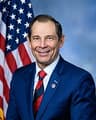 John Curtis
Republican · Utah
 Cynthia Lummis
Republican · Wyoming