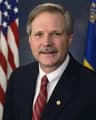
John Hoeven (R-ND)
Dakota Water Resources Act Amendments of 2026
A Republican bill with 1 Democratic cosponsor · See all 2 cosponsors
Last activity — Placed on Senate Legislative Calendar under General Orders. Calendar No. 655.
Cleared committee, waiting for its first floor vote
A committee approved it and it is on the calendar of the chamber it started in.
This is further than most bills get, and still no promise of a vote: the calendar is a queue, and the majority leadership decides what is called. A bill can sit here until the Congress ends.
Its path through Congress
- Introduced
- On Calendar
What this bill would do
This bill is known as the Dakota Water Resources Act Amendments of 2026. It updates a previous law to change how much money can be spent on various water supply projects. The funding goes toward state, municipal, rural, and industrial water systems. It also provides specific funding amounts for several Indian Reservation water systems. Finally, the bill includes instructions on how these funds can be adjusted for construction cost changes over time.
Yes· 3 of 20
- Scored +10
Would Native Americans be better off under this?
Provides massive targeted funding for water systems on several specific Indian Reservations.
- Scored +9
Would people in rural areas be better off under this?
Specifically targets the completion and expansion of rural water systems.
- Scored +8
Would farmers be better off under this?
Essential water infrastructure directly supports farming and livestock operations.
The opposite
- Scored -5
Does this reduce what the federal government spends?
The bill authorizes hundreds of millions of dollars in additional government appropriations.
- Scored -2
Does this reduce what the federal government owes?
The bill authorizes significant new federal spending, which increases the national deficit.
- Scored -2
Does this make the government pay for what it commits to?
Increasing authorized spending without offsetting cuts is generally seen as less fiscally responsible.
Who it would affect, and how
Potential Positive Impacts for People
-
Northwest Area Water Supply: Section 2 authorizes $120,000,000 to complete all phases of the Northwest Area Water Supply Biota Water Treatment Plant and Pump Station Project. This could help complete this specific water infrastructure project.
-
Eastern North Dakota Alternate Water Supply: Section 2 authorizes $404,000,000 to complete the McClusky Canal and Missouri River North Alternative. This funding is aimed at finishing this part of the alternative water supply project.
-
Southwest Pipeline Project: Section 2 authorizes $50,000,000 for the Southwest Pipeline Project to finish specific raw water intakes, transmission line upgrades, hydraulic improvements, and rural distribution expansions.
-
North Dakota Rural Water Districts: Section 2 authorizes $63,000,000 for North Dakota rural water districts for water treatment and rural distribution expansion, including specific work on the South Central Regional Water District and Northeast North Dakota projects.
-
Tribal Rural Water Systems: Section 2 authorizes up to $743,000,000 for several rural water systems. This includes up to $118,000,000 for the Spirit Lake Rural Water System, up to $275,000,000 for the Three Affiliated Tribes Rural Water System, up to $240,000,000 for the Standing Rock Rural Water System, and up to $98,000,000 for the Turtle Mountain Rural Water System.
-
Lake Traverse Indian Reservation: Section 2 provides $12,000,000 to complete a feasibility study for a municipal, rural, and industrial water system, and potentially begin construction if it is found to be feasible.
Potential Negative Impacts for People
- Increased Authorizations and Spending: Section 2 authorizes significant new amounts of taxpayer funds—such as hundreds of millions for various water projects and tribal water systems—which could increase federal spending and the national financial burden on citizens.
Groups and Interests Ranking
Every group the model scored this bill for, from -10 to +10. Tap or hover a score for the reason it gave.
- Demographic And Interest Groups
- Would Native Americans be better off under this? — Provides massive targeted funding for water systems on several specific Indian Reservations. Would people in rural areas be better off under this? — Specifically targets the completion and expansion of rural water systems. Would farmers be better off under this? — Essential water infrastructure directly supports farming and livestock operations. Would households on low incomes be better off under this? — Directly benefits low-income households in rural and tribal areas by completing essential water systems. Would business owners be better off under this? — Reliable water infrastructure is critical for agricultural and industrial business operations. Would middle-income households be better off under this? — Improves water reliability and access for rural middle-class households. Would union members be better off under this? — Increases demand for skilled trade labor in water infrastructure construction. Would white Americans be better off under this? — Benefits white residents in rural North Dakota through water district funding. Would children be better off under this? — Ensures children in rural and tribal areas have access to safe drinking water. Would people in middle age be better off under this? — Improves basic infrastructure for middle-aged residents in these regions. Would people over 65 be better off under this? — Ensures seniors in rural and tribal areas have access to safe drinking water. Would people in their twenties and thirties be better off under this? — Improves basic infrastructure for young adults living in these regions.
- Environment Energy And Infrastructure
- Does this invest in rural communities? — Directly funds the expansion and completion of rural water treatment and distribution systems.
- Social Issues And Justice
- Does this narrow racial gaps in how people are treated? — Provides substantial funding to complete water systems for multiple Native American reservations. Is this likely to lift people out of poverty? — Providing basic infrastructure like water to underserved tribal and rural areas helps alleviate poverty.
- Economy And Finance
- Is this likely to create jobs? — Investment in water infrastructure projects typically creates construction and engineering jobs. Is this likely to grow the economy? — Improved water infrastructure supports local economic development and industrial capacity. Does this make it easier to run a small business? — Improved rural water infrastructure supports small businesses and agricultural operations in North Dakota. Does this reduce what the federal government spends? — The bill authorizes hundreds of millions of dollars in additional government appropriations. Does this make the government pay for what it commits to? — Increasing authorized spending without offsetting cuts is generally seen as less fiscally responsible. Does this reduce what the federal government owes? — The bill authorizes significant new federal spending, which increases the national deficit.
- Governance And Ideology
- Does this give the federal government more power? — Increases federal appropriation authority and oversight for state/tribal water projects.
- Healthcare
- Does this make health care easier to get in general? — Access to clean and reliable drinking water is a fundamental component of public health.
- 9/17/2026
- Committee on Energy and Natural Resources. Reported by Senator Lee without amendment. Without written report.
- Placed on Senate Legislative Calendar under General Orders. Calendar No. 655.
- 6/10/2026
- Committee on Energy and Natural Resources. Ordered to be reported without amendment favorably.
- 3/17/2026
- Committee on Energy and Natural Resources Subcommittee on Water and Power. Hearings held.
- 3/10/2026
- Read twice and referred to the Committee on Energy and Natural Resources.
- 2 Cosponsors added.
- Introduced in Senate
3 bills Congress.gov lists as related to this one — companions in the other chamber, earlier versions, and bills this one absorbed or was folded into.
 Kevin Cramer
Republican · North Dakota
 Alex Padilla
Democrat · California