
A Republican bill with 6 Democratic cosponsors · See all 11 cosponsors
Last activity — Read twice and referred to the Committee on Health, Education, Labor, and Pensions.
In committee
Introduced and handed to a committee in the chamber it started in.
The committee holds it, and most bills are never heard from again. A hearing or a committee vote would be news; silence is the usual outcome, and it kills the bill without anyone voting against it.
Its path through Congress
- Introduced
- In Committee
What this bill would do
This bill is known as the Accelerating Access to Dementia and Alzheimer's Provider Training Act or the AADAPT Act. It amends the Public Health Service Act to expand the Project ECHO Grant Program. The bill allows the grant program to share knowledge and build capacity to address Alzheimer's disease and other dementias. It also updates who can receive grants by explicitly including public or nonprofit private entities. Finally, it adds dementia care to the list of areas supported by the program.
Yes· 3 of 6
- Scored +7
Would people over 65 be better off under this?
Seniors stand to benefit significantly from enhanced medical training and capacity building focused specifically on Alzheimer's disease and other dementias.
- Scored +7
Would retired people be better off under this?
Retirees facing a higher statistical risk of developing Alzheimer's disease and dementia will benefit from better-trained healthcare providers.
- Scored +6
Does this make health care easier to get in general?
The bill expands the Project ECHO Grant Program to include dementia care and broaden entity eligibility, improving healthcare access and provider training for Alzheimer's and related dementias.
The opposite
No question was scored the opposite.
Who it would affect, and how
Potential Positive Impacts for People
-
Expanded Grant Eligibility: Section 2(1) updates the program to explicitly state that grants can go to a public or nonprofit private entity, which opens up who can apply to help people.
-
Focus on Dementia Care: Section 2(2) adds dementia care to the program, which helps build capacity and share knowledge to address Alzheimer's disease and other dementias for individuals and families dealing with these conditions.
Potential Negative Impacts for People
- The provided text does not contain any specific sections or provisions that outline potential negative consequences or burdens for individuals or groups of people.
Groups and Interests Ranking
Every group the model scored this bill for, from -10 to +10. Tap or hover a score for the reason it gave.
- Demographic And Interest Groups
- Would retired people be better off under this? — Retirees facing a higher statistical risk of developing Alzheimer's disease and dementia will benefit from better-trained healthcare providers. Would people over 65 be better off under this? — Seniors stand to benefit significantly from enhanced medical training and capacity building focused specifically on Alzheimer's disease and other dementias. Would people with disabilities be better off under this? — Individuals experiencing cognitive impairments and related neurological conditions benefit from targeted improvements in specialized healthcare delivery. Would people in rural areas be better off under this? — Project ECHO models frequently help connect rural healthcare providers with specialized knowledge, benefiting rural communities dealing with limited access to dementia specialists. Would people in middle age be better off under this? — Middle-aged adults benefit indirectly through improved provider training and resources for managing early-onset or familial dementia care responsibilities.
- Healthcare
- Does this make health care easier to get in general? — The bill expands the Project ECHO Grant Program to include dementia care and broaden entity eligibility, improving healthcare access and provider training for Alzheimer's and related dementias.
- 11/10/2026
- 2 Cosponsors added.
- 7/29/2026
- 2 Cosponsors added.
- 3/10/2026
- Read twice and referred to the Committee on Health, Education, Labor, and Pensions.
- 7 Cosponsors added.
- Introduced in Senate
One bill Congress.gov lists as related to this one — companions in the other chamber, earlier versions, and bills this one absorbed or was folded into.
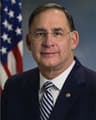 John Boozman
Republican · Arkansas
 Cory Booker
Democrat · New Jersey
 Maria Cantwell
Democrat · Washington
 Christopher Coons
Democrat · Delaware
 Amy Klobuchar
Democrat · Minnesota
 Andy Kim
Democrat · New Jersey
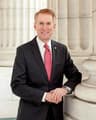 James Lankford
Republican · Oklahoma
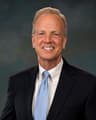 Jerry Moran
Republican · Kansas
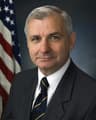 John Reed
Democrat · Rhode Island
 Dan Sullivan
Republican · Alaska
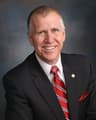 Thomas Tillis
Republican · North Carolina