
A Republican bill with 1 Republican cosponsor · See the cosponsor
Last activity — Read twice and referred to the Committee on Environment and Public Works.
In committee
Introduced and handed to a committee in the chamber it started in.
The committee holds it, and most bills are never heard from again. A hearing or a committee vote would be news; silence is the usual outcome, and it kills the bill without anyone voting against it.
Its path through Congress
- Introduced
- In Committee
What this bill would do
This bill, known as the "FENCES Act," seeks to amend the Clean Air Act. It focuses on clarifying standards regarding emissions that come from outside of the United States. The legislation aims to change how nonattainment areas are designated for air quality standards. Specifically, it provides a way for States to demonstrate they would have met standards if not for emissions from outside their control. It also addresses the applicability of sanctions and fees in certain circumstances.
Yes
- Scored +5
Does this leave more decisions to the states?
The bill increases state authority by allowing them to avoid federal sanctions if they can prove air quality issues are caused by external factors.
- Scored +3
Does this make it easier to run a small business?
The bill protects states and local sources from federal sanctions and fees due to uncontrollable external emissions.
- Scored +2
Would people in rural areas be better off under this?
States can more easily defend against federal penalties for air quality issues caused by factors beyond their control.
The opposite
- Scored -2
Does this better protect air, water and wildlife?
The bill clarifies that areas cannot be designated as nonattainment if emissions come from outside the U.S., which may reduce the urgency for local air quality enforcement.
Who it would affect, and how
Potential Positive Impacts for People
-
Protection from Sanctions and Fees: Under Section 2(c), a State, area, or source may avoid sanctions or fees if they can demonstrate that the failure to meet air quality standards was due to emissions from outside the nonattainment area, exceptional events, or certain uncontrolled mobile sources.
-
Clarified Nonattainment Designations: Per Section 2(b), an area may not be designated as a nonattainment area if the State proves to the Administrator that the area would have met the standard but for emissions coming from outside the United States, regardless of whether those emissions came from human activity.
Potential Negative Impacts for People
- Continued Obligation to Implement Measures: According to Section 2(c)(b), even if sanctions or fees are not applied due to emissions beyond a State's control, this does not change the obligation of a State, area, source, or other entity to establish and implement measures to attain national ambient air quality standards for ozone or particulate matter.
Groups and Interests Ranking
Every group the model scored this bill for, from -10 to +10. Tap or hover a score for the reason it gave.
- Governance And Ideology
- Does this leave more decisions to the states? — The bill increases state authority by allowing them to avoid federal sanctions if they can prove air quality issues are caused by external factors.
- Economy And Finance
- Does this make it easier to run a small business? — The bill protects states and local sources from federal sanctions and fees due to uncontrollable external emissions.
- Demographic And Interest Groups
- Would people in rural areas be better off under this? — States can more easily defend against federal penalties for air quality issues caused by factors beyond their control.
- Environment Energy And Infrastructure
- Does this better protect air, water and wildlife? — The bill clarifies that areas cannot be designated as nonattainment if emissions come from outside the U.S., which may reduce the urgency for local air quality enforcement.
- 3/4/2026
- 1 Cosponsor added.
- 2/11/2026
- Read twice and referred to the Committee on Environment and Public Works.
- Introduced in Senate
One bill Congress.gov lists as related to this one — companions in the other chamber, earlier versions, and bills this one absorbed or was folded into.
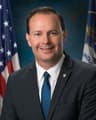 Mike Lee
Republican · Utah