
Rick Scott (R-FL)
Preserving Safe Communities by Ending Swatting Act of 2025
A Republican bill with 2 Republican cosponsors · See all 2 cosponsors
Last activity — Read twice and referred to the Committee on the Judiciary.
In committee
Introduced and handed to a committee in the chamber it started in.
The committee holds it, and most bills are never heard from again. A hearing or a committee vote would be news; silence is the usual outcome, and it kills the bill without anyone voting against it.
Its path through Congress
- Introduced
- In Committee
What this bill would do
The "Preserving Safe Communities by Ending Swatting Act of 2025" aims to amend title 18 of the United States Code. It focuses on penalizing individuals who use false or misleading information to trigger emergency responses. The bill establishes criminal penalties, including fines and imprisonment, for such conduct. It also creates civil liability for those who incur expenses due to these emergency or investigative responses. Finally, it provides a specific definition for what constitutes an "emergency response."
Yes
- Scored +3
Does this change how police departments operate?
The bill penalizes the false information that triggers police or emergency deployments, potentially reducing unnecessary police activity.
- Scored +2
Would people in cities be better off under this?
Reducing swatting incidents can improve safety and resource management in urban emergency response environments.
- Scored +2
Does this protect the right to fair treatment by the courts?
The bill establishes specific legal consequences and civil liabilities for those engaging in harmful false communications.
The opposite
No question was scored the opposite.
Who it would affect, and how
Potential Positive Impacts for People
-
Criminal Penalties for False Information: Under Section 2, individuals who convey false information that results in an emergency response can face fines and imprisonment for up to 5 years. This is a positive step toward holding people accountable for creating false emergencies (Section 2, subsection (a)(1)).
-
Increased Penalties for Severe Outcomes: If the false information leads to serious bodily injury, the penalty increases to up to 20 years in prison, and if death results, the penalty can be up to life in prison (Section 2, subsection (a)(1)). This provides a stricter deterrent for the most harmful actions.
-
Financial Accountability for Expenses: The bill allows any party that incurs expenses due to an emergency or investigative response caused by false information to take civil action to recover those expenses (Section 2, subsection (b)).
Potential Negative Impacts for People
-
Criminal Liability for Specific Information Types: Individuals could face fines or up to 5 years in prison if they convey information that is reasonably believed to indicate a violation of specific chapters or sections of title 18 or other specific acts like the Atomic Energy Act of 1954 (Section 2, subsection (a)(1)(A)).
-
Civil Liability for Emergency Costs: People can be held liable in a civil action to any party that incurs expenses related to an emergency or investigative response triggered by the false or misleading information (Section 2, subsection (b)).
Groups and Interests Ranking
Every group the model scored this bill for, from -10 to +10. Tap or hover a score for the reason it gave.
- Social Issues And Justice
- Does this change how police departments operate? — The bill penalizes the false information that triggers police or emergency deployments, potentially reducing unnecessary police activity.
- Demographic And Interest Groups
- Would people in cities be better off under this? — Reducing swatting incidents can improve safety and resource management in urban emergency response environments.
- Governance And Ideology
- Does this protect the right to fair treatment by the courts? — The bill establishes specific legal consequences and civil liabilities for those engaging in harmful false communications.
- 1/9/2025
- Read twice and referred to the Committee on the Judiciary.
- 2 Cosponsors added.
- Introduced in Senate
4 bills Congress.gov lists as related to this one — companions in the other chamber, earlier versions, and bills this one absorbed or was folded into.
 Mike Rounds
Republican · South Dakota
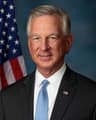 Tommy Tuberville
Republican · Alabama