
Maria Cantwell (D-WA)
Radar Next Program Act of 2026
A Democratic bill with 1 Republican cosponsor · See the cosponsor
Last activity — Read twice and referred to the Committee on Commerce, Science, and Transportation.
In committee
Introduced and handed to a committee in the chamber it started in.
The committee holds it, and most bills are never heard from again. A hearing or a committee vote would be news; silence is the usual outcome, and it kills the bill without anyone voting against it.
Its path through Congress
- Introduced
- In Committee
What this bill would do
This bill establishes the "Radar Next Program" to modernize the United States' weather radar network. The Under Secretary, working with the National Weather Service, is tasked with developing requirements and a plan to replace the existing NEXRAD system. This plan aims to improve weather radar coverage, accuracy, and performance across the U.S. and its territories. It includes the development of phased array radar and a weather surveillance radar testbed to evaluate various technologies. Additionally, the Under Secretary may use "Radar-As-A-Service" to fill data gaps through partnerships or contracts. The full implementation of this plan must be completed by September 30, 2040.
Yes· 3 of 6
- Scored +5
Does this improve help for people hit by a disaster?
The bill enhances the detection of significant precipitation and severe weather to improve warning capabilities.
- Scored +5
Would people in rural areas be better off under this?
The bill specifically addresses radar coverage gaps in geographically difficult regions through small, gap-filling radars.
- Scored +4
Does this invest in rural communities?
The bill provides technical assistance for small, gap-filling radars in regions where large systems are not commercially viable.
The opposite
No question was scored the opposite.
Who it would affect, and how
Potential Positive Impacts for People
-
Improved Weather Forecasting: The plan seeks to continue and improve weather radar coverage and provides expected improvements to data available for weather and water-related forecasts and warnings (Section 2(c)(2)).
-
Enhanced Detection of Severe Weather: The Under Secretary may partner with outside entities to better detect significant precipitation and severe weather over a greater area across a population (Section 2(d)(1)(C)).
-
Filling Coverage Gaps: The program includes providing technical assistance for the use of small, gap-filling radars in regions where geographical topography prevents the use of large systems or where large systems are not commercially viable (Section 2(c)(2)(D)(ii)).
-
Addressing Data Gaps: Through "Radar-As-A-Service," the Under Secretary can partner with outside entities to supplement data gaps in weather radar coverage at low levels and in wide areas (Section 2(d)(1)(A)).
Potential Negative Impacts for People
- No specific negative impacts or burdens are explicitly mentioned in the provided text.
Groups and Interests Ranking
Every group the model scored this bill for, from -10 to +10. Tap or hover a score for the reason it gave.
- Environment Energy And Infrastructure
- Does this improve help for people hit by a disaster? — The bill enhances the detection of significant precipitation and severe weather to improve warning capabilities. Does this invest in rural communities? — The bill provides technical assistance for small, gap-filling radars in regions where large systems are not commercially viable. Does this better protect air, water and wildlife? — The bill improves weather and water-related forecasting which aids in environmental monitoring.
- Demographic And Interest Groups
- Would people in rural areas be better off under this? — The bill specifically addresses radar coverage gaps in geographically difficult regions through small, gap-filling radars. Would farmers be better off under this? — Improved weather and water-related forecasts directly benefit agricultural operations.
- Education And Technology
- Does this put more money into scientific research? — The bill funds the development of phased array radar and a weather surveillance radar testbed.
- 2/5/2026
- Read twice and referred to the Committee on Commerce, Science, and Transportation.
- 1 Cosponsor added.
- Introduced in Senate
2 bills Congress.gov lists as related to this one — companions in the other chamber, earlier versions, and bills this one absorbed or was folded into.
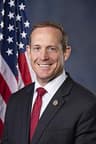 Ted Budd
Republican · North Carolina