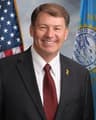
Mike Rounds (R-SD)
Financial Stability Oversight Council Improvement Act of 2025
A Republican bill with 2 Democratic cosponsors · See all 3 cosponsors
Last activity — Read twice and referred to the Committee on Banking, Housing, and Urban Affairs.
In committee
Introduced and handed to a committee in the chamber it started in.
The committee holds it, and most bills are never heard from again. A hearing or a committee vote would be news; silence is the usual outcome, and it kills the bill without anyone voting against it.
Its path through Congress
- Introduced
- In Committee
What this bill would do
This bill is called the "Financial Stability Oversight Council Improvement Act of 2025." It seeks to amend the Financial Stability Act of 2010. The main goal is to change how the Financial Stability Oversight Council handles U.S. nonbank financial companies. It requires the Council to consider alternative approaches before deciding a company must be supervised by the Board of Governors of the Federal Reserve System. The Council must consult with the company and its primary regulatory agency first. This ensures other methods are checked before full supervision is triggered.
Yes
- Scored +2
Would business owners be better off under this?
The requirement to consider alternative, less intrusive regulatory measures provides more flexibility for nonbank financial companies.
- Scored +2
Is this likely to grow the economy?
The bill introduces more collaborative and flexible regulatory approaches for nonbank financial companies, which may reduce the burden of full Federal Reserve supervision.
- Scored +1
Does this make what the government does easier for the public to see?
The bill requires a formal determination process and consultation with companies before decisive regulatory actions are taken.
The opposite
- Scored -2
Does this give the federal government more power?
The bill limits the unilateral power of the Financial Stability Oversight Council to mandate Federal Reserve supervision without first exploring alternative mitigation methods.
Who it would affect, and how
Potential Positive Impacts for People
-
Mandatory Consideration of Alternatives: The Council would be required to determine if different actions, such as new standards or a company's own written plan, could work instead of full supervision. This is found in Section 2, subsection (a), paragraph (1), adding paragraph (3).
-
Consultation Requirements: The Council must consult with the specific company and its primary financial regulatory agency before voting on a determination. This could provide a more collaborative approach to managing financial risks, as noted in Section 2, subsection (a), paragraph (1), adding paragraph (3).
Potential Negative Impacts for People
- No specific negative impacts are explicitly detailed in the provided text.
Groups and Interests Ranking
Every group the model scored this bill for, from -10 to +10. Tap or hover a score for the reason it gave.
- Demographic And Interest Groups
- Would business owners be better off under this? — The requirement to consider alternative, less intrusive regulatory measures provides more flexibility for nonbank financial companies.
- Economy And Finance
- Is this likely to grow the economy? — The bill introduces more collaborative and flexible regulatory approaches for nonbank financial companies, which may reduce the burden of full Federal Reserve supervision.
- Governance And Ideology
- Does this make what the government does easier for the public to see? — The bill requires a formal determination process and consultation with companies before decisive regulatory actions are taken. Does this give the federal government more power? — The bill limits the unilateral power of the Financial Stability Oversight Council to mandate Federal Reserve supervision without first exploring alternative mitigation methods.
- 2/4/2026
- 2 Cosponsors added.
- 12/18/2025
- Read twice and referred to the Committee on Banking, Housing, and Urban Affairs.
- 1 Cosponsor added.
- Introduced in Senate
One bill Congress.gov lists as related to this one — companions in the other chamber, earlier versions, and bills this one absorbed or was folded into.
 Ruben Gallego
Democrat · Arizona
 David McCormick
Republican · Pennsylvania
 Gary Peters
Democrat · Michigan