
Richard Blumenthal (D-CT)
Honor Our Promise to Veterans Act of 2025
A Democratic bill with 1 Republican cosponsor · See all 15 cosponsors
Last activity — Read twice and referred to the Committee on Veterans' Affairs.
In committee
Introduced and handed to a committee in the chamber it started in.
The committee holds it, and most bills are never heard from again. A hearing or a committee vote would be news; silence is the usual outcome, and it kills the bill without anyone voting against it.
Its path through Congress
- Introduced
- In Committee
What this bill would do
The Honor Our Promise to Veterans Act of 2025 aims to improve health care provided by the Department of Veterans Affairs. It establishes strict new timelines for scheduling both urgent and non-urgent medical appointments. The bill introduces various programs to enhance provider quality, including a rating system for military sexual trauma awareness. It also addresses staffing by modifying pay authorities and creating new educational assistance programs for employees. Additionally, the legislation focuses on infrastructure by authorizing funds for land acquisitions and improving capital asset management. The bill mandates the creation of performance metrics, internal dashboards, and standardized processes to solicit feedback from veterans and medical staff.
Yes· 3 of 21
- Scored +8
Would veterans be better off under this, taking everything together?
The bill implements comprehensive improvements to healthcare scheduling, staffing, and infrastructure for the veteran community.
- Scored +8
Does this help veterans get medical care?
The bill significantly enhances veteran healthcare through faster appointment scheduling, better provider training, and expanded infrastructure.
- Scored +8
Does this increase the pay, pensions or support veterans receive?
The bill provides substantial funding for VA construction, staffing, and medical facility improvements to better serve veterans.
The opposite
No question was scored the opposite.
Who it would affect, and how
Potential Positive Impacts for People
-
Improved Appointment Timing: The bill mandates that non-urgent appointments be scheduled within seven days and urgent care appointments be completed within 48 hours (Section 101).
-
Better Access to Information: Veterans will be provided with information regarding current wait times and average driving times for various care options (Section 103).
-
Specialized Provider Awareness: A new rating program will identify community care providers who are "MST Aware," specifically trained in military sexual trauma and the treatment of women veterans (Section 112).
-
Workforce Training and Quality: The bill requires community care providers to complete specific training modules to ensure they are prepared to treat veterans (Section 114).
-
Career Advancement for Employees: The "Start and Stay at VA Program" provides scholarships and debt reduction to help employees move into shortage occupations (Section 221).
-
Infrastructure Support: The "Build and Maintain Department of Veterans Affairs Program" provides assistance for those pursuing education in essential maintenance and infrastructure roles (Section 222).
-
Improved Infrastructure Planning through Veteran Feedback: The bill requires the Department to collect the views and expectations of veterans regarding their medical facility needs and infrastructure preferences (Section 1(G)(i)). This ensures that the people actually using the services have a voice in how facilities are improved.
-
Enhanced Facility Resilience: The Secretary must submit a report assessing how mission-critical assets are at risk from extreme weather, such as flooding, wildfires, or hurricanes (Section s321(b)(1)). This focus on resilience helps protect the safety and continuity of care for veterans.
-
Targeted Support for Specialized Care: The legislation requires a report identifying infrastructure needs for specific groups, including women veterans, those with spinal cord injuries, traumatic brain injury, and memory loss (Section 323(a)(1)). This helps ensure that those with unique medical needs receive appropriate care environments.
-
Support for Research and Development: The bill mandates a report on the capital asset and information technology needs of the Department's research and development program (Section 325(a)). This can help maintain and advance the high-performing functions necessary for medical research.
-
Accountability and Oversight: By requiring the development of meaningful metrics and an internal dashboard, the bill aims to allow for sound decisions regarding construction, leasing, and maintenance (Section 314(a)(1)). This oversight is designed to track progress and improve performance for the benefit of veterans and their families.
Potential Negative Impacts for People
-
Restrictions on Telehealth: The bill places specific limitations on when a veteran may seek care via telehealth through community care providers (Section 102).
-
Provider Liabilities: There are strict rules regarding a provider's liability and the potential for the government to recover funds if service agreements are breached (Section s 7699C-1 and 7699C-2).
-
Financial Risks for Participants: Individuals participating in educational assistance programs may be held liable for the cost of their education if they fail to maintain academic standing or fail to complete their period of obligated service (Section 7699C-1).
-
Potential Funding Gaps: The bill includes a requirement for the Secretary to provide a detailed justification if requested funding levels are less than what is authorized, identifying which projects will not be funded due to those lower levels (Section 316(d)(1)). This indicates that requested needs may not always be fully met by the available budget.
-
Risk of Infrastructure Vulnerability: The requirement to assess risks from flooding, wildfires, and extreme weather (Section 321(b)(1)) highlights that current mission-critical facilities may currently be at high risk, which could impact the safety of those using them.
Groups and Interests Ranking
Every group the model scored this bill for, from -10 to +10. Tap or hover a score for the reason it gave.
- Demographic And Interest Groups
- Would veterans be better off under this, taking everything together? — The bill implements comprehensive improvements to healthcare scheduling, staffing, and infrastructure for the veteran community. Would students be better off under this? — The bill establishes scholarship programs and debt reduction for students in shortage healthcare and infrastructure occupations. Would people over 65 be better off under this? — The bill focuses on improving long-term care infrastructure and capacity for aging veterans. Would women be better off under this? — The bill includes specific training requirements and reports on the long-term care needs of women veterans. Would Black Americans be better off under this? — The bill mandates outreach to Historically Black Colleges and Universities for its educational assistance programs. Would Native Americans be better off under this? — The bill mandates outreach to Tribal Colleges and Universities for its educational assistance programs. Would people with disabilities be better off under this? — The bill requires a report on the infrastructure needs of veterans with spinal cord injuries, traumatic brain injury, and memory loss. Would people in rural areas be better off under this? — The bill includes outreach for educational assistance programs to high schools in rural areas.
- Healthcare
- Does this help veterans get medical care? — The bill significantly enhances veteran healthcare through faster appointment scheduling, better provider training, and expanded infrastructure. Does this make health care easier to get in general? — The bill mandates strict new timelines for scheduling medical appointments and invests in infrastructure to increase medical capacity.
- Education And Technology
- Does this make college cost less? — The bill provides scholarships and debt reduction for employees seeking education in essential medical and infrastructure roles. Does this put more money into scientific research? — The bill directs a report on the information technology and infrastructure needs of the VA research and development program.
- Economy And Finance
- Does this make the government pay for what it commits to? — The bill mandates increased oversight, reporting, and metrics to prevent waste, fraud, and abuse in capital asset projects. Is this likely to create jobs? — The bill provides scholarships and debt reduction through the Start and Stay at VA Program to encourage employment in shortage occupations.
- Environment Energy And Infrastructure
- Does this repair or build roads and bridges? — The bill authorizes significant funding for the construction and maintenance of VA medical facilities and capital assets. Does this improve help for people hit by a disaster? — The bill requires a report on the resilience of VA assets against extreme weather events to ensure service continuity. Does this better protect public land such as parks and forests? — The bill authorizes funding for land acquisitions to increase the capacity of medical facilities.
- National Security And Foreign Policy
- Does this increase the pay, pensions or support veterans receive? — The bill provides substantial funding for VA construction, staffing, and medical facility improvements to better serve veterans.
- Social Issues And Justice
- Does this narrow the gap between how men and women are treated? — The bill establishes a rating program and requires reports on the long-term care needs of women veterans. Does this strengthen Social Security? — The bill strengthens the capacity of the VA to provide essential services and infrastructure for veterans.
- Governance And Ideology
- Does this make what the government does easier for the public to see? — The bill mandates the publication of wait times, provider ratings, and frequent reporting on VA staffing and asset management.
- 11/9/2026
- 1 Cosponsor added.
- 9/29/2026
- 1 Cosponsor added.
- 9/28/2026
- 1 Cosponsor added.
- 2/24/2026
- 1 Cosponsor added.
- 1/27/2026
- 1 Cosponsor added.
- 12/17/2025
- 1 Cosponsor added.
- 12/16/2025
- 2 Cosponsors added.
- 12/11/2025
- Read twice and referred to the Committee on Veterans' Affairs.
- 7 Cosponsors added.
- Introduced in Senate
One bill Congress.gov lists as related to this one — companions in the other chamber, earlier versions, and bills this one absorbed or was folded into.
 Angela Alsobrooks
Democrat · Maryland
 Tammy Baldwin
Democrat · Wisconsin
 Marsha Blackburn
Republican · Tennessee
 Catherine Cortez Masto
Democrat · Nevada
 Tammy Duckworth
Democrat · Illinois
 Mazie Hirono
Democrat · Hawaii
 Amy Klobuchar
Democrat · Minnesota
 Angus King
Independent · Maine
 Patty Murray
Democrat · Washington
 Jeff Merkley
Democrat · Oregon
 Bernie Sanders
Independent · Vermont
 Adam Schiff
Democrat · California
 Jeanne Shaheen
Democrat · New Hampshire
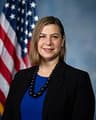 Elissa Slotkin
Democrat · Michigan
 Sheldon Whitehouse
Democrat · Rhode Island