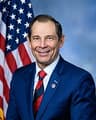
A Republican bill with 1 Republican cosponsor · See the cosponsor
Last activity — Committee on Small Business and Entrepreneurship. Hearings held.
In committee
Introduced and handed to a committee in the chamber it started in.
The committee holds it, and most bills are never heard from again. A hearing or a committee vote would be news; silence is the usual outcome, and it kills the bill without anyone voting against it.
Its path through Congress
- Introduced
- In Committee
What this bill would do
The "Combatting China's Pilfering of Intellectual Property Act" aims to impose sanctions on individuals and entities in the People's Republic of China involved in significant intellectual property theft against United States persons. Sanctions include asset blocking and the denial or revocation of visas and entry into the United States. The bill targets specific Chinese nationals, entities, and government officials, including senior CCP leadership and members of the People's Liberation Army. The President has the authority to waive these sanctions if deemed in the national security interests of the United States. Additionally, the bill restricts visa issuance for certain high-ranking Chinese officials and their families.
Yes· 3 of 5
- Scored +7
Would business owners be better off under this?
The bill protects the proprietary assets and innovations of business owners from theft.
- Scored +7
Does this make patent and copyright rules fairer?
The bill creates consequences for those who engage in patterns of significant intellectual property theft.
- Scored +4
Would high-income households be better off under this?
The bill protects the intellectual property of U.S. persons, which often benefits high-earning innovators and corporations.
The opposite
No question was scored the opposite.
Who it would affect, and how
Potential Positive Impacts for People
-
Protection of Intellectual Property: By imposing asset blocking and visa restrictions on those engaged in a pattern of significant theft, the bill aims to protect the intellectual property of United States persons (Section 2(a)).
-
Asset Security: The bill allows for the blocking and prohibition of transactions involving property and interests in property of offending persons if that property is in the United States or controlled by a United States person (Section 2(b)(1)).
-
Visa Restrictions on Targeted Officials: The bill prevents senior Chinese Communist Party officials, government cabinet members, and active duty members of the People's Liberation Army from obtaining visas, which may serve as a deterrent against intellectual property infringement (Section 3(a)).
Potential Negative Impacts for People
-
Economic Burdens via Asset Blocking: Individuals or entities identified as being involved in intellectual property theft will have their assets blocked and transactions prohibited (Section 2(b)(1)).
-
Travel and Immigration Restrictions: Targeted individuals, including the spouses and children of senior Chinese officials, will be unable to receive visas or be admitted to or paroled into the United States (Section 2(b)(2) and Section 3(a)).
-
Immediate Revocation of Documentation: Any current visa or entry documentation held by an individual identified under the act will be subject to immediate revocation and automatic cancellation (Section 2(b)(2)(B)).
Groups and Interests Ranking
Every group the model scored this bill for, from -10 to +10. Tap or hover a score for the reason it gave.
- Demographic And Interest Groups
- Would business owners be better off under this? — The bill protects the proprietary assets and innovations of business owners from theft. Would high-income households be better off under this? — The bill protects the intellectual property of U.S. persons, which often benefits high-earning innovators and corporations.
- Education And Technology
- Does this make patent and copyright rules fairer? — The bill creates consequences for those who engage in patterns of significant intellectual property theft.
- National Security And Foreign Policy
- Does this make trade with other countries easier? — The bill aims to protect U.S. intellectual property which is a critical component of international trade.
- Social Issues And Justice
- Does this tighten control of the border? — The bill restricts entry and visa issuance for specific foreign officials and their families.
- 7/23/2025
- Committee on Small Business and Entrepreneurship. Hearings held.
- 6/12/2025
- 1 Cosponsor added.
- 1/30/2025
- Read twice and referred to the Committee on Foreign Relations.
- Introduced in Senate
One bill Congress.gov lists as related to this one — companions in the other chamber, earlier versions, and bills this one absorbed or was folded into.
 Rick Scott
Republican · Florida