
Shelley Capito (R-WV)
NOPAIN for Veterans Act
A Republican bill with 13 Democratic cosponsors · See all 27 cosponsors
Last activity — Read twice and referred to the Committee on Veterans' Affairs.
In committee
Introduced and handed to a committee in the chamber it started in.
The committee holds it, and most bills are never heard from again. A hearing or a committee vote would be news; silence is the usual outcome, and it kills the bill without anyone voting against it.
Its path through Congress
- Introduced
- In Committee
What this bill would do
This bill, known as the "Non-Opioids Prevent Addiction in the Nation for Veterans Act," aims to amend title 38 of the United States Code. It focuses on ensuring the Secretary of Veterans Affairs includes certain non-opioid pain medications in the national formulary. These medications must be approved by the FDA to treat acute pain or reduce postoperative pain without acting on opioid receptors. The bill sets specific deadlines for adding these products to the formulary based on their FDA approval or eligibility for additional payment. Furthermore, the Act prohibits using funds from the Cost of War Toxic Exposures Fund for these purposes.
Yes· 3 of 4
- Scored +7
Would veterans be better off under this, taking everything together?
The bill ensures veterans have access to FDA-approved non-opioid pain management drugs through the VA formulary.
- Scored +7
Does this increase the pay, pensions or support veterans receive?
The bill expands the available medications provided to veterans to include specific non-opioid pain management options.
- Scored +6
Does this do more about addiction and overdose deaths?
By prioritizing non-opioid treatments for acute and postoperative pain, the bill helps reduce reliance on opioids.
The opposite
No question was scored the opposite.
Who it would affect, and how
Potential Positive Impacts for People
-
Access to non-opioid pain relief: The bill requires the Secretary of Veterans Affairs to include non-opioid pain management drugs or biological products in the national formulary (Section 2(a)). This is positive because it ensures veterans have access to FDA-approved treatments for acute or postoperative pain that do not act on the body's opioid receptors (Section 2(a)(1)).
-
Timely implementation: The Secretary is required to implement these amendments within 90 days of the Act's enactment (Section 2(c)). This ensures that the changes to the medication formulary are put into effect relatively quickly.
Potential Negative Impacts for People
- No specific negative impacts are listed in the provided text.
Groups and Interests Ranking
Every group the model scored this bill for, from -10 to +10. Tap or hover a score for the reason it gave.
- Healthcare
- Does this do more about addiction and overdose deaths? — By prioritizing non-opioid treatments for acute and postoperative pain, the bill helps reduce reliance on opioids. Does this make health care easier to get in general? — The bill mandates the inclusion of specific non-opioid pain medications in the VA national formulary to improve access for veterans.
- Demographic And Interest Groups
- Would veterans be better off under this, taking everything together? — The bill ensures veterans have access to FDA-approved non-opioid pain management drugs through the VA formulary.
- National Security And Foreign Policy
- Does this increase the pay, pensions or support veterans receive? — The bill expands the available medications provided to veterans to include specific non-opioid pain management options.
- 7/21/2026
- 2 Cosponsors added.
- 6/1/2026
- 4 Cosponsors added.
- 2/3/2026
- 2 Cosponsors added.
- 12/1/2025
- 3 Cosponsors added.
- 11/19/2025
- Read twice and referred to the Committee on Veterans' Affairs.
- 16 Cosponsors added.
- Introduced in Senate
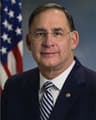 John Boozman
Republican · Arkansas
 Marsha Blackburn
Republican · Tennessee
 Michael Bennet
Democrat · Colorado
 Cory Booker
Democrat · New Jersey
 Jim Banks
Republican · Indiana
 Katie Britt
Republican · Alabama
 John Cornyn
Republican · Texas
 Kevin Cramer
Republican · North Dakota
 Catherine Cortez Masto
Democrat · Nevada
 Kirsten Gillibrand
Democrat · New York
 John Hickenlooper
Democrat · Colorado
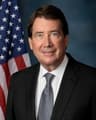 Bill Hagerty
Republican · Tennessee
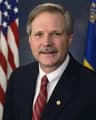 John Hoeven
Republican · North Dakota
 Cindy Hyde-Smith
Republican · Mississippi
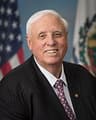 James Justice
Republican · West Virginia
 Amy Klobuchar
Democrat · Minnesota
 Mark Kelly
Democrat · Arizona
 Angus King
Independent · Maine
 Timothy Kaine
Democrat · Virginia
 Roger Marshall
Republican · Kansas
 Jon Ossoff
Democrat · Georgia
 Jacky Rosen
Democrat · Nevada
 Pete Ricketts
Republican · Nebraska
 Jeanne Shaheen
Democrat · New Hampshire
 Tim Scott
Republican · South Carolina
 Chris Van Hollen
Democrat · Maryland
 Raphael Warnock
Democrat · Georgia