
John Cornyn (R-TX)
Scam Compound Accountability and Mobilization Act
A Republican bill with 5 Democratic cosponsors · See all 8 cosponsors
Last activity — Held at the desk.
Passed one chamber, waiting for the other to take it up
Passed one chamber, and the other has not yet sent it to a committee or put it on its calendar.
The other chamber will hand it to a committee, place it on its calendar, or leave it where it is. Nothing has been decided, and a bill can sit here indefinitely.
Its path through Congress
- Introduced
- Passed Senate unanimous consent
- Awaiting House
The Senate by unanimous consent (no one objected, so there was no vote): no senator's position on it was recorded.
What this bill would do
This Act, known as the "Scam Compound Accountability and Mobilization Act," targets international scam compounds that use cyber-enabled fraud and human trafficking. It requires the Secretary of State to develop a global strategy to hold significant transnational criminal organizations accountable. The bill mandates the creation of an interagency task force to monitor these operations and implement the strategy. It grants the President authority to impose sanctions, including blocking transactions, against individuals and entities supporting these scam compounds. Additionally, the Attorney General must assess ways to use forfeited assets to provide financial redress to victimized U.S. citizens. The Act includes a sunset provision that ends its effectiveness seven years after enactment.
Yes· 3 of 7
- Scored +5
Does this better protect the country from computer attacks?
The bill targets the infrastructure and financial support of international cyber-enabled fraud operations.
- Scored +3
Does this strengthen ties with allied countries?
The bill encourages coordination with partner governments to combat transnational crime.
- Scored +3
Would households on low incomes be better off under this?
The bill includes measures to protect at-risk populations from recruitment fraud and human trafficking.
The opposite
No question was scored the opposite.
Who it would affect, and how
Potential Positive Impacts for People
-
Victim Redress: The bill requires an assessment of how to use forfeited assets to provide financial redress to United States citizen victims of scam operations (Section 7).
-
Protection of At-Risk Populations: The strategy includes raising awareness among at-risk populations to help them identify recruitment fraud and improve their own protection (Section 4(b)(5)(A)(ii)).
-
Support for Human Trafficking Survivors: The legislation calls for providing victim-centered support to survivors of human trafficking and forced criminality (Section 2(5) and Section 4(b)(5)(B)).
-
Prevention of Recruitment Fraud: The strategy aims to prevent recruitment fraud by engaging private sector entities that operate internet platforms used for these crimes (Section 4(b)(5)(A)(i)).
Potential Negative Impacts for People
-
Sanctions on Foreign Persons: The President is authorized to block and prohibit all transactions in property and interests in property of foreign persons determined to have assisted scam compound operations (Section 6(a) and Section 6(b)).
-
Financial Institution Risks: The President has the authority to apply sanctions to foreign financial institutions that assist in these operations (Section 6(g)(1)).
Groups and Interests Ranking
Every group the model scored this bill for, from -10 to +10. Tap or hover a score for the reason it gave.
- National Security And Foreign Policy
- Does this better protect the country from computer attacks? — The bill targets the infrastructure and financial support of international cyber-enabled fraud operations. Does this strengthen ties with allied countries? — The bill encourages coordination with partner governments to combat transnational crime.
- Demographic And Interest Groups
- Would households on low incomes be better off under this? — The bill includes measures to protect at-risk populations from recruitment fraud and human trafficking. Would middle-income households be better off under this? — The bill targets large-scale fraud schemes that impact various levels of wealth.
- Economy And Finance
- Is this likely to grow the economy? — The bill aims to mitigate massive economic losses caused by cyber-enabled fraud.
- Governance And Ideology
- Does this make what the government does easier for the public to see? — The bill requires regular public reports on the effectiveness of the strategy and the use of sanctions.
- Social Issues And Justice
- Is this likely to lift people out of poverty? — The bill seeks to provide financial redress to victims of large-scale fraud operations.
- 12/9/2025
- Message on Senate action sent to the House.
- Held at the desk.
- Received in the House.
- 12/8/2025
- Passed/agreed to in Senate: Passed Senate with an amendment by Unanimous Consent.
- Passed Senate with an amendment by Unanimous Consent. (consideration: CR S8533-8535; text: CR S8533--8535)
- 12/1/2025
- 3 Cosponsors added.
- 11/20/2025
- 1 Cosponsor added.
- 10/30/2025
- Committee on Foreign Relations. Reported by Senator Risch with an amendment in the nature of a substitute. Without written report.
- Placed on Senate Legislative Calendar under General Orders. Calendar No. 244.
- 10/22/2025
- Committee on Foreign Relations. Ordered to be reported with an amendment in the nature of a substitute favorably.
- 10/21/2025
- 3 Cosponsors added.
- 9/30/2025
- Read twice and referred to the Committee on Foreign Relations.
- 1 Cosponsor added.
- Introduced in Senate
 Tammy Duckworth
Democrat · Illinois
 Maggie Hassan
Democrat · New Hampshire
 Timothy Kaine
Democrat · Virginia
 James Lankford
Republican · Oklahoma
 Jacky Rosen
Democrat · Nevada
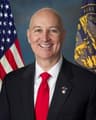 Pete Ricketts
Republican · Nebraska
 Jeanne Shaheen
Democrat · New Hampshire
 Rick Scott
Republican · Florida