
A Republican bill with 2 Republican cosponsors · See all 2 cosponsors
Last activity — Read twice and referred to the Committee on the Judiciary.
In committee
Introduced and handed to a committee in the chamber it started in.
The committee holds it, and most bills are never heard from again. A hearing or a committee vote would be news; silence is the usual outcome, and it kills the bill without anyone voting against it.
Its path through Congress
- Introduced
- In Committee
What this bill would do
This bill, known as the "Visa Cap Enforcement Act," aims to discontinue certain exceptions to the H-1B nonimmigrant visa numerical limit. It would require certain aliens to be recounted against the numerical limitation once they surpass three years in H-1B status. The legislation also strikes the existing paragraph regarding employment by colleges and research institutions. Additionally, it modifies the rules regarding changes of status and changes of employer for H-1B nonimmigrants.
Yes
No question was scored yes.
The opposite· 3 of 5
- Scored -5
Would immigrants be better off under this?
The bill creates stricter counting requirements for the H-1B cap and removes exceptions for those in academia or research.
- Scored -4
Would Asian Americans be better off under this?
Because H-1B visas are disproportionately used by Asian immigrants, the increased cap enforcement and removal of exceptions will likely have a negative impact on this demographic.
- Scored -4
Does this make it easier to use public money at a school other than the local one?
The bill strikes the exception for employment by colleges and research institutions, which may negatively impact higher education staffing.
Who it would affect, and how
Potential Positive Impacts for People
- Numerical Limitation Accountability: Under Section 2, paragraph (a), an alien who surpasses 3 years in H-1B status would be recounted against the numerical limitation. This ensures that those staying longer are accounted for within the cap.
Potential Negative Impacts for People
-
Impact on Research and Higher Education: Section 2, paragraph (b) strikes paragraph (5) of Section 214(g) of the Immigration and Nationality Act, which relates to employment by colleges and research institutions.
-
Changes to Status Transitions: Section 2, paragraph (c) amends Section 214(l)(2)(A) of the Immigration and Nationality Act by striking the second sentence, which impacts how changes of status to H-1B nonimmigrants are handled.
-
Burden on Changing Employers: Section 2, paragraph (d) amends Section 214(n)(1) of the Immigration and Nationality Act to state that if a new position is approved, it shall be counted against the numerical limitation.
Groups and Interests Ranking
Every group the model scored this bill for, from -10 to +10. Tap or hover a score for the reason it gave.
- Demographic And Interest Groups
- Would immigrants be better off under this? — The bill creates stricter counting requirements for the H-1B cap and removes exceptions for those in academia or research. Would Asian Americans be better off under this? — Because H-1B visas are disproportionately used by Asian immigrants, the increased cap enforcement and removal of exceptions will likely have a negative impact on this demographic. Would high-income households be better off under this? — The bill may restrict the ability of high-earning foreign professionals to transition between roles or stay long-term.
- Education And Technology
- Does this make it easier to use public money at a school other than the local one? — The bill strikes the exception for employment by colleges and research institutions, which may negatively impact higher education staffing.
- Social Issues And Justice
- Does this make it easier for immigrants already here to become citizens? — By increasing the frequency with which H-1B workers are counted against the cap, the bill creates more barriers for long-term foreign workers.
- 8/6/2026
- 1 Cosponsor added.
- 7/16/2026
- 1 Cosponsor added.
- 9/30/2025
- Read twice and referred to the Committee on the Judiciary.
- Introduced in Senate
 Bernie Moreno
Republican · Ohio
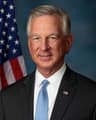 Tommy Tuberville
Republican · Alabama