
A Republican bill with 2 Republican cosponsors · See all 2 cosponsors
Last activity — Read twice and referred to the Committee on the Judiciary.
In committee
Introduced and handed to a committee in the chamber it started in.
The committee holds it, and most bills are never heard from again. A hearing or a committee vote would be news; silence is the usual outcome, and it kills the bill without anyone voting against it.
Its path through Congress
- Introduced
- In Committee
What this bill would do
This bill is known as the American Tech Workforce Act of 2025. It makes changes to the H-1B nonimmigrant visa program and completely terminates the Optional Practical Training Program. The text states that the H-1B program has been used to replace U.S. workers with inexpensive foreign labor. It sets new minimum wage rules for H-1B workers and limits visas when work is done at a third-party worksite. It also prioritizes H-1B petitions that offer higher pay over those that offer lower pay.
Yes· 3 of 4
- Scored +6
Does this put more rules on large technology companies?
The legislation places strict operational and wage constraints on major technology companies utilizing the H-1B and OPT programs.
- Scored +5
Would middle-income households be better off under this?
Domestic middle-class technology workers benefit from reduced wage suppression and less competition from lower-cost foreign labor.
- Scored +5
Is this likely to create jobs?
The bill aims to incentivize the hiring of U.S. workers by removing competitive wage disadvantages and ending foreign student work programs.
The opposite· 3 of 6
- Scored -7
Would immigrants be better off under this?
The legislation severely restricts foreign student post-graduation work opportunities and imposes stringent conditions on H-1B visas.
- Scored -6
Would students be better off under this?
International students face the immediate termination of the Optional Practical Training program upon graduation.
- Scored -5
Would billionaires be better off under this?
Major technology company executives face stricter regulations and higher labor costs due to H-1B and OPT reforms.
Who it would affect, and how
Potential Positive Impacts for People
-
Higher Wages for H-1B Workers: Under Section 4, employers must offer H-1B workers an annual wage that is at least $150,000 (adjusted over time for inflation) or match what a U.S. citizen or lawful permanent resident was paid for identical work in the previous two years. This ensures that foreign workers are not brought in at wages substantially below local median wages.
-
Prioritizing Higher Pay: Section 4 adds a rule that prioritizes approving H-1B petitions that offer higher compensation rates over those offering lower compensation rates. This targets the issue identified in the findings where a majority of H-1B visas were assigned wage levels far below local median wages.
-
Protection Against Cheap Labor Disincentives: By setting strict wage floors and terminating the Optional Practical Training Program—which the text notes waives employer payroll tax withholding obligations—the bill removes financial incentives for employers to bypass hiring United States workers, as outlined in Section 2 and Section 3.
Potential Negative Impacts for People
-
Termination of Student Work Programs: Under Section 3, the Optional Practical Training Program is terminated, and student visa holders can no longer receive employment authorization through the program after completing their studies. Furthermore, any pending applications will be denied and fees refunded, removing a work pathway for foreign students who graduated in science, technology, engineering, or math fields.
-
Loss of Employer Tax Breaks: Under Section 3, the termination of the Optional Practical Training Program ends the waiver of employer payroll tax withholding obligations for student visa holders who completed their studies. This removes a specific financial benefit that employers previously relied upon when hiring these individuals.
-
Shortened Visa Validity for Third-Party Work: Section 4 mandates that an H-1B visa is valid for a period not to exceed one year if any part of the assigned work is performed at a third-party worksite. This creates a stricter and more frequent renewal burden for workers and employers operating at third-party locations compared to standard arrangements.
Groups and Interests Ranking
Every group the model scored this bill for, from -10 to +10. Tap or hover a score for the reason it gave.
- Demographic And Interest Groups
- Would middle-income households be better off under this? — Domestic middle-class technology workers benefit from reduced wage suppression and less competition from lower-cost foreign labor. Would immigrants be better off under this? — The legislation severely restricts foreign student post-graduation work opportunities and imposes stringent conditions on H-1B visas. Would students be better off under this? — International students face the immediate termination of the Optional Practical Training program upon graduation. Would billionaires be better off under this? — Major technology company executives face stricter regulations and higher labor costs due to H-1B and OPT reforms. Would business owners be better off under this? — Business owners and employers face higher wage floors and the loss of payroll tax exemptions for certain student workers. Would people in their twenties and thirties be better off under this? — Young international graduates lose access to the Optional Practical Training program under the legislation.
- Education And Technology
- Does this put more rules on large technology companies? — The legislation places strict operational and wage constraints on major technology companies utilizing the H-1B and OPT programs.
- Economy And Finance
- Is this likely to create jobs? — The bill aims to incentivize the hiring of U.S. workers by removing competitive wage disadvantages and ending foreign student work programs.
- Social Issues And Justice
- Does this make it easier for immigrants already here to become citizens? — The bill restricts employment pathways for foreign graduates and tightens restrictions on H-1B nonimmigrant visas.
- Governance And Ideology
- Does this give the federal government more power? — The bill exercises federal authority to regulate immigration programs and establish uniform wage mandates.
- 8/7/2026
- 1 Cosponsor added.
- 7/16/2026
- 1 Cosponsor added.
- 9/16/2025
- Read twice and referred to the Committee on the Judiciary.
- Introduced in Senate
 Bernie Moreno
Republican · Ohio
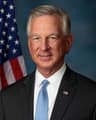 Tommy Tuberville
Republican · Alabama