
A Democratic bill with 7 Republican cosponsors · See all 13 cosponsors
Last activity — Read twice and referred to the Committee on the Judiciary. (text: CR S6539)
In committee
Introduced and handed to a committee in the chamber it started in.
The committee holds it, and most bills are never heard from again. A hearing or a committee vote would be news; silence is the usual outcome, and it kills the bill without anyone voting against it.
Its path through Congress
- Introduced
- In Committee
What this bill would do
The Healthcare Workforce Resilience Act aims to increase the number of nurses and physicians in the United States. It does this by recapturing unused employment-based immigrant visas from fiscal years 1992 through 2024. The bill limits these recaptured visas to 40,000 immigrants, with 25,000 for professional nurses and 15,000 for physicians. These visas are exempt from per-country numerical limits. The bill also requires expedited processing and prohibits premium fees for these applications.
Yes· 3 of 21
- Scored +8
Would immigrants be better off under this?
Creates an expedited pathway to visas for 40,000 healthcare professionals and their families.
- Scored +7
Does this make health care easier to get in general?
Increases the number of available nurses and physicians, directly improving service capacity.
- Scored +6
Does this make it easier for immigrants already here to become citizens?
Provides 40,000 immigrant visas for healthcare professionals, creating a legal path to residency.
The opposite
No question was scored the opposite.
Who it would affect, and how
Potential Positive Impacts for People
-
Increased Healthcare Staffing: The bill reserves 25,000 visas for professional nurses and 15,000 for physicians, which enhances the Nation's nurse and physician workforce (Sec. 2(2)(B)).
-
Fairer Access Regardless of Origin: Visas under this act are not subject to per-country numerical limitations, meaning the beneficiary's home country will not limit their ability to receive a visa (Sec. 2(2)(C)(i)).
-
Support for Families: Family members accompanying or following the principal beneficiary are entitled to an unreserved visa and do not count against the limits reserved for nurses and physicians (Sec. 2(3)(C)).
-
Faster and Cheaper Processing: The bill requires premium and expedited processing for these petitions, and explicitly states that U.S. Citizenship and Immigration Services may not charge a premium fee for these services (Sec. 2(4)(A)).
-
Protection of US Workers: For professional nurses, the petitioner must attest that hiring the immigrant has not and will not displace a United States worker (Sec. 2(5)).
Potential Negative Impacts for People
-
Strict Time Limits: Benefits are only available to those whose immigrant worker petitions are filed no later than 3 years after the act is enacted (Sec. 2(2)(A)).
-
Limited Availability: The total number of available visas is capped at 40,000, meaning many other healthcare professionals may not benefit from this act (Sec. 2(2)(A)).
-
Eligibility Restrictions: Visas are only available to individuals if they are not already immediately available to them through existing worldwide and per country allocations (Sec. 2(2)(D)).
Groups and Interests Ranking
Every group the model scored this bill for, from -10 to +10. Tap or hover a score for the reason it gave.
- Demographic And Interest Groups
- Would immigrants be better off under this? — Creates an expedited pathway to visas for 40,000 healthcare professionals and their families. Would retired people be better off under this? — Increased medical workforce improves accessibility to care for the elderly. Would people over 65 be better off under this? — Seniors rely heavily on physicians and nurses, benefiting from increased provider availability. Would households on low incomes be better off under this? — Increased healthcare provider capacity often helps underserved and low-income communities. Would people in rural areas be better off under this? — Critical for alleviating physician and nurse shortages in rural areas. Would people with disabilities be better off under this? — Increased availability of medical professionals improves care for those with chronic disabilities. Would Black Americans be better off under this? — Increased provider capacity can help reduce disparities in care access. Would Asian Americans be better off under this? — Increased provider capacity can help reduce disparities in care access. Would business owners be better off under this? — Healthcare facilities (businesses) benefit from an expanded talent pool of skilled workers. Would children be better off under this? — Better healthcare staffing generally leads to improved pediatric care. Would Hispanic Americans be better off under this? — Increased provider capacity can help reduce disparities in care access. Would middle-income households be better off under this? — General improvement in healthcare access benefits the middle class. Would Native Americans be better off under this? — Increased provider capacity can help reduce disparities in care access. Would people in cities be better off under this? — Increases staffing in urban hospitals and clinics. Would white Americans be better off under this? — General improvement in healthcare access benefits the population.
- Healthcare
- Does this make health care easier to get in general? — Increases the number of available nurses and physicians, directly improving service capacity. Does this make the country readier for the next outbreak? — A larger healthcare workforce increases the capacity to respond to public health emergencies.
- Social Issues And Justice
- Does this make it easier for immigrants already here to become citizens? — Provides 40,000 immigrant visas for healthcare professionals, creating a legal path to residency.
- Economy And Finance
- Is this likely to create jobs? — Increases the available workforce of physicians and nurses, supporting healthcare sector growth. Is this likely to grow the economy? — Addressing healthcare staffing shortages can lead to better economic productivity.
- Environment Energy And Infrastructure
- Does this invest in rural communities? — Increasing the overall number of physicians may help alleviate staffing gaps in rural areas.
- 12/1/2025
- 2 Cosponsors added.
- 10/3/2025
- 2 Cosponsors added.
- 9/10/2025
- Read twice and referred to the Committee on the Judiciary. (text: CR S6539)
- 9 Cosponsors added.
- Introduced in Senate
One bill Congress.gov lists as related to this one — companions in the other chamber, earlier versions, and bills this one absorbed or was folded into.
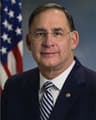 John Boozman
Republican · Arkansas
 Cory Booker
Democrat · New Jersey
 Susan Collins
Republican · Maine
 Christopher Coons
Democrat · Delaware
 Kevin Cramer
Republican · North Dakota
 Tammy Duckworth
Democrat · Illinois
 Mark Kelly
Democrat · Arizona
 Roger Marshall
Republican · Kansas
 Alex Padilla
Democrat · California
 Mike Rounds
Republican · South Dakota
 Thomas Tillis
Republican · North Carolina
 Peter Welch
Democrat · Vermont
 Todd Young
Republican · Indiana