
A Republican bill with 2 Democratic cosponsors · See all 4 cosponsors
Last activity — Read twice and referred to the Committee on Finance.
In committee
Introduced and handed to a committee in the chamber it started in.
The committee holds it, and most bills are never heard from again. A hearing or a committee vote would be news; silence is the usual outcome, and it kills the bill without anyone voting against it.
Its path through Congress
- Introduced
- In Committee
What this bill would do
This bill, known as the "Preserving Emergency Access in Key Sites Act" or the "PEAKS Act," seeks to amend title XVIII of the Social Security Act. It focuses on ensuring continued designation for certain hospitals as critical access hospitals. Specifically, it addresses hospitals that met distance requirements due to mountainous terrain or secondary roads. The bill also aims to modify the distance requirements for ambulance services provided by these critical access hospitals.
Yes· 3 of 11
- Scored +7
Would people in rural areas be better off under this?
The bill directly supports the healthcare infrastructure and emergency service access for rural populations.
- Scored +7
Does this make health care easier to get in general?
The bill preserves critical access hospital designations and modifies ambulance service distances to ensure continued care access for remote populations.
- Scored +5
Would people over 65 be better off under this?
The bill protects hospital access for seniors who rely on Medicare and critical access hospitals.
The opposite
No question was scored the opposite.
Who it would affect, and how
Potential Positive Impacts for People
-
Continued Hospital Designation: Hospitals that currently meet the 15-mile distance requirement for mountainous terrain or secondary roads will be deemed to meet that requirement on or after January 1, 2026, provided they meet specific criteria regarding new facilities located nearby (Section 2).
-
Ambulance Service Adjustments: For services furnished on or after January 1, 2026, the distance requirement for ambulance services in mountainous terrain or areas with only secondary roads will be modified to a 15-mile drive (Section 3).
Potential Negative Impacts for People
- No negative impacts or burdens are explicitly stated in the provided text.
Groups and Interests Ranking
Every group the model scored this bill for, from -10 to +10. Tap or hover a score for the reason it gave.
- Demographic And Interest Groups
- Would people in rural areas be better off under this? — The bill directly supports the healthcare infrastructure and emergency service access for rural populations. Would retired people be better off under this? — Securing hospital access is vital for retirees living in remote or mountainous areas. Would people over 65 be better off under this? — The bill protects hospital access for seniors who rely on Medicare and critical access hospitals. Would farmers be better off under this? — Farmers in rural areas benefit from maintained local healthcare and ambulance service accessibility. Would households on low incomes be better off under this? — Securing local hospital access provides essential services to low-income populations in remote areas. Would Native Americans be better off under this? — Ensuring hospital access can be particularly beneficial for Native American communities in remote or mountainous areas. Would people with disabilities be better off under this? — Improved ambulance service distance requirements aid people with disabilities living in remote areas. Would veterans be better off under this, taking everything together? — Improved hospital and ambulance access benefits veterans residing in rural and mountainous regions.
- Healthcare
- Does this make health care easier to get in general? — The bill preserves critical access hospital designations and modifies ambulance service distances to ensure continued care access for remote populations. Does this put more money into Medicare, the health coverage for people over 65? — The bill supports critical access hospitals that are key providers for Medicare populations.
- Environment Energy And Infrastructure
- Does this invest in rural communities? — The bill helps sustain medical infrastructure and services in rural, mountainous, or remote areas.
- 6/5/2025
- Read twice and referred to the Committee on Finance.
- 4 Cosponsors added.
- Introduced in Senate
One bill Congress.gov lists as related to this one — companions in the other chamber, earlier versions, and bills this one absorbed or was folded into.
 John Barrasso
Republican · Wyoming
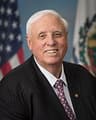 James Justice
Republican · West Virginia
 Alex Padilla
Democrat · California
 Adam Schiff
Democrat · California