
A Republican bill with 3 Democratic cosponsors · See all 4 cosponsors
Last activity — Committee on Commerce, Science, and Transportation. Ordered to be reported with an amendment in the nature of a substitute favorably.
In committee
Introduced and handed to a committee in the chamber it started in.
The committee holds it, and most bills are never heard from again. A hearing or a committee vote would be news; silence is the usual outcome, and it kills the bill without anyone voting against it.
Its path through Congress
- Introduced
- In Committee
What this bill would do
The "Stop the Scroll Act" requires the Federal Trade Commission, with concurrence from the Secretary of Health and Human Services, to implement mental health warning labels on covered platforms. These covered platforms include social media platforms and anonymous content sharing platforms. The bill mandates that providers display these labels conspicuously to users accessing the platforms while in the United States. Labels must warn of potential negative mental health impacts and provide access to Federal resources like the 988 Suicide and Crisis Lifeline. The Act also establishes enforcement mechanisms through the Commission and State attorneys general.
Yes· 3 of 10
- Scored +6
Does this put more rules on large technology companies?
The bill increases regulation of social media and content-sharing platforms through mandatory warning labels.
- Scored +5
Would children be better off under this?
The bill protects children from the mental health risks associated with social media.
- Scored +5
Does this give people more protection from unfair business practices?
The bill enhances consumer protection by mandating mental health risk disclosures on social media platforms.
The opposite
- Scored -3
Would business owners be better off under this?
Platform providers face new regulatory burdens and potential litigation risks.
- Scored -3
Would billionaires be better off under this?
Owners of large tech platforms face increased regulatory scrutiny and compliance costs.
- Scored -2
Does this protect what people are allowed to say in public life?
The bill imposes mandatory content disclosures that could be viewed as a mild infringement on platform autonomy.
Who it would affect, and how
Potential Positive Impacts for People
- Increased Awareness of Health Risks: The bill aims to increase user awareness regarding the mental health risks associated with social media use, such as bullying, harassment, and addictive algorithms (Section 2).
- Informed Decision Making: By providing clear, factual risk disclosures, the bill seeks to ensure users can make informed decisions about how much time they spend on covered platforms (Section 2).
- Access to Support Resources: The required warning labels must provide users with access to Federal resources to address potential negative mental health impacts, specifically mentioning the 988 Suicide and Crisis Lifeline (Section 4(b)).
- Regular Safety Updates: The Commission is required to review and revise regulations at least every five years to address changes in technology, market conditions, and medical science (Section 4(e)).
Potential Negative Impacts for People
- Repeated Interruptions for Users: For users who acknowledge the potential harm and choose to proceed, the law requires the warning label to be redisplayed after every hour of continuous use (Section 4(a)(3)).
- Mandatory Interaction with Labels: A covered platform provider cannot allow a user to disable a mental health warning label, except through the specific methods of exiting the platform or acknowledging the risk (Section 4(a)(2) and 4(c)(3)).
Groups and Interests Ranking
Every group the model scored this bill for, from -10 to +10. Tap or hover a score for the reason it gave.
- Demographic And Interest Groups
- Would children be better off under this? — The bill protects children from the mental health risks associated with social media. Would students be better off under this? — Students benefit from increased awareness of mental health risks in digital environments. Would people in their twenties and thirties be better off under this? — The bill addresses mental health risks that disproportionately affect younger social media users. Would people in middle age be better off under this? — The bill provides health awareness for all users of covered platforms. Would people over 65 be better off under this? — The bill provides health awareness for all users of covered platforms. Would billionaires be better off under this? — Owners of large tech platforms face increased regulatory scrutiny and compliance costs. Would business owners be better off under this? — Platform providers face new regulatory burdens and potential litigation risks.
- Education And Technology
- Does this put more rules on large technology companies? — The bill increases regulation of social media and content-sharing platforms through mandatory warning labels.
- Governance And Ideology
- Does this give the federal government more power? — The bill expands the authority of the FTC and the Secretary of HHS over digital platforms. Does this leave more decisions to the states? — The bill empowers State attorneys general to bring civil actions against covered platforms.
- Economy And Finance
- Does this give people more protection from unfair business practices? — The bill enhances consumer protection by mandating mental health risk disclosures on social media platforms.
- Healthcare
- Does this make mental health care easier to get? — The bill improves access to mental health resources by requiring platforms to provide the 988 Suicide and Crisis Lifeline.
- Social Issues And Justice
- Does this protect what people are allowed to say in public life? — The bill imposes mandatory content disclosures that could be viewed as a mild infringement on platform autonomy.
- 4/14/2026
- Committee on Commerce, Science, and Transportation. Ordered to be reported with an amendment in the nature of a substitute favorably.
- 3/2/2026
- 1 Cosponsor added.
- 6/2/2025
- 2 Cosponsors added.
- 5/22/2025
- Read twice and referred to the Committee on Commerce, Science, and Transportation.
- 1 Cosponsor added.
- Introduced in Senate
 John Fetterman
Democrat · Pennsylvania
 Maggie Hassan
Democrat · New Hampshire
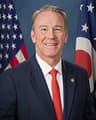 Jon Husted
Republican · Ohio
 Elissa Slotkin
Democrat · Michigan