
Lisa Blunt Rochester (D-DE)
National Nursing Workforce Center Act of 2025
A Democratic bill with 2 Republican cosponsors · See all 4 cosponsors
Last activity — Committee on Health, Education, Labor, and Pensions. Hearings held.
In committee
Introduced and handed to a committee in the chamber it started in.
The committee holds it, and most bills are never heard from again. A hearing or a committee vote would be news; silence is the usual outcome, and it kills the bill without anyone voting against it.
Its path through Congress
- Introduced
- In Committee
What this bill would do
The National Nursing Workforce Center Act of 2025 aims to amend the Public Health Service Act to stabilize and grow the nursing workforce. It establishes a 2-year pilot program to create or improve State-based nursing workforce centers. These centers will conduct research on nursing education, recruitment, and retention challenges. The bill also authorizes the Secretary to use up to $1,500,000 for fiscal years 2026 and 2027 to carry out these activities. Additionally, the act expands covered programs to include more analysis and technical assistance regarding the nursing workforce.
Yes· 3 of 15
- Scored +6
Does this make the country readier for the next outbreak?
The bill specifically includes funding to prepare the nursing workforce for public health crises and pandemics.
- Scored +5
Does this make health care easier to get in general?
By stabilizing the nursing workforce, the bill helps ensure more consistent access to healthcare services.
- Scored +4
Does this put more money into medical research?
The act provides funding for research into nursing education, recruitment, and retention challenges.
The opposite
No question was scored the opposite.
Who it would affect, and how
Potential Positive Impacts for People
-
Support for Nursing Students and Professionals: The bill allows for funds to be used for programs that assist individuals in obtaining necessary education and training, providing career counseling and mentoring to help them enter or advance in the profession (Section 2, subsection f, 3, F).
-
Improved Workforce Stability: Centers may implement programs to recruit and retain nurses in all practice settings, as well as support faculty to increase enrollment in nursing schools (Section 2, subsection f, 3, A and B).
-
Addressing Health Inequities: Funds can be used to prepare the nursing workforce to address social determinants of health and health inequities (Section 2, subsection f, 3, D).
-
Disaster Preparedness: The act provides for programs that prepare the nursing workforce to respond to public health crises and pandemics (Section 2, subsection f, 3, E).
-
Equitable Access to Resources: The Secretary is instructed to ensure that grant awards are distributed equitably among the different geographical regions of the United States (Section 2, subsection d).
Potential Negative Impacts for People
- Financial Requirements for Applicants: To receive a grant, an entity must agree to provide non-Federal contributions (either cash or in kind) of at least $1 for every $4 of Federal funds provided (Section 2, subsection b, 2).
Groups and Interests Ranking
Every group the model scored this bill for, from -10 to +10. Tap or hover a score for the reason it gave.
- Healthcare
- Does this make the country readier for the next outbreak? — The bill specifically includes funding to prepare the nursing workforce for public health crises and pandemics. Does this make health care easier to get in general? — By stabilizing the nursing workforce, the bill helps ensure more consistent access to healthcare services. Does this put more money into medical research? — The act provides funding for research into nursing education, recruitment, and retention challenges.
- Demographic And Interest Groups
- Would people in rural areas be better off under this? — The bill focuses on reducing nursing shortages in rural areas. Would students be better off under this? — The bill includes support for nursing education, training, and potential financial aid. Would households on low incomes be better off under this? — Improved healthcare access can benefit low-income populations through better workforce distribution. Would retired people be better off under this? — Improved healthcare stability benefits retirees. Would people over 65 be better off under this? — A stable nursing workforce benefits the healthcare needs of the elderly population.
- Education And Technology
- Does this put more money into scientific research? — The bill funds research related to the nursing workforce and education. Does this make college cost less? — The bill addresses nursing education through research into scholarships and financial aid.
- Economy And Finance
- Is this likely to create jobs? — The bill aims to stabilize the nursing workforce, which supports job security and growth in the healthcare sector. Is this likely to grow the economy? — A stable healthcare workforce contributes to overall economic stability.
- Environment Energy And Infrastructure
- Does this invest in rural communities? — The bill explicitly aims to reduce nursing shortages in rural and underserved areas.
- Governance And Ideology
- Does this make what the government does easier for the public to see? — The bill requires annual reports to Congress regarding the grant awards. Does this give the federal government more power? — The bill expands the Secretary's authority under the Public Health Service Act.
- 4/21/2026
- 1 Cosponsor added.
- 3/19/2026
- Committee on Health, Education, Labor, and Pensions. Hearings held.
- 4/10/2025
- Read twice and referred to the Committee on Health, Education, Labor, and Pensions.
- 3 Cosponsors added.
- Introduced in Senate
One bill Congress.gov lists as related to this one — companions in the other chamber, earlier versions, and bills this one absorbed or was folded into.
 Christopher Coons
Democrat · Delaware
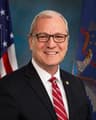 Kevin Cramer
Republican · North Dakota
 Jeff Merkley
Democrat · Oregon
 Thomas Tillis
Republican · North Carolina