
A Democratic bill with 5 Republican cosponsors · See all 16 cosponsors
Last activity — Placed on Senate Legislative Calendar under General Orders. Calendar No. 82.
Cleared committee, waiting for its first floor vote
A committee approved it and it is on the calendar of the chamber it started in.
This is further than most bills get, and still no promise of a vote: the calendar is a queue, and the majority leadership decides what is called. A bill can sit here until the Congress ends.
Its path through Congress
- Introduced
- On Calendar
What this bill would do
The Strong Communities Act of 2025 seeks to amend the Omnibus Crime Control and Safe Streets Act of 1968. It establishes the COPS Strong Communities Program to provide competitive grants to local law enforcement agencies. These funds can be used to pay for officers and recruits to attend law enforcement training programs at eligible entities. To receive these benefits, recipients must agree to serve full-time in their communities for at least four years. The bill includes specific geographic requirements based on where the individuals have resided.
Yes· 3 of 10
- Scored +2
Would people in their twenties and thirties be better off under this?
The bill offers educational and career opportunities for law enforcement recruits.
- Scored +2
Would students be better off under this?
The bill provides funding for students attending law enforcement academies.
- Scored +2
Is this likely to create jobs?
The bill facilitates law enforcement training which can support job placement in local agencies.
The opposite
No question was scored the opposite.
Who it would affect, and how
Potential Positive Impacts for People
-
Funding for Training: Local law enforcement agencies can receive competitive grants to fund training programs for their officers and recruits (Section 2, paragraph 2).
-
Community Stability: The bill encourages recruits to serve in their own communities, specifically within 7 miles or 20 miles of their long-term residence depending on local population (Section 2, paragraph 3, subparagraph B).
-
Accountability through Reporting: The Attorney General is required to submit annual reports to Congress regarding the number of grant recipients and the status of the officers and recruits involved (Section 3).
Potential Negative Impacts for People
-
Financial Repayment Burden: If an officer or recruit fails to complete the required four years of service, they must pay back the full amount of the benefits received (Section 2, paragraph 4, subparagraph A).
-
Strict Service Requirements: To keep the benefits, individuals must commit to at least four years of full-time service within specific geographic distances of their home (Section 2, paragraph 3, subparagraphs A and B).
Groups and Interests Ranking
Every group the model scored this bill for, from -10 to +10. Tap or hover a score for the reason it gave.
- Demographic And Interest Groups
- Would students be better off under this? — The bill provides funding for students attending law enforcement academies. Would people in their twenties and thirties be better off under this? — The bill offers educational and career opportunities for law enforcement recruits. Would Native Americans be better off under this? — The bill explicitly includes Indian Tribes as eligible local law enforcement agencies. Would people in rural areas be better off under this? — The bill provides specific geographic allowances for those in less populous counties.
- Economy And Finance
- Is this likely to create jobs? — The bill facilitates law enforcement training which can support job placement in local agencies.
- Education And Technology
- Does this make college cost less? — The bill provides funding for law enforcement training through higher education institutions.
- Governance And Ideology
- Does this make what the government does easier for the public to see? — The bill mandates annual reporting to Congress to ensure transparency of program results. Does this give the federal government more power? — The bill expands federal grant authority for local law enforcement training.
- Environment Energy And Infrastructure
- Does this invest in rural communities? — The bill includes provisions for service in counties with fewer than 150,000 residents.
- Social Issues And Justice
- Does this change how police departments operate? — The bill focuses on community-based law enforcement presence and training.
- 10/22/2025
- 1 Cosponsor added.
- 7/21/2025
- 1 Cosponsor added.
- 6/9/2025
- 1 Cosponsor added.
- 6/2/2025
- 1 Cosponsor added.
- 5/20/2025
- Committee on the Judiciary. Reported by Senator Grassley with an amendment. Without written report.
- Placed on Senate Legislative Calendar under General Orders. Calendar No. 82.
- 5/15/2025
- Committee on the Judiciary. Ordered to be reported with an amendment favorably.
- 5/14/2025
- 1 Cosponsor added.
- 5/6/2025
- 1 Cosponsor added.
- 4/28/2025
- 1 Cosponsor added.
- 4/10/2025
- 1 Cosponsor added.
- 4/7/2025
- Read twice and referred to the Committee on the Judiciary.
- 8 Cosponsors added.
- Introduced in Senate
One bill Congress.gov lists as related to this one — companions in the other chamber, earlier versions, and bills this one absorbed or was folded into.
 Angela Alsobrooks
Democrat · Maryland
 Marsha Blackburn
Republican · Tennessee
 John Cornyn
Republican · Texas
 Christopher Coons
Democrat · Delaware
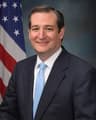 Ted Cruz
Republican · Texas
 Catherine Cortez Masto
Democrat · Nevada
 Richard Durbin
Democrat · Illinois
 Mazie Hirono
Democrat · Hawaii
 Maggie Hassan
Democrat · New Hampshire
 Amy Klobuchar
Democrat · Minnesota
 Jeff Merkley
Democrat · Oregon
 Ashley Moody
Republican · Florida
 Jon Ossoff
Democrat · Georgia
 Alex Padilla
Democrat · California
 Thomas Tillis
Republican · North Carolina
 Peter Welch
Democrat · Vermont