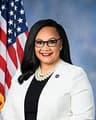
Nikema Williams (D-GA)
Expressing opposition to the use of State power against people in the United States seeking essential health care, including criminalization of the full range of sexual and reproductive health care such as abortion, gender-affirming care, and contraceptive care, and disapproving of State punishment of people for their pregnancy outcomes.
A Democratic resolution with 59 Democratic cosponsors · See all 59 cosponsors
Last activity — Referred to the Committee on Energy and Commerce, and in addition to the Committee on the Judiciary, for a period to be subsequently determined by the Speaker, in each case for consideration of such provisions as fall within the jurisdiction of the committee concerned.
In committee
Introduced and handed to a committee in the chamber it started in.
The committee holds it, and most bills are never heard from again. A hearing or a committee vote would be news; silence is the usual outcome, and it kills the bill without anyone voting against it.
Its path through Congress
- Introduced
- In Committee
A House resolution is the House speaking for itself: stating a position, honouring someone, or setting its own rules. Adopting it is the whole process. Once the House agrees to it, it is officially the House's word; it is not a law, so the Senate and the President have no part in it.
What this bill would do
This resolution expresses opposition to the use of State power to criminalize sexual and reproductive health care, including abortion, gender-affirming care, and contraception. It condemns the punishment of individuals for pregnancy outcomes, such as miscarriages or stillbirths, and the penalization of health care providers who offer these services. The text highlights how marginalized groups are disproportionately impacted by the criminal justice system regarding these issues. It aligns with major medical and human rights organizations in recommending the decriminalization of these health care services. Ultimately, the House of Representatives resolves to condemn such criminalization and affirms the commitment to work toward a future where patients can access this care without restrictions or fear of punishment.
Yes· 3 of 10
- Scored +8
Does this make health care easier to get in general?
The resolution expresses support for universal access to reproductive and gender-affirming health care free from state restrictions and bans.
- Scored +7
Would women be better off under this?
Women benefit from the resolution's strong stance against criminalizing pregnancy outcomes and restricting reproductive health care access.
- Scored +7
Would LGBTQ people be better off under this?
The resolution explicitly opposes the criminalization and restriction of gender-affirming care, benefiting the LGBTQ+ community.
The opposite
No question was scored the opposite.
Who it would affect, and how
Potential Positive Impacts for People
-
Protection from State Punishment for Pregnancy Outcomes: The resolution condemns the application of criminal laws to punish people for the outcomes of their pregnancies, which protects individuals from facing criminal or civil charges for events like miscarriages or stillbirths. This is supported by the resolved clause (1).
-
Support for Universal Access to Health Care: The text declares a goal for a future where patients can access sexual and reproductive health care—including abortion, contraception, and gender-affirming care—free from restrictions, bans, and barriers. This is detailed in resolved clause (5)(A).
-
Affirmation of Provider Ethics and Patient Privacy: The resolution affirms the ethical obligations of health care providers to safeguard patient privacy and private medical information. This can be found in resolved clause (4).
Potential Negative Impacts for People
- None Identified: The provided text does not contain any sections or provisions that outline negative consequences or burdens for individuals or groups of people in the United States.
Groups and Interests Ranking
Every group the model scored this bill for, from -10 to +10. Tap or hover a score for the reason it gave.
- Demographic And Interest Groups
- Would LGBTQ people be better off under this? — The resolution explicitly opposes the criminalization and restriction of gender-affirming care, benefiting the LGBTQ+ community. Would women be better off under this? — Women benefit from the resolution's strong stance against criminalizing pregnancy outcomes and restricting reproductive health care access. Would Black Americans be better off under this? — Black Americans experience disproportionate scrutiny and punishment regarding pregnancy outcomes, which this resolution explicitly condemns. Would households on low incomes be better off under this? — Low-income individuals, who are disproportionately impacted by criminal justice scrutiny regarding pregnancy outcomes, benefit from this protective stance. Would people in their twenties and thirties be better off under this? — Young adults and youth seeking reproductive or gender-affirming care benefit from the resolution's condemnation of criminalization.
- Social Issues And Justice
- Does this expand the rights of LGBTQ people? — The resolution opposes the criminalization of gender-affirming care, supporting the rights and access of LGBTQ individuals. Does this shorten or soften prison sentences? — The resolution condemns the use of criminal laws and punishment against individuals for pregnancy outcomes and healthcare provision. Does this narrow racial gaps in how people are treated? — The text highlights and condemns how marginalized racial and ethnic groups are disproportionately targeted by criminal laws related to healthcare and pregnancy outcomes.
- Healthcare
- Does this make health care easier to get in general? — The resolution expresses support for universal access to reproductive and gender-affirming health care free from state restrictions and bans.
- Governance And Ideology
- Does this protect people from being watched or searched? — The resolution affirms the ethical obligations of health care providers to safeguard private medical information and patient privacy.
- 11/12/2026
- Submitted in House
- Referred to the Committee on Energy and Commerce, and in addition to the Committee on the Judiciary, for a period to be subsequently determined by the Speaker, in each case for consideration of such provisions as fall within the jurisdiction of the committee concerned.
- 59 Cosponsors added.
 Alma Adams
Democrat · North Carolina
 Suzanne Bonamici
Democrat · Oregon
 Joyce Beatty
Democrat · Ohio
 Julia Brownley
Democrat · California
 Nanette Barragán
Democrat · California
 Becca Balint
Democrat · Vermont
 Emanuel Cleaver
Democrat · Missouri
 André Carson
Democrat · Indiana
 Judy Chu
Democrat · California
 Salud Carbajal
Democrat · California
 Troy Carter
Democrat · Louisiana
 Jasmine Crockett
Democrat · Texas
 Lloyd Doggett
Democrat · Texas
 Christopher Deluzio
Democrat · Pennsylvania
 Suzan DelBene
Democrat · Washington
 Mark DeSaulnier
Democrat · California
 Debbie Dingell
Democrat · Michigan
 Madeleine Dean
Democrat · Pennsylvania
 Dwight Evans
Democrat · Pennsylvania
 Veronica Escobar
Democrat · Texas
 Lois Frankel
Democrat · Florida
 Lizzie Fletcher
Democrat · Texas
 Maxwell Frost
Democrat · Florida
 Valerie Foushee
Democrat · North Carolina
 Josh Gottheimer
Democrat · New Jersey
 Sylvia Garcia
Democrat · Texas
 Robert Garcia
Democrat · California
 Jared Huffman
Democrat · California
 Pramila Jayapal
Democrat · Washington
 Sydney Kamlager-Dove
Democrat · California
 Teresa Leger Fernandez
Democrat · New Mexico
 Summer Lee
Democrat · Pennsylvania
 Doris Matsui
Democrat · California
 Seth Moulton
Democrat · Massachusetts
 Joseph Morelle
Democrat · New York
 Morgan McGarvey
Democrat · Kentucky
 Seth Magaziner
Democrat · Rhode Island
 Kevin Mullin
Democrat · California
 Jennifer McClellan
Democrat · Virginia
 Dave Min
Democrat · California
 Eleanor Norton
Democrat · District of Columbia
 Mark Pocan
Democrat · Wisconsin
 Scott Peters
Democrat · California
 Mike Quigley
Democrat · Illinois
 Deborah Ross
Democrat · North Carolina
 Delia Ramirez
Democrat · Illinois
 Adam Smith
Democrat · Washington
 Bradley Schneider
Democrat · Illinois
 Melanie Stansbury
Democrat · New Mexico
 Hillary Scholten
Democrat · Michigan
 Mark Takano
Democrat · California
 Rashida Tlaib
Democrat · Michigan
 Lori Trahan
Democrat · Massachusetts
 Ritchie Torres
Democrat · New York
 Jill Tokuda
Democrat · Hawaii
 Shri Thanedar
Democrat · Michigan
 Juan Vargas
Democrat · California
 Frederica Wilson
Democrat · Florida
 Bonnie Watson Coleman
Democrat · New Jersey