
Analilia Mejia (D-NJ)
Affirming the commitment of the House of Representatives to defend the Fourteenth and Fifteenth Amendments to the Constitution and to oppose efforts to intimidate voters, suppress the vote, or interfere with free and fair elections.
A Democratic resolution with 9 Democratic cosponsors · See all 9 cosponsors
Last activity — Referred to the Committee on the Judiciary, and in addition to the Committee on House Administration, for a period to be subsequently determined by the Speaker, in each case for consideration of such provisions as fall within the jurisdiction of the committee concerned.
In committee
Introduced and handed to a committee in the chamber it started in.
The committee holds it, and most bills are never heard from again. A hearing or a committee vote would be news; silence is the usual outcome, and it kills the bill without anyone voting against it.
Its path through Congress
- Introduced
- In Committee
A House resolution is the House speaking for itself: stating a position, honouring someone, or setting its own rules. Adopting it is the whole process. Once the House agrees to it, it is officially the House's word; it is not a law, so the Senate and the President have no part in it.
What this bill would do
This resolution reaffirms the commitment of the House of Representatives to defend the Fourteenth and Fifteenth Amendments of the Constitution. It condemns the deployment of armed Federal agents or immigration enforcement personnel to polling places. The text opposes the collection of confidential voter registration information into a national database by any Federal agency. It also registers opposition to the Safeguard American Voter Eligibility Act and any requirement for documentary proof of citizenship to register to vote. Additionally, the measure supports restoring Federal preclearance protections and section 2 protections of the Voting Rights Act. Finally, it calls on the Speaker of the House to promptly administer the oath of office to any duly elected Representative or Delegate.
Yes· 3 of 11
- Scored +8
Does this protect the right to vote?
The resolution supports restoring federal preclearance and Section 2 of the Voting Rights Act to prevent discriminatory voting laws.
- Scored +7
Would Black Americans be better off under this?
The resolution aims to protect against voter intimidation and discriminatory redistricting that historically and currently impacts Black communities.
- Scored +7
Would Hispanic Americans be better off under this?
The resolution opposes the deployment of immigration enforcement near polling places which can intimidate Latino communities.
The opposite
No question was scored the opposite.
Who it would affect, and how
Potential Positive Impacts for People
-
Protection Against Voter Intimidation: Under resolution clause (2), the House condemns the deployment of armed Federal agents or immigration enforcement personnel to or near polling places. This helps ensure that voters can cast their ballots free from fear and intimidation.
-
Protection of Personal Privacy: Under resolution clause (5), the House opposes the collection or compilation of a national database of confidential voter registration information by any Federal agency. This protects the personal information of individual voters from being gathered into a centralized government database.
-
Support for Voting Rights: Under resolution clause (6), the House supports restoring Federal preclearance protections and section 2 protections of the Voting Rights Act. This aims to strengthen the legal tools available to protect minority communities against discriminatory voting changes and map redrawing.
Potential Negative Impacts for People
Based on the provided text, there are no specific sections or provisions identified that impose negative consequences or burdens on individuals or groups of people in the United States.
Groups and Interests Ranking
Every group the model scored this bill for, from -10 to +10. Tap or hover a score for the reason it gave.
- Demographic And Interest Groups
- Would Black Americans be better off under this? — The resolution aims to protect against voter intimidation and discriminatory redistricting that historically and currently impacts Black communities. Would Hispanic Americans be better off under this? — The resolution opposes the deployment of immigration enforcement near polling places which can intimidate Latino communities. Would people with disabilities be better off under this? — The resolution supports mandating that polling place information and accessibility be provided in formats accessible to voters with disabilities. Would immigrants be better off under this? — The resolution opposes the use of immigration enforcement as a tool for voter intimidation and protects against inaccuracies in immigration databases. Would households on low incomes be better off under this? — The resolution opposes documentary proof of citizenship requirements that would create barriers for many low-income and working-class voters. Would people over 65 be better off under this? — The resolution seeks to mitigate the risks posed by new USPS mail-in ballot rules that could disproportionately burden senior voters. Would people in rural areas be better off under this? — The resolution seeks to prevent mail-in ballot failures that could disproportionately affect voters in rural areas.
- Social Issues And Justice
- Does this protect the right to vote? — The resolution supports restoring federal preclearance and Section 2 of the Voting Rights Act to prevent discriminatory voting laws. Does this make casting a ballot easier in practice? — The resolution calls for required public notice of polling place accessibility and opposes barriers like documentary proof of citizenship requirements. Is this likely to lift people out of poverty? — By opposing voter registration barriers that disproportionately affect poor and working-class voters, the resolution supports political inclusion for low-income groups.
- Governance And Ideology
- Does this make what the government does easier for the public to see? — The resolution opposes the creation of a national database of confidential voter registration information to protect voter privacy.
- 10/19/2026
- 1 Cosponsor added.
- 10/5/2026
- 1 Cosponsor added.
- 10/1/2026
- 1 Cosponsor added.
- 9/24/2026
- 1 Cosponsor added.
- 9/16/2026
- 1 Cosponsor added.
- 9/15/2026
- Submitted in House
- Referred to the Committee on the Judiciary, and in addition to the Committee on House Administration, for a period to be subsequently determined by the Speaker, in each case for consideration of such provisions as fall within the jurisdiction of the committee concerned.
- 4 Cosponsors added.
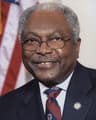 James Clyburn
Democrat · South Carolina
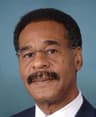 Emanuel Cleaver
Democrat · Missouri
 Pramila Jayapal
Democrat · Washington
 Emily Randall
Democrat · Washington
 Josh Riley
Democrat · New York
 Suhas Subramanyam
Democrat · Virginia
 Rashida Tlaib
Democrat · Michigan
 Lauren Underwood
Democrat · Illinois
 Bonnie Watson Coleman
Democrat · New Jersey