
Sydney Kamlager-Dove (D-CA)
Recognizing the designation of the week of April 24 through April 30 as the annual "National Reentry Week".
A Democratic resolution with 11 Democratic cosponsors · See all 11 cosponsors
Last activity — Referred to the House Committee on the Judiciary.
In committee
Introduced and handed to a committee in the chamber it started in.
The committee holds it, and most bills are never heard from again. A hearing or a committee vote would be news; silence is the usual outcome, and it kills the bill without anyone voting against it.
Its path through Congress
- Introduced
- In Committee
A House resolution is the House speaking for itself: stating a position, honouring someone, or setting its own rules. Adopting it is the whole process. Once the House agrees to it, it is officially the House's word; it is not a law, so the Senate and the President have no part in it.
What this bill would do
This resolution recognizes the annual designation of the week of April 24 through April 30 as "National Reentry Week." The text describes a mass incarceration crisis where the incarcerated population has increased by 500 percent. It outlines various challenges faced by formerly incarcerated individuals, including restrictions on housing, education, and employment. The resolution states that the Nation has a responsibility to advance reentry programs to promote opportunity and public safety. It calls on Congress to address obstacles to successful reentry by increasing access to essential resources. Finally, it encourages the Department of Justice and the Bureau of Prisons to engage in reentry events and learning opportunities.
Yes· 3 of 15
- Scored +5
Does this make mental health care easier to get?
The resolution explicitly calls for increasing access to mental health services for formerly incarcerated individuals.
- Scored +4
Would households on low incomes be better off under this?
The focus on reentry support, housing, and education aims to stabilize individuals facing economic hardship upon release.
- Scored +4
Would people with disabilities be better off under this?
The bill specifically calls for increased access to mental health services for those reentering society.
The opposite
No question was scored the opposite.
Who it would affect, and how
Potential Positive Impacts for People
-
Increased access to essential resources: The resolution suggests that addressing obstacles to reentry can provide formerly incarcerated individuals with access to halfway homes, housing resources, education programs, higher education grants, occupational training, and mental health services (Section 2, C).
-
Promotion of public safety: Advancing reentry programs is intended to bolster public safety by supporting the reentry of former convicts to productive, law-abiding lives (Section 2, B and Section 1).
-
Improved community outcomes: Investing in evidence-based policy solutions and community-driven policy is intended to create safer communities across the Nation (Section 2, F, ii and vi).
-
Support for individual stability: The resolution aims to grant formerly incarcerated individuals the opportunity to reenter communities with financial and mental stability (Section 2, B).
Potential Negative Impacts for People
- No specific negative impacts are listed: The provided text focuses on the crisis of mass incarceration and the proposed ways to improve reentry outcomes; it does not identify specific negative consequences or burdens resulting from the passage of this resolution.
Groups and Interests Ranking
Every group the model scored this bill for, from -10 to +10. Tap or hover a score for the reason it gave.
- Demographic And Interest Groups
- Would households on low incomes be better off under this? — The focus on reentry support, housing, and education aims to stabilize individuals facing economic hardship upon release. Would people with disabilities be better off under this? — The bill specifically calls for increased access to mental health services for those reentering society. Would Black Americans be better off under this? — The bill addresses the overrepresentation of minority demographics in the carceral system. Would Hispanic Americans be better off under this? — The bill addresses the overrepresentation of minority demographics in the carceral system. Would people in cities be better off under this? — The resolution aims to create safer communities through improved reentry outcomes.
- Social Issues And Justice
- Does this make housing cost less? — The bill calls for increasing access to halfway homes and housing resources for those reentering society. Does this narrow racial gaps in how people are treated? — The bill notes the significant overrepresentation of minority demographics among incarcerated populations and calls for addressing structural marginalization. Is this likely to lift people out of poverty? — By improving access to education, training, and housing, the resolution aims to provide financial stability to formerly incarcerated individuals. Does this shorten or soften prison sentences? — The resolution calls for a more fair and efficient criminal justice system to reduce the impacts of mass incarceration.
- Economy And Finance
- Is this likely to create jobs? — The resolution calls for increased access to occupational training and workforce development to assist formerly incarcerated individuals. Is this likely to grow the economy? — The text suggests that investing in community, education, and workforce development is a better use of public funds than the current cost of incarceration.
- Education And Technology
- Does this make college cost less? — The resolution calls for increasing access to higher education grants following release from prison. Does this put more money into public schools? — The bill emphasizes the need to invest in education programs for incarcerated individuals.
- Healthcare
- Does this make mental health care easier to get? — The resolution explicitly calls for increasing access to mental health services for formerly incarcerated individuals.
- Governance And Ideology
- Does this make what the government does easier for the public to see? — The resolution calls for a national conversation and platform to amplify the efforts of entities focused on reentry.
- 4/28/2026
- Submitted in House
- Referred to the House Committee on the Judiciary.
- 11 Cosponsors added.
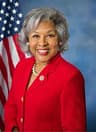 Joyce Beatty
Democrat · Ohio
 Steve Cohen
Democrat · Tennessee
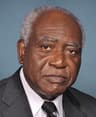 Danny Davis
Democrat · Illinois
 Henry Johnson
Democrat · Georgia
 Jonathan Jackson
Democrat · Illinois
 LaMonica McIver
Democrat · New Jersey
 Eleanor Norton
Democrat · District of Columbia
 Lateefah Simon
Democrat · California
 Rashida Tlaib
Democrat · Michigan
 Shri Thanedar
Democrat · Michigan
 Nydia Velázquez
Democrat · New York