
Yassamin Ansari (D-AZ)
Recognizing the United States legacy of dismissed pain and denied autonomy in women's health care, and affirming the Federal Government's duty to protect individual dignity and advance patient-centered care in women's health.
A Democratic resolution with 26 Democratic cosponsors · See all 26 cosponsors
Last activity — Referred to the House Committee on Energy and Commerce.
In committee
Introduced and handed to a committee in the chamber it started in.
The committee holds it, and most bills are never heard from again. A hearing or a committee vote would be news; silence is the usual outcome, and it kills the bill without anyone voting against it.
Its path through Congress
- Introduced
- In Committee
A House resolution is the House speaking for itself: stating a position, honouring someone, or setting its own rules. Adopting it is the whole process. Once the House agrees to it, it is officially the House's word; it is not a law, so the Senate and the President have no part in it.
What this bill would do
This resolution addresses the history of dismissed pain and denied autonomy in women's health care within the United States. It highlights how various groups of women have faced systemic neglect, exploitation, and lack of consent in medical practices. The resolution recognizes that recent rollbacks on reproductive rights have impacted access to care and caused medical emergencies. To move forward, the House of Representatives aims to honor those who suffered from systemic bias. The resolution calls for a shift toward patient-centered approaches and expanded research in women's health. Finally, it commits to protecting bodily autonomy and increasing Federal investment in this field.
Yes· 3 of 11
- Scored +8
Would women be better off under this?
The resolution is centered on improving the dignity, autonomy, and medical treatment of women.
- Scored +7
Does this make abortion easier to get?
The resolution calls for expanding access to reproductive health care and protecting bodily autonomy in response to rollbacks.
- Scored +7
Does this put more money into medical research?
The resolution explicitly commits to increasing Federal investment in women's health research.
The opposite
No question was scored the opposite.
Who it would affect, and how
Potential Positive Impacts for People
-
Advancing Patient-Centered Care: The resolution affirms a need for shared decision-making and approaches that include patient education and procedural transparency (Section 3). This could help ensure women are better informed about their own care.
-
Increased Research and Investment: There is a commitment to increasing Federal investment in women's health research (Section 4). This aims to address the fact that women's health remains a relatively under-researched area of medicine.
-
Protection of Autonomy and Access: The resolution commits to expanding access to reproductive and gynecological health care while strengthening protections for bodily autonomy (Section 4).
-
Accountability for Bias: The resolution seeks to hold institutions accountable for bias and harm (Section 4), which could help address the historical and ongoing injustices where women's pain has been dismissed or minimized.
Potential Negative Impacts for People
- No specific negative impacts or burdens are explicitly mentioned in the provided text.
Groups and Interests Ranking
Every group the model scored this bill for, from -10 to +10. Tap or hover a score for the reason it gave.
- Demographic And Interest Groups
- Would women be better off under this? — The resolution is centered on improving the dignity, autonomy, and medical treatment of women. Would Black Americans be better off under this? — The resolution addresses the history of medical exploitation and systemic neglect faced by Black women. Would LGBTQ people be better off under this? — The resolution explicitly includes the experiences of LGBTQ women in its call for improved health care and autonomy. Would Hispanic Americans be better off under this? — The resolution notes the history of coercive testing on women in Puerto Rico and seeks to address such injustices. Would households on low incomes be better off under this? — The resolution specifically mentions addressing the needs of low-income women in the context of medical justice.
- Healthcare
- Does this make abortion easier to get? — The resolution calls for expanding access to reproductive health care and protecting bodily autonomy in response to rollbacks. Does this put more money into medical research? — The resolution explicitly commits to increasing Federal investment in women's health research. Does this make health care easier to get in general? — The resolution commits to expanding access to reproductive and gynecological health care.
- Social Issues And Justice
- Does this narrow the gap between how men and women are treated? — The resolution aims to protect women's bodily autonomy and ensure their medical needs and pain are taken seriously. Does this narrow racial gaps in how people are treated? — The resolution highlights and seeks to address historical injustices and systemic neglect faced by Black and indigenous women. Does this expand the rights of people with disabilities? — The resolution recognizes the historical exploitation of disabled women and seeks a shift toward patient-centered care.
- 5/7/2026
- 1 Cosponsor added.
- 4/2/2026
- 2 Cosponsors added.
- 3/30/2026
- Submitted in House
- Referred to the House Committee on Energy and Commerce.
- 23 Cosponsors added.
 Suzanne Bonamici
Democrat · Oregon
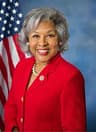 Joyce Beatty
Democrat · Ohio
 Julia Brownley
Democrat · California
 Wesley Bell
Democrat · Missouri
 Yvette Clarke
Democrat · New York
 Steve Cohen
Democrat · Tennessee
 Troy Carter
Democrat · Louisiana
 Herbert Conaway
Democrat · New Jersey
 Lizzie Fletcher
Democrat · Texas
 Daniel Goldman
Democrat · New York
 Adelita Grijalva
Democrat · Arizona
 Henry Johnson
Democrat · Georgia
 Jonathan Jackson
Democrat · Illinois
 Raja Krishnamoorthi
Democrat · Illinois
 Timothy Kennedy
Democrat · New York
 Morgan McGarvey
Democrat · Kentucky
 Eleanor Norton
Democrat · District of Columbia
 Ayanna Pressley
Democrat · Massachusetts
 Deborah Ross
Democrat · North Carolina
 Paul Tonko
Democrat · New York
 Rashida Tlaib
Democrat · Michigan
 Lori Trahan
Democrat · Massachusetts
 Shri Thanedar
Democrat · Michigan
 Nydia Velázquez
Democrat · New York
 Nikema Williams
Democrat · Georgia
 Frederica Wilson
Democrat · Florida