
Mary Gay Scanlon (D-PA)
Recognizing January 2026 as "National Mentoring Month".
A Democratic resolution with 2 Republican cosponsors · See all 28 cosponsors
Last activity — Referred to the House Committee on Education and Workforce.
In committee
Introduced and handed to a committee in the chamber it started in.
The committee holds it, and most bills are never heard from again. A hearing or a committee vote would be news; silence is the usual outcome, and it kills the bill without anyone voting against it.
Its path through Congress
- Introduced
- In Committee
A House resolution is the House speaking for itself: stating a position, honouring someone, or setting its own rules. Adopting it is the whole process. Once the House agrees to it, it is officially the House's word; it is not a law, so the Senate and the President have no part in it.
What this bill would do
This resolution seeks to recognize January 2026 as National Mentoring Month.'' It aims to celebrate the impact of mentoring relationships and recognize the adults who serve as staff and volunteers. The resolution highlights how mentoring can help young people find inner strength and reach their full potential. It also focuses on the need to recruit new mentors and expand quality programs across the country. Finally, the measure supports initiatives intended to close the mentoring gap'' for youth without meaningful connections to adults outside their homes.
Yes· 3 of 8
- Scored +2
Would children be better off under this?
The resolution promotes quality mentoring to support positive youth development and academic success.
- Scored +2
Would people in their twenties and thirties be better off under this?
Mentoring supports career exploration and college access for young people.
- Scored +2
Would students be better off under this?
Mentoring is intended to bolster academic achievement, school engagement, and career exploration for students.
The opposite
No question was scored the opposite.
Who it would affect, and how
Potential Positive Impacts for People
-
Support for Youth Development: Mentoring is cited as a way to foster positive life and social skills, promote self-esteem, and nurture leadership development (Preamble).
-
Educational and Career Benefits: Mentoring can bolster academic achievement, college access, and help young people set career goals or connect with industry professionals (Preamble, Section 3).
-
Mental Health and Social Well-being: Programs can improve mental health symptoms, help individuals confront challenges, and support social-emotional well-being (Preamble).
-
Safety and Stability: Mentoring serves as a tool for juvenile justice and violence prevention, and can help foster youth with issues regarding employment and housing stability (Preamble).
-
Community Strengthening: The resolution states that mentoring links youth to economic and social opportunities while strengthening communities (Preamble, Section 3).
-
Personal Satisfaction for Volunteers: Mentors may find the relationships highly satisfying (Preamble).
Potential Negative Impacts for People
- No negative impacts or burdens are explicitly mentioned in the provided text.
Groups and Interests Ranking
Every group the model scored this bill for, from -10 to +10. Tap or hover a score for the reason it gave.
- Demographic And Interest Groups
- Would children be better off under this? — The resolution promotes quality mentoring to support positive youth development and academic success. Would students be better off under this? — Mentoring is intended to bolster academic achievement, school engagement, and career exploration for students. Would people in their twenties and thirties be better off under this? — Mentoring supports career exploration and college access for young people. Would households on low incomes be better off under this? — Mentoring can help youth facing risk with employment and housing stability. Would Native Americans be better off under this? — The bill notes that mentoring can improve outcomes for Alaska Native and American Indian youth when culture is integrated.
- Education And Technology
- Does this make college cost less? — Mentoring is noted for bolstering academic achievement and college access.
- Healthcare
- Does this make mental health care easier to get? — The resolution highlights how mentoring can improve mental health symptoms and social-emotional well-being.
- Social Issues And Justice
- Does this narrow racial gaps in how people are treated? — The bill mentions that culture and heritage-focused mentoring can specifically improve outcomes for Alaska Native and American Indian youth.
- 2/24/2026
- 3 Cosponsors added.
- 2/12/2026
- 1 Cosponsor added.
- 2/10/2026
- 1 Cosponsor added.
- 2/9/2026
- Submitted in House
- Referred to the House Committee on Education and Workforce.
- 23 Cosponsors added.
3 bills Congress.gov lists as related to this one — companions in the other chamber, earlier versions, and bills this one absorbed or was folded into.
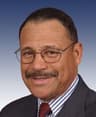 Sanford Bishop
Democrat · Georgia
 Don Bacon
Republican · Nebraska
 Ed Case
Democrat · Hawaii
 Yvette Clarke
Democrat · New York
 Steve Cohen
Democrat · Tennessee
 Angie Craig
Democrat · Minnesota
 Sheila Cherfilus-McCormick
Democrat · Florida
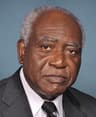 Danny Davis
Democrat · Illinois
 Donald Davis
Democrat · North Carolina
 Mark DeSaulnier
Democrat · California
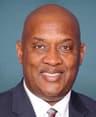 Dwight Evans
Democrat · Pennsylvania
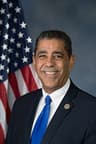 Adriano Espaillat
Democrat · New York
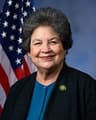 Lois Frankel
Democrat · Florida
 Josh Gottheimer
Democrat · New Jersey
 Jahana Hayes
Democrat · Connecticut
 Henry Johnson
Democrat · Georgia
 Sydney Kamlager-Dove
Democrat · California
 Greg Landsman
Democrat · Ohio
 Summer Lee
Democrat · Pennsylvania
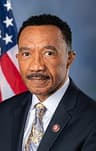 Kweisi Mfume
Democrat · Maryland
 Gwen Moore
Democrat · Wisconsin
 Seth Moulton
Democrat · Massachusetts
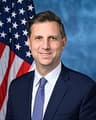 Seth Magaziner
Democrat · Rhode Island
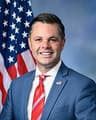 Zachary Nunn
Republican · Iowa
 Deborah Ross
Democrat · North Carolina
 Janice Schakowsky
Democrat · Illinois
 Lateefah Simon
Democrat · California
 Rashida Tlaib
Democrat · Michigan