
Darin LaHood (R-IL)
Supporting the contributions of Catholic schools in the United States and celebrating the 52nd annual National Catholic Schools Week.
A Republican resolution with 2 Democratic cosponsors · See all 16 cosponsors
Last activity — Referred to the House Committee on Education and Workforce.
In committee
Introduced and handed to a committee in the chamber it started in.
The committee holds it, and most bills are never heard from again. A hearing or a committee vote would be news; silence is the usual outcome, and it kills the bill without anyone voting against it.
Its path through Congress
- Introduced
- In Committee
A House resolution is the House speaking for itself: stating a position, honouring someone, or setting its own rules. Adopting it is the whole process. Once the House agrees to it, it is officially the House's word; it is not a law, so the Senate and the President have no part in it.
What this bill would do
This resolution supports the contributions of Catholic schools in the United States and celebrates the 52nd annual National Catholic Schools Week. It recognizes the academic excellence and values-based education provided to approximately 1,700,000 students. The text highlights the diversity of the student population and the affordability of these schools for parents. It also notes the high graduation rates and the role these institutions play in community service. Finally, the House of Representatives resolves to support the goals of National Catholic Schools Week and the dedication of those involved in the school community.
Yes· 3 of 12
- Scored +2
Would students be better off under this?
The resolution emphasizes the academic excellence and high graduation rates provided to students.
- Scored +2
Does this protect the freedom to practise a religion?
The resolution supports the mission and presence of faith-based educational institutions.
- Scored +1
Would children be better off under this?
The resolution recognizes the academic and moral development provided to students in these schools.
The opposite
No question was scored the opposite.
Who it would affect, and how
Potential Positive Impacts for People
-
Academic and Moral Development: Catholic schools provide an education that emphasizes the development of moral, intellectual, physical, and social values (Whereas clause 2).
-
Diverse and Inclusive Education: These schools serve a diverse population, including 27.3 percent of students from racial minority backgrounds, 16.6 percent from Hispanic heritage, and 21.7 percent from non-Catholic families (Whereas clause 3).
-
Affordability: The text notes that Catholic schools are an affordable option for parents, especially those in underserved urban areas (Whereas clause 4).
-
Higher Education Readiness: Catholic high schools have a 98.9 percent graduation rate, with 85.2 percent of graduates attending 4-year colleges (Whereas clause 7).
-
Community and Character Building: The schools produce students dedicated to their faith, values, families, and communities through an environment that promotes spiritual and character development (Whereas clause 5).
Potential Negative Impacts for People
- No negative impacts or burdens are mentioned in the provided text.
Groups and Interests Ranking
Every group the model scored this bill for, from -10 to +10. Tap or hover a score for the reason it gave.
- Demographic And Interest Groups
- Would students be better off under this? — The resolution emphasizes the academic excellence and high graduation rates provided to students. Would Black Americans be better off under this? — The resolution notes the service of a diverse student population including racial minorities. Would children be better off under this? — The resolution recognizes the academic and moral development provided to students in these schools. Would Hispanic Americans be better off under this? — The resolution explicitly mentions that 16.6 percent of the student population is of Hispanic heritage. Would households on low incomes be better off under this? — The resolution notes that Catholic schools provide an affordable educational option for diverse socioeconomic backgrounds. Would middle-income households be better off under this? — The resolution highlights the affordability of these schools for parents. Would people in cities be better off under this? — The resolution highlights that Catholic schools are an affordable option particularly in underserved urban areas. Would people in their twenties and thirties be better off under this? — The resolution highlights high graduation rates and college readiness for students.
- Social Issues And Justice
- Does this protect the freedom to practise a religion? — The resolution supports the mission and presence of faith-based educational institutions. Does this narrow racial gaps in how people are treated? — The resolution highlights the significant role Catholic schools play in serving a diverse student population including racial minorities.
- Education And Technology
- Does this make college cost less? — The text notes that Catholic schools serve as an affordable option for parents. Does this make it easier to use public money at a school other than the local one? — The resolution highlights the academic excellence and availability of Catholic school options.
- 2/2/2026
- 3 Cosponsors added.
- 1/27/2026
- Submitted in House
- Referred to the House Committee on Education and Workforce.
- 13 Cosponsors added.
3 bills Congress.gov lists as related to this one — companions in the other chamber, earlier versions, and bills this one absorbed or was folded into.
- 119-HRES-74: Supporting the contributions of Catholic schools in the United States and celebrating the 51st annual "National Catholic Schools Week".
- 119-SRES-45: A resolution supporting the contributions of Catholic schools in the United States and celebrating the 51st annual National Catholic Schools Week.
- 119-SRES-594: A resolution supporting the contributions of Catholic schools in the United States and celebrating the 52nd annual National Catholic Schools Week.
 Jim Costa
Democrat · California
 Mario Diaz-Balart
Republican · Florida
 Brian Fitzpatrick
Republican · Pennsylvania
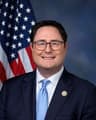 Mike Flood
Republican · Nebraska
 Andrew Garbarino
Republican · New York
 Andy Harris
Republican · Maryland
 J. Hill
Republican · Arkansas
 John Joyce
Republican · Pennsylvania
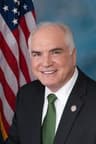 Mike Kelly
Republican · Pennsylvania
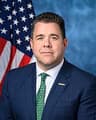 Nick LaLota
Republican · New York
 Michael Lawler
Republican · New York
 Mariannette Miller-Meeks
Republican · Iowa
 Riley Moore
Republican · West Virginia
 Richard Neal
Democrat · Massachusetts
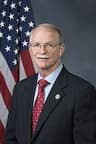 John Rutherford
Republican · Florida
 Christopher Smith
Republican · New Jersey