
A Democratic bill with 18 Democratic cosponsors · See all 18 cosponsors
Last activity — Referred to the Committee on Education and Workforce, and in addition to the Committee on Energy and Commerce, for a period to be subsequently determined by the Speaker, in each case for consideration of such provisions as fall within the jurisdiction of the committee concerned.
In committee
Introduced and handed to a committee in the chamber it started in.
The committee holds it, and most bills are never heard from again. A hearing or a committee vote would be news; silence is the usual outcome, and it kills the bill without anyone voting against it.
Its path through Congress
- Introduced
- In Committee
What this bill would do
This bill establishes the Green New Deal for Public Schools Act to upgrade public school facilities and support educational equity. It creates grant programs funded by mandatory appropriations to modernize school buildings, improve energy efficiency, and remove environmental hazards. The legislation provides resources to hire additional educators, mental health professionals, and support staff while lowering student-to-staff ratios. It also funds programs focused on climate change resiliency, community partnerships, and hands-on learning opportunities for students. Additionally, the bill mandates increased federal funding for the Individuals with Disabilities Education Act over a ten-year period.
Yes· 3 of 39
- Scored +10
Would people with disabilities be better off under this?
The bill provides mandatory funding increases and protects accessibility in school design.
- Scored +10
Does this put more money into public schools?
The bill provides massive new funding for public schools and the Individuals with Disabilities Education Act.
- Scored +9
Would children be better off under this?
The bill directly improves school safety, nutrition, and environments for students.
The opposite
- Scored -2
Does this give the government more power to monitor people inside the country?
The bill explicitly prohibits using funds for measures that unduly surveil students.
Who it would affect, and how
Potential Positive Impacts for People
-
Healthier and Safer School Facilities: Under Section 102, eligible schools can receive grants to conduct healthy green retrofits that eliminate greenhouse gas emissions, remove contaminants like asbestos and lead, and improve indoor air and water quality. This creates safer and more comfortable learning environments for students and staff.
-
Expanded Support Staff and Lower Ratios: Under Section 103, resource block grants allow local educational agencies to hire full-time educators, mental health professionals, counselors, and social workers. This provision aims to achieve target student-to-staff ratios and increase access to essential student support services.
-
Mandatory Special Education Funding: Under Section 105, the bill amends the Individuals with Disabilities Education Act to provide substantial mandatory appropriations from fiscal years 2027 through 2036 and beyond. This significantly increases federal financial support for special education and related services for children with disabilities.
-
Local Job Creation and Training: Under Section 101 and Section 102, grant recipients must implement resource allocation plans that prioritize local hiring. These provisions create economic opportunities for local workers, veterans, and traditionally disadvantaged individuals while expanding training and apprenticeship programs.
Potential Negative Impacts for People
-
Administrative and Compliance Burdens: Under Section 101 and Section 103, grant recipients must establish and maintain public digitized platforms and resource allocation plans, and they must engage in extensive community planning processes. These complex compliance requirements and reporting mandates could impose heavy administrative burdens on under-resourced local educational agencies and school staff.
-
Potential Restraints on Contracting Flexibility: Under Section 102 and Section 103, contractors and grant recipients must adhere to strict labor standards, such as prevailing wage requirements, project labor agreements for projects over twenty-five million dollars, and restrictions on hiring through temporary staffing agencies. These rules could potentially limit contracting flexibility and increase overall project costs for schools.
Groups and Interests Ranking
Every group the model scored this bill for, from -10 to +10. Tap or hover a score for the reason it gave.
- Demographic And Interest Groups
- Would people with disabilities be better off under this? — The bill provides mandatory funding increases and protects accessibility in school design. Would children be better off under this? — The bill directly improves school safety, nutrition, and environments for students. Would Native Americans be better off under this? — The bill provides specific reserved funding and technical assistance for BIE schools and Tribal sovereignty. Would students be better off under this? — The bill improves school facilities, nutrition, mental health support, and internet access. Would households on low incomes be better off under this? — The bill targets low-income communities for resource and equity grants. Would Black Americans be better off under this? — The bill focuses on racial equity and environmental justice for communities of color. Would Hispanic Americans be better off under this? — The bill supports inclusive and culturally responsive education. Would union members be better off under this? — The bill includes project labor agreements and strong labor standards. Would veterans be better off under this, taking everything together? — The bill provides preferential hiring for veterans in local community plans. Would people in their twenties and thirties be better off under this? — The bill includes pathways for young adults exiting the foster care system. Would LGBTQ people be better off under this? — The bill explicitly mentions LGBTQIAP+ individuals in its social empowerment goals. Would people over 65 be better off under this? — The bill includes elderly individuals in its community hiring and empowerment goals. Would people in cities be better off under this? — The bill supports urban island heat effect reduction through green infrastructure. Would women be better off under this? — The bill includes women in its affirmative local hiring goals. Would business owners be better off under this? — The bill creates opportunities for local businesses through grant-funded projects.
- Social Issues And Justice
- Does this expand the rights of people with disabilities? — The bill mandates significant funding increases for the Individuals with Disabilities Education Act. Does this narrow racial gaps in how people are treated? — The bill focuses on climate justice and racial equity through targeted funding for underserved communities. Does this change how police departments operate? — The bill seeks to reduce the school-to-prison pipeline and zero-tolerance discipline. Is this likely to lift people out of poverty? — The bill aims to empower low-income and low-wealth communities through resource grants. Does this narrow the gap between how men and women are treated? — The bill includes women in its affirmative local hiring and economic empowerment goals. Does this expand the rights of LGBTQ people? — The bill explicitly includes LGBTQIAP+ individuals in its local hiring and empowerment goals. Is this likely to reduce homelessness? — The bill includes support for unhoused individuals in its community hiring and social service goals.
- Environment Energy And Infrastructure
- Does this put more money into wind, solar and other renewable power? — The bill prioritizes on-site renewable energy and solar photovoltaic systems for schools. Does this cut the pollution that drives climate change? — The bill focuses on creating healthy zero-carbon schools and renewable energy use. Does this better protect air, water and wildlife? — The bill includes significant investments in green infrastructure and environmental justice. Does this improve help for people hit by a disaster? — The bill establishes schools as community resiliency centers for disaster response. Does this reduce how much oil, gas and coal is produced? — The bill requires new schools to be located away from oil and gas wells. Does this improve buses, trains and other public transport? — The bill includes infrastructure for bicycle lanes and multi-modal access.
- Economy And Finance
- Is this likely to create jobs? — The bill promotes local hiring and provides training for various job sectors. Does this strengthen the rights of workers to organise? — The bill includes provisions for project labor agreements and protections for union workers. Does this make it easier to run a small business? — The bill encourages partnerships with local businesses and cooperatives. Is this likely to grow the economy? — The bill invests heavily in infrastructure and local community economic empowerment.
- Education And Technology
- Does this put more money into public schools? — The bill provides massive new funding for public schools and the Individuals with Disabilities Education Act. Does this get reliable internet to more people? — The bill funds high-speed internet infrastructure for schools and universal access.
- Healthcare
- Does this make mental health care easier to get? — The bill funds the hiring of mental health professionals and school psychologists. Does this make the country readier for the next outbreak? — The bill funds resiliency to prepare for public health emergencies.
- Governance And Ideology
- Does this make what the government does easier for the public to see? — The bill requires grant recipients to maintain public digitized platforms for progress documentation. Does this give the federal government more power? — The bill establishes new offices and mandates within the Department of Education.
- National Security And Foreign Policy
- Does this increase the pay, pensions or support veterans receive? — The bill provides preferential treatment for veterans in local hiring processes. Does this give the government more power to monitor people inside the country? — The bill explicitly prohibits using funds for measures that unduly surveil students.
- 9/24/2026
- 1 Cosponsor added.
- 9/1/2026
- 1 Cosponsor added.
- 8/13/2026
- 2 Cosponsors added.
- 7/27/2026
- Referred to the Committee on Education and Workforce, and in addition to the Committee on Energy and Commerce, for a period to be subsequently determined by the Speaker, in each case for consideration of such provisions as fall within the jurisdiction of the committee concerned.
- 14 Cosponsors added.
- Introduced in House
 Judy Chu
Democrat · California
 Troy Carter
Democrat · Louisiana
 Christopher Deluzio
Democrat · Pennsylvania
 Valerie Foushee
Democrat · North Carolina
 Jesús García
Democrat · Illinois
 Daniel Goldman
Democrat · New York
 Eleanor Norton
Democrat · District of Columbia
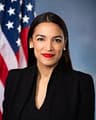 Alexandria Ocasio-Cortez
Democrat · New York
 Ilhan Omar
Democrat · Minnesota
 Chellie Pingree
Democrat · Maine
 Mark Pocan
Democrat · Wisconsin
 Mike Quigley
Democrat · Illinois
 Delia Ramirez
Democrat · Illinois
 Lateefah Simon
Democrat · California
 Bennie Thompson
Democrat · Mississippi
 Paul Tonko
Democrat · New York
 Rashida Tlaib
Democrat · Michigan
 Shri Thanedar
Democrat · Michigan