
A Democratic bill with 16 Democratic cosponsors · See all 16 cosponsors
Last activity — Referred to the Committee on Energy and Commerce, and in addition to the Committee on Ways and Means, for a period to be subsequently determined by the Speaker, in each case for consideration of such provisions as fall within the jurisdiction of the committee concerned.
In committee
Introduced and handed to a committee in the chamber it started in.
The committee holds it, and most bills are never heard from again. A hearing or a committee vote would be news; silence is the usual outcome, and it kills the bill without anyone voting against it.
Its path through Congress
- Introduced
- In Committee
What this bill would do
This bill, titled the "Medicare Dental Benefit Act of 2026," aims to amend the Social Security Act to include coverage for dental and oral health services under Medicare. The proposed coverage includes preventive care, basic and major dental services, and emergency dental care. The bill outlines a gradual increase in payment percentages over several years, reaching 80 percent by the eighth year. It also establishes specific rules for dental prostheses and limits on the frequency of certain routine services. Additionally, the bill mandates the inclusion of an oral health professional on the U.S. Preventive Services Task Force. These changes are intended to take effect on January 1, 2028.
Yes· 3 of 6
- Scored +8
Would people over 65 be better off under this?
The bill provides Medicare beneficiaries with coverage for various dental and oral health services.
- Scored +8
Would retired people be better off under this?
The bill extends essential dental care coverage to those enrolled in Medicare.
- Scored +8
Does this make health care easier to get in general?
The bill improves access to essential dental and oral health care for Medicare beneficiaries.
The opposite
- Scored -2
Does this reduce what the federal government spends?
The bill increases federal spending by providing coverage for dental services through Medicare and increasing the FMAP to 100 percent for certain state expenditures.
Who it would affect, and how
Potential Positive Impacts for People
-
Expanded Healthcare Access: The bill would provide coverage for various dental and oral health services, including routine diagnostic and preventive care, basic services like fillings, major services like crowns, and emergency care (Section 2(b)).
-
Enhanced Support for Low-Income Individuals: Certain low-income individuals, specifically those who are subsidy eligible, would receive a higher payment rate of 80 percent for dental services and prostheses starting in the first year (Section 2(d)(2)(B) and Section 2(f)(2)(B)(ii)).
-
Improved Expertise in Preventive Services: The U.S. Preventive Services Task Force would be required to include at least one oral health professional to provide expertise (Section 4(a)).
-
State Financial Support: The bill increases the Federal medical assistance percentage to 100 percent for certain state expenditures related to Medicare cost-sharing for dental and oral health services (Section 3).
Potential Negative Impacts for People
-
Delayed Full Coverage: For most individuals, the payment percentage for dental and oral health services starts at 0 percent for the first year, with a gradual increase of 10 percentage points each year until reaching 80 percent in the eighth year (Section 2(d)(2)(A)).
-
Service Frequency Restrictions: Coverage for certain services is limited, such as a maximum of two dental cleanings and two routine exams within a 12-month period (Section 2(d)(3)(A)).
-
Limitations on Dental Prostheses: There are limits on how often individuals can receive dental prostheses, specifically no more than one full upper and one full lower prosthesis every five years, and no more than one partial upper and one partial lower prosthesis every five years (Section 2(f)(3)(A)).
-
Potential for Additional Restrictions: The Secretary has the authority to apply additional limitations on coverage, such as requiring prior authorization (Section 2(d)(3)(B)(i)).
Groups and Interests Ranking
Every group the model scored this bill for, from -10 to +10. Tap or hover a score for the reason it gave.
- Demographic And Interest Groups
- Would retired people be better off under this? — The bill extends essential dental care coverage to those enrolled in Medicare. Would people over 65 be better off under this? — The bill provides Medicare beneficiaries with coverage for various dental and oral health services. Would households on low incomes be better off under this? — The bill ensures that subsidy-eligible low-income individuals receive an 80 percent payment rate for dental services immediately.
- Healthcare
- Does this make health care easier to get in general? — The bill improves access to essential dental and oral health care for Medicare beneficiaries. Does this put more money into Medicare, the health coverage for people over 65? — The bill expands Medicare coverage to include a wide range of dental and oral health services.
- Social Issues And Justice
- Is this likely to lift people out of poverty? — The bill provides immediate higher coverage rates for subsidy-eligible low-income individuals for dental services.
- Economy And Finance
- Does this reduce what the federal government spends? — The bill increases federal spending by providing coverage for dental services through Medicare and increasing the FMAP to 100 percent for certain state expenditures.
- 9/2/2026
- 1 Cosponsor added.
- 8/31/2026
- 1 Cosponsor added.
- 8/3/2026
- 1 Cosponsor added.
- 7/22/2026
- Referred to the Committee on Energy and Commerce, and in addition to the Committee on Ways and Means, for a period to be subsequently determined by the Speaker, in each case for consideration of such provisions as fall within the jurisdiction of the committee concerned.
- 13 Cosponsors added.
- Introduced in House
One bill Congress.gov lists as related to this one — companions in the other chamber, earlier versions, and bills this one absorbed or was folded into.
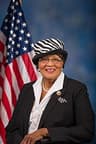 Alma Adams
Democrat · North Carolina
 Judy Chu
Democrat · California
 Salud Carbajal
Democrat · California
 Angie Craig
Democrat · Minnesota
 Danny Davis
Democrat · Illinois
 Jesús García
Democrat · Illinois
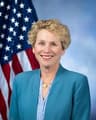 Chrissy Houlahan
Democrat · Pennsylvania
 Robin Kelly
Democrat · Illinois
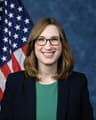 Sarah McBride
Democrat · Delaware
 Eleanor Norton
Democrat · District of Columbia
 Deborah Ross
Democrat · North Carolina
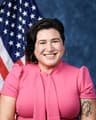 Emily Randall
Democrat · Washington
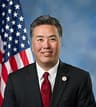 Mark Takano
Democrat · California
 Rashida Tlaib
Democrat · Michigan
 Shri Thanedar
Democrat · Michigan
 Frederica Wilson
Democrat · Florida