
A Democratic bill with 22 Democratic cosponsors · See all 22 cosponsors
Last activity — Referred to the House Committee on Energy and Commerce.
In committee
Introduced and handed to a committee in the chamber it started in.
The committee holds it, and most bills are never heard from again. A hearing or a committee vote would be news; silence is the usual outcome, and it kills the bill without anyone voting against it.
Its path through Congress
- Introduced
- In Committee
What this bill would do
The Medicaid Dental Benefit Act of 2026 aims to improve dental and oral health coverage for adults under Medicaid. It mandates coverage for specific services including dentures, implants, and services to prevent disease or treat emergencies. To support this, the bill provides a 100 percent Federal medical assistance percentage for these services for a 12-quarter period starting January 1, 2027. Additionally, the Act requires the development of a core set of health quality and equity measures for adults over age 21. The legislation also mandates annual state reporting on oral health quality and the creation of an outreach and education program.
Yes· 3 of 15
- Scored +9
Would households on low incomes be better off under this?
The bill provides significant dental coverage enhancements for low-income adults on Medicaid.
- Scored +9
Does this make health care easier to get in general?
The bill mandates coverage for essential dental services including dentures and implants for Medicaid adults.
- Scored +8
Would women be better off under this?
The bill specifically addresses dental care for pregnant and postpartum individuals through quality and equity measures.
The opposite
No question was scored the opposite.
Who it would affect, and how
Potential Positive Impacts for People
-
Mandatory Dental Coverage for Adults: The bill requires Medicaid to cover dental and oral health services, which includes dentures, implants, and services to prevent disease, restore oral structures, and treat emergency conditions (Section 2(a)(2)(B)).
-
Increased Federal Support for States: For the 50 states and the District of Columbia, the Federal medical assistance percentage will be 100 percent for expenditures related to authorized dental and oral health services for a 12-quarter period starting January 1, 2027 (Section 2(c)(1)(A)).
-
Support for Territories: Similar to the states, the bill provides a 100 percent Federal medical assistance percentage for qualifying dental and oral health services in Puerto Rico, the Virgin Islands, Guam, the Northern Mariana Islands, and American Samoa (Section 2(c)(1)(B)).
-
Improved Quality and Equity Oversight: The Secretary is required to identify and publish a core set of health quality and equity measures for adults over 21, including measures for dental service utilization, emergency department visits, and care for specific conditions (Section 3(a)(1)).
-
Outreach and Education: The bill directs the development of a program to provide culturally competent and linguistically appropriate information regarding oral health coverage and assistance in connecting underserved populations to care (Section 5).
Potential Negative Impacts for People
-
Optional Coverage for Territories: While the bill provides increased federal funding, the requirement to provide these dental and oral health services is optional for States other than the 50 States and the District of Columbia (Section 2(a)(1)(C)(i)).
-
Exclusions on Increased Federal Funding: The increased Federal medical assistance percentage does not apply to additional items and services authorized at the State's option, nor does it apply to services that were already available to the individual through the State plan or Medicare cost-sharing at the time of enactment (Section 2(c)(2)).
Groups and Interests Ranking
Every group the model scored this bill for, from -10 to +10. Tap or hover a score for the reason it gave.
- Demographic And Interest Groups
- Would households on low incomes be better off under this? — The bill provides significant dental coverage enhancements for low-income adults on Medicaid. Would people with disabilities be better off under this? — The bill includes specific provisions and reporting requirements for individuals with physical and intellectual disabilities. Would women be better off under this? — The bill specifically addresses dental care for pregnant and postpartum individuals through quality and equity measures. Would Black Americans be better off under this? — The bill includes quality and equity measures designed to address racial disparities in oral health. Would Asian Americans be better off under this? — The bill includes quality and equity measures designed to address racial disparities in oral health. Would Hispanic Americans be better off under this? — The bill includes quality and equity measures designed to address racial disparities in oral health. Would LGBTQ people be better off under this? — The bill requires data collection and reporting stratified by sexual orientation and gender identity. Would Native Americans be better off under this? — The bill includes quality and equity measures designed to address racial disparities in oral health. Would white Americans be better off under this? — The bill includes quality and equity measures designed to address racial disparities in oral health.
- Healthcare
- Does this make health care easier to get in general? — The bill mandates coverage for essential dental services including dentures and implants for Medicaid adults. Does this put more money into Medicaid, the health coverage for people on low incomes? — The bill provides a 100 percent Federal medical assistance percentage for dental and oral health services for states and territories.
- Social Issues And Justice
- Does this expand the rights of people with disabilities? — The bill requires measures to address disparities for individuals with disabilities and ensures access to dental services. Does this narrow racial gaps in how people are treated? — The bill includes provisions for tracking and reducing health disparities through equity measures and outreach to diverse populations.
- Governance And Ideology
- Does this make what the government does easier for the public to see? — The bill mandates new reporting requirements and the publication of oral health quality measures. Does this give the federal government more power? — The bill increases federal oversight and funding requirements for state Medicaid programs.
- 9/2/2026
- 1 Cosponsor added.
- 8/31/2026
- 2 Cosponsors added.
- 8/3/2026
- 3 Cosponsors added.
- 7/22/2026
- Referred to the House Committee on Energy and Commerce.
- 16 Cosponsors added.
- Introduced in House
One bill Congress.gov lists as related to this one — companions in the other chamber, earlier versions, and bills this one absorbed or was folded into.
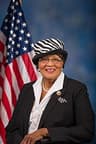 Alma Adams
Democrat · North Carolina
 Steve Cohen
Democrat · Tennessee
 Judy Chu
Democrat · California
 Salud Carbajal
Democrat · California
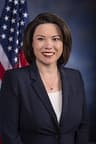 Angie Craig
Democrat · Minnesota
 Danny Davis
Democrat · Illinois
 Lloyd Doggett
Democrat · Texas
 Josh Gottheimer
Democrat · New Jersey
 Jesús García
Democrat · Illinois
 Adelita Grijalva
Democrat · Arizona
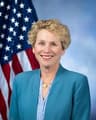 Chrissy Houlahan
Democrat · Pennsylvania
 Pramila Jayapal
Democrat · Washington
 Seth Magaziner
Democrat · Rhode Island
 Sarah McBride
Democrat · Delaware
 Eleanor Norton
Democrat · District of Columbia
 Chellie Pingree
Democrat · Maine
 Deborah Ross
Democrat · North Carolina
 Emily Randall
Democrat · Washington
 Melanie Stansbury
Democrat · New Mexico
 Rashida Tlaib
Democrat · Michigan
 Shri Thanedar
Democrat · Michigan
 Frederica Wilson
Democrat · Florida