
Raja Krishnamoorthi (D-IL)
Federal Jobs for STARs Act of 2026
A Democratic bill with 6 Republican cosponsors · See all 12 cosponsors
Last activity — Referred to the House Committee on Oversight and Government Reform.
In committee
Introduced and handed to a committee in the chamber it started in.
The committee holds it, and most bills are never heard from again. A hearing or a committee vote would be news; silence is the usual outcome, and it kills the bill without anyone voting against it.
Its path through Congress
- Introduced
- In Committee
What this bill would do
The Federal Jobs for STARs Act of 2026 aims to remove educational barriers for workers who have gained skills through alternative routes. It defines a "STAR" as an active member of the labor force without a bachelor's degree or higher who has developed skills via methods like apprenticeships, military service, or on-the-job experience. The bill directs the Office of Personnel Management to prohibit agencies from requiring specific degrees unless they are deemed strictly necessary for a position. It also mandates the creation of a dedicated hiring path on usajobs.gov for these workers. Finally, it requires a feasibility study on providing further training and education pathways for STAR employees.
Yes· 3 of 21
- Scored +6
Would veterans be better off under this, taking everything together?
The bill explicitly includes military service as an approved alternative route for developing job-related skills.
- Scored +5
Would people in their twenties and thirties be better off under this?
Young adults entering the workforce without a traditional college degree benefit significantly from alternative hiring paths.
- Scored +5
Would households on low incomes be better off under this?
Low-income individuals who cannot afford higher education gain access to stable government careers.
The opposite
No question was scored the opposite.
Who it would affect, and how
Potential Positive Impacts for People
-
Expanded Job Opportunities: By prohibiting agency heads from requiring a minimum educational attainment unless it is deemed necessary for specific skills, the bill opens doors for skilled workers who lack a degree (Section 3, subsection 1).
-
Improved Hiring Accessibility: The establishment of a dedicated hiring path on usajobs.gov allows "STAR" workers to easily find and search for positions for which they are eligible (Section 3, subsection 4).
-
Clearer Qualification Standards: The directive for the Office of Personnel Management to prescribe regulations regarding alternative qualifications helps ensure that skills and abilities are recognized instead of just degrees (Section 3, subsection 2).
-
Future Educational Support: The feasibility study explores ways to provide employees with pathways for further training, including scholarships, fellowships, and tuition assistance (Section 4, subsection 1).
Potential Negative Impacts for People
- No specific negative impacts are explicitly stated in the text provided.
Groups and Interests Ranking
Every group the model scored this bill for, from -10 to +10. Tap or hover a score for the reason it gave.
- Demographic And Interest Groups
- Would veterans be better off under this, taking everything together? — The bill explicitly includes military service as an approved alternative route for developing job-related skills. Would households on low incomes be better off under this? — Low-income individuals who cannot afford higher education gain access to stable government careers. Would people in their twenties and thirties be better off under this? — Young adults entering the workforce without a traditional college degree benefit significantly from alternative hiring paths. Would people in middle age be better off under this? — Middle-aged workers looking to pivot careers using on-the-job experience or certifications benefit from reduced educational barriers. Would middle-income households be better off under this? — Supports middle-class economic stability by opening up federal job opportunities to skilled workers without degrees. Would students be better off under this? — Benefits community college students, bootcamp participants, and partial-degree holders seeking federal employment. Would Black Americans be better off under this? — Demographic groups with historically lower rates of college degree attainment benefit disproportionately from skill-based hiring reforms. Would Hispanic Americans be better off under this? — Skill-based hiring paths help reduce barriers to federal employment for communities with lower college completion rates. Would Native Americans be better off under this? — Expands federal career accessibility for Native Americans who may access training through alternative community routes. Would people in rural areas be better off under this? — Rural residents with practical or military experience can access federal employment without relocating for university degrees. Would union members be better off under this? — Apprenticeships and alternative training programs often align with workforce and labor union development pathways. Would immigrants be better off under this? — Immigrants with practical work experience and skills developed through non-traditional routes can more easily access federal jobs. Would men be better off under this? — Benefits men who enter the labor force through trades, apprenticeships, or military service. Would women be better off under this? — Provides alternative entry routes into federal careers for women who may have gained skills outside of traditional degree paths.
- Economy And Finance
- Is this likely to create jobs? — The bill opens up federal employment opportunities to workers skilled through alternative routes by removing traditional degree barriers. Is this likely to grow the economy? — By expanding access to federal jobs for skilled workers without degrees, it can improve labor market efficiency.
- Governance And Ideology
- Does this make what the government does easier for the public to see? — The legislation requires auditing and tracking of educational requirements in federal hiring and creates a dedicated USAJOBS path. Does this give the federal government more power? — The bill directs OPM to implement federal hiring rules across executive agencies.
- Social Issues And Justice
- Is this likely to lift people out of poverty? — Providing stable federal employment opportunities for non-degree holders helps lift individuals and households into the middle class. Does this narrow racial gaps in how people are treated? — Removing degree barriers can positively impact economic mobility for diverse demographic groups less likely to hold bachelor's degrees.
- National Security And Foreign Policy
- Does this increase the pay, pensions or support veterans receive? — The bill explicitly recognizes military service as a valid alternative route for developing job-related skills for federal employment.
- 10/1/2026
- 1 Cosponsor added.
- 9/15/2026
- 1 Cosponsor added.
- 7/22/2026
- 1 Cosponsor added.
- 7/15/2026
- 2 Cosponsors added.
- 7/6/2026
- Referred to the House Committee on Oversight and Government Reform.
- 7 Cosponsors added.
- Introduced in House
One bill Congress.gov lists as related to this one — companions in the other chamber, earlier versions, and bills this one absorbed or was folded into.
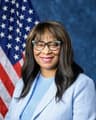 Janelle Bynum
Democrat · Oregon
 Angie Craig
Democrat · Minnesota
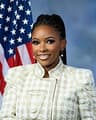 Jasmine Crockett
Democrat · Texas
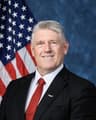 Troy Downing
Republican · Montana
 Brian Fitzpatrick
Republican · Pennsylvania
 Shomari Figures
Democrat · Alabama
 Glenn Grothman
Republican · Wisconsin
 Jennifer Kiggans
Republican · Virginia
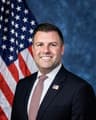 Ryan Mackenzie
Republican · Pennsylvania
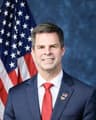 John McGuire
Republican · Virginia
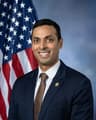 Suhas Subramanyam
Democrat · Virginia
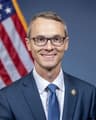 James Walkinshaw
Democrat · Virginia