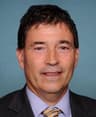
A Republican bill with 3 Democratic cosponsors · See all 6 cosponsors
Last activity — Received in the Senate and Read twice and referred to the Committee on Energy and Natural Resources.
In the other chamber's committee
Passed one chamber and has been handed to a committee in the other.
The committee decides whether it goes any further, and most bills that reach a committee never leave it. A committee that simply does nothing kills a bill without anyone ever voting against it, so no news from here is usually the news.
Its path through Congress
- Introduced
- Passed House voice vote
- In Senate committee
The House by voice vote (members called out yes or no together): no member's position on it was recorded.
What this bill would do
This bill is called the Load Forecasting Enhancement Act. It requires the Federal Energy Regulatory Commission to set up regional joint boards made up of state representatives and a commission member. These boards must study electric load forecasting to find best practices that improve the reliability and affordability of electric service. The commission must then report these best practices and recommendations to Congress. Additionally, the bill updates the Public Utility Regulatory Policies Act of 1978 and the Energy Policy and Conservation Act to incorporate these new forecasting procedures and state energy conservation plans.
Yes· 3 of 18
- Scored +4
Does this make what the government does easier for the public to see?
Explicitly mandates the improvement of transparency and accuracy of data used for electric load forecasting.
- Scored +3
Would households on low incomes be better off under this?
Aims to enhance the affordability of electric service to customers.
- Scored +3
Would middle-income households be better off under this?
Aims to enhance the affordability and reliability of electric service.
The opposite
- Scored -1
Does this leave more decisions to the states?
Requires state regulatory authorities to consider federally established forecasting standards.
Who it would affect, and how
Potential Positive Impacts for People
-
Section 2: This section establishes regional joint boards to study electric load forecasting with the goal of enhancing the reliability and affordability of electric service for customers. This could benefit everyday people by helping to keep electricity reliable and affordable.
-
Section 4: This section adds procedures and programs to state energy conservation plans to improve the accuracy, oversight, and transparency to stakeholders of the forecasting of electric loads by electric utilities. This may benefit the public by making utility forecasting clearer and more accountable.
Potential Negative Impacts for People
- The provided text does not contain any specific sections or provisions that outline negative consequences or burdens for individuals or groups of people in the United States.
Groups and Interests Ranking
Every group the model scored this bill for, from -10 to +10. Tap or hover a score for the reason it gave.
- Demographic And Interest Groups
- Would business owners be better off under this? — More reliable and affordable energy supports business operations. Would households on low incomes be better off under this? — Aims to enhance the affordability of electric service to customers. Would middle-income households be better off under this? — Aims to enhance the affordability and reliability of electric service. Would people in rural areas be better off under this? — Improved load forecasting helps address reliability issues common in rural electric service. Would farmers be better off under this? — Improved grid reliability and affordability are beneficial for agricultural operations. Would high-income households be better off under this? — Benefits from overall grid reliability and resilience. Would people in cities be better off under this? — Urban centers with high load density benefit from more accurate forecasting and reliability.
- Economy And Finance
- Does this give people more protection from unfair business practices? — Increased transparency and accuracy in load forecasting protect consumers from inefficient utility planning. Is this likely to grow the economy? — Improved electrical reliability and affordability supports stable economic activity and industrial growth. Does this make it easier to run a small business? — Better load forecasting can lead to more affordable and reliable energy costs for small businesses.
- Governance And Ideology
- Does this make what the government does easier for the public to see? — Explicitly mandates the improvement of transparency and accuracy of data used for electric load forecasting. Does this make it easier to do business across state lines? — Consistent best practices across state lines improve the efficiency of the interstate electric grid. Does this give the federal government more power? — Grants FERC the authority to establish regional boards and set standards for state regulatory authorities to consider. Does this leave more decisions to the states? — Requires state regulatory authorities to consider federally established forecasting standards.
- Environment Energy And Infrastructure
- Does this invest in rural communities? — Improved grid reliability and forecasting benefit rural electrification and economic development. Does this put more money into wind, solar and other renewable power? — Better forecasting aids in the strategic deployment of renewable energy resources. Does this cut the pollution that drives climate change? — More accurate load forecasting can optimize energy efficiency and support grid integration of renewables.
- Education And Technology
- Does this put more money into scientific research? — Promotes the study and adoption of the best available technologies and methodologies for forecasting.
- Social Issues And Justice
- Is this likely to lift people out of poverty? — Increased energy affordability can marginally reduce the financial burden on low-income households.
- 9/16/2026
- Received in the Senate and Read twice and referred to the Committee on Energy and Natural Resources.
- 9/15/2026
- Motion to reconsider laid on the table Agreed to without objection.
- Passed/agreed to in House: On motion to suspend the rules and pass the bill Agreed to by voice vote.
- On motion to suspend the rules and pass the bill Agreed to by voice vote. (text: CR H5663-5664)
- DEBATE - The House proceeded with forty minutes of debate on H.R. 9332.
- Considered under suspension of the rules. (consideration: CR H5663-5665)
- Mr. Guthrie moved to suspend the rules and pass the bill.
- 9/14/2026
- Reported by the Committee on Energy and Commerce. H. Rept. 119-823.
- Placed on the Union Calendar, Calendar No. 722.
- 8/6/2026
- 1 Cosponsor added.
- 7/21/2026
- Committee Consideration and Mark-up Session Held
- Ordered to be Reported by the Yeas and Nays: 47 - 0.
- 1 Cosponsor added.
- 7/20/2026
- Committee Consideration and Mark-up Session Held
- 1 Cosponsor added.
- 7/9/2026
- 1 Cosponsor added.
- 6/30/2026
- 1 Cosponsor added.
- 6/24/2026
- Subcommittee Consideration and Mark-up Session Held
- Forwarded by Subcommittee to Full Committee by Voice Vote.
- 6/18/2026
- Referred to the House Committee on Energy and Commerce.
- Referred to the Subcommittee on Energy.
- 1 Cosponsor added.
- Introduced in House
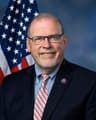 H. Griffith
Republican · Virginia
 John Joyce
Republican · Pennsylvania
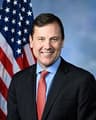 Thomas Kean
Republican · New Jersey
 Robert Menendez
Democrat · New Jersey
 Jennifer McClellan
Democrat · Virginia
 Eugene Vindman
Democrat · Virginia