
Scott Franklin (R-FL)
Florida Freeze Disaster Assistance Act of 2026
A Republican bill with 7 Democratic cosponsors · See all 23 cosponsors
Last activity — Referred to the Committee on Appropriations, and in addition to the Committee on the Budget, for a period to be subsequently determined by the Speaker, in each case for consideration of such provisions as fall within the jurisdiction of the committee concerned.
In committee
Introduced and handed to a committee in the chamber it started in.
The committee holds it, and most bills are never heard from again. A hearing or a committee vote would be news; silence is the usual outcome, and it kills the bill without anyone voting against it.
Its path through Congress
- Introduced
- In Committee
What this bill would do
This bill is known as the Florida Freeze Disaster Assistance Act of 2026. It sets aside $3,500,000,000 for the fiscal year ending September 30, 2027, for the U.S. Department of Agriculture. The money is to be used by the Secretary of Agriculture to provide block grants to States. These grants are for revenue, quality, or production losses of crops, trees, bushes, and vines due to a freeze or cold weather condition. The funds are exclusively for losses in counties that received a disaster designation for freeze and related cold weather conditions issued by the Secretary on March 4, 2026. The Secretary must also submit regular implementation reports to Congress.
Yes· 3 of 11
- Scored +9
Would farmers be better off under this?
Directly benefits crop and multi-year crop producers suffering from freeze and cold weather losses.
- Scored +8
Would people in rural areas be better off under this?
Aids rural counties and agricultural economies impacted by weather disasters.
- Scored +8
Does this improve help for people hit by a disaster?
Provides significant federal disaster relief funding specifically targeted for agricultural freeze losses.
The opposite
- Scored -2
Does this reduce what the federal government owes?
Appropriates $3.5 billion in emergency funding without offsetting spending reductions, which increases the national debt.
- Scored -2
Does this reduce what the federal government spends?
Increases federal spending by appropriating $3.5 billion for disaster assistance.
- Scored -1
Does this make the government pay for what it commits to?
Designates the funding as an emergency requirement, bypassing normal budgetary caps.
Who it would affect, and how
Potential Positive Impacts for People
-
Section 2 provides $3,500,000,000 in assistance through block grants to States, which can help people who suffered losses of revenue, quality, or production of crops, trees, bushes, and vines because of freezes or cold weather.
-
Section 2 ensures that the assistance includes compensation to producers for losses of multi-year crops, which directly helps farmers and growers deal with long-term agricultural setbacks.
-
Section 2 requires the Secretary to submit a report to the Committees on Appropriations of the House of Representatives and the Senate every quarter until the funds are spent, which holds officials accountable for how the money is used.
Potential Negative Impacts for People
- The provided text does not contain any specific sections or provisions that outline negative consequences or burdens for individuals or groups of people in the United States.
Groups and Interests Ranking
Every group the model scored this bill for, from -10 to +10. Tap or hover a score for the reason it gave.
- Demographic And Interest Groups
- Would farmers be better off under this? — Directly benefits crop and multi-year crop producers suffering from freeze and cold weather losses. Would people in rural areas be better off under this? — Aids rural counties and agricultural economies impacted by weather disasters. Would business owners be better off under this? — Provides critical financial assistance to farm and agricultural business owners experiencing freeze-related revenue losses.
- Environment Energy And Infrastructure
- Does this improve help for people hit by a disaster? — Provides significant federal disaster relief funding specifically targeted for agricultural freeze losses. Does this invest in rural communities? — Directly supports rural agricultural communities affected by severe freeze and cold weather conditions.
- Governance And Ideology
- Does this make what the government does easier for the public to see? — Mandates regular quarterly implementation reports from the Secretary of Agriculture to congressional committees. Does this leave more decisions to the states? — Allows state departments of agriculture to request and administer block grant assistance according to state needs. Does this give the federal government more power? — Directs federal funds and establishes reporting requirements for the Department of Agriculture.
- Economy And Finance
- Does this make it easier to run a small business? — Provides substantial block grant funding to support agricultural producers and farm businesses suffering from revenue and crop losses. Is this likely to grow the economy? — Provides financial relief to agricultural producers recovering from severe freeze losses, stabilizing local rural economies. Does this reduce what the federal government spends? — Increases federal spending by appropriating $3.5 billion for disaster assistance. Does this reduce what the federal government owes? — Appropriates $3.5 billion in emergency funding without offsetting spending reductions, which increases the national debt. Does this make the government pay for what it commits to? — Designates the funding as an emergency requirement, bypassing normal budgetary caps.
- Social Issues And Justice
- Is this likely to lift people out of poverty? — Provides financial stabilization to agricultural workers and producers facing devastating weather-related income losses.
- 6/8/2026
- 1 Cosponsor added.
- 6/2/2026
- Referred to the Committee on Appropriations, and in addition to the Committee on the Budget, for a period to be subsequently determined by the Speaker, in each case for consideration of such provisions as fall within the jurisdiction of the committee concerned.
- 22 Cosponsors added.
- Introduced in House
One bill Congress.gov lists as related to this one — companions in the other chamber, earlier versions, and bills this one absorbed or was folded into.
 Gus Bilirakis
Republican · Florida
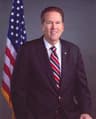 Vern Buchanan
Republican · Florida
 Kat Cammack
Republican · Florida
 Kathy Castor
Democrat · Florida
 Byron Donalds
Republican · Florida
 Neal Dunn
Republican · Florida
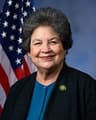 Lois Frankel
Democrat · Florida
 Maxwell Frost
Democrat · Florida
 Randy Fine
Republican · Florida
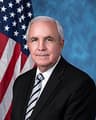 Carlos Gimenez
Republican · Florida
 Mike Haridopolos
Republican · Florida
 Anna Paulina Luna
Republican · Florida
 Laurel Lee
Republican · Florida
 Brian Mast
Republican · Florida
 Cory Mills
Republican · Florida
 Jared Moskowitz
Democrat · Florida
 Jimmy Patronis
Republican · Florida
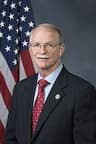 John Rutherford
Republican · Florida
 Maria Salazar
Republican · Florida
 Darren Soto
Democrat · Florida
 Debbie Wasserman Schultz
Democrat · Florida
 Daniel Webster
Republican · Florida
 Frederica Wilson
Democrat · Florida