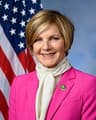
A Democratic bill with 3 Democratic cosponsors · See all 3 cosponsors
Last activity — Referred to the House Committee on Education and Workforce.
In committee
Introduced and handed to a committee in the chamber it started in.
The committee holds it, and most bills are never heard from again. A hearing or a committee vote would be news; silence is the usual outcome, and it kills the bill without anyone voting against it.
Its path through Congress
- Introduced
- In Committee
What this bill would do
This bill, titled the "Full-Service Community School Expansion Act of 2026," aims to improve and expand the full-service community school program. It authorizes significant annual appropriations increasing from $500 million in 2027 to $1 billion by 2031. The legislation establishes new definitions for roles like community school coordinators and initiative directors to manage school success. It creates a framework for planning, implementation, and expansion grants for eligible schools. Additionally, it provides for State-level grants and specific support for Bureau-funded schools. The ultimate goal is to integrate student supports, enriched learning, and community engagement within the school environment.
Yes· 3 of 44
- Scored +10
Does this put more money into public schools?
The legislation authorizes massive federal funding increases ranging from $500 million to $1 billion annually for community schools.
- Scored +9
Would children be better off under this?
The primary goal of the bill is to improve health, well-being, and academic outcomes for children and students.
- Scored +9
Would households on low incomes be better off under this?
Grants are specifically targeted toward high-poverty schools and communities needing comprehensive social and economic support.
The opposite
- Scored -5
Does this reduce what the federal government spends?
The bill authorizes significant new federal spending, scaling up to $1,000,000,000 annually by fiscal year 2031.
- Scored -2
Does this make the government pay for what it commits to?
Substantial increases in federal authorizations without offsetting revenue measures weigh negatively on fiscal discipline.
Who it would affect, and how
Potential Positive Impacts for People
-
Increased Funding for Schools: The bill authorizes specific, growing amounts of money for fiscal years 2027 through 2031 to carry out the full-service community school program (Section 2(a)(3)).
-
Integrated Student Supports: Students can benefit from in- and out-of-school support addressing well-being, such as medical, dental, vision, and mental health services (Section 2(b)(8)(A)).
-
Expanded Learning Opportunities: Students may have access to expanded learning time, including before-school, after-school, and summer programs that offer academic instruction and enrichment (Section 2(b)(8)(B)).
-
Family and Community Assistance: Families may receive access to support services such as assistance with housing stability, nutrition, and citizenship preparation (Section 2(b)(8)(A)(ii)).
-
Enhanced Student Safety and Culture: The bill promotes a culture of belonging and safety through restorative discipline practices instead of zero-tolerance practices (Section 2(b)(8)(F)).
-
Support for Specific Populations: The bill provides priority and specific programs for high-need local educational agencies, rural areas, and Indian Tribes or Tribal organizations (Section 2(a)(3)).
Potential Negative Impacts for People
-
Increased Administrative Requirements: Eligible entities must navigate complex requirements, including conducting needs and assets assessments, creating comprehensive planning reports, and submitting implementation and expansion reports (Section 2(b)(2) and Section s 2(c)(1)).
-
Mandatory Data Sharing: To receive grants, entities must enter into data-sharing agreements between local educational agencies and partner entities (Section 2(b)(1)(H) and Section 2(c)(1)(C)).
-
Public Disclosure of Records: Schools receiving grant funds are required to make records related to finances, personnel, and other decisionmaking processes available for public review (Section 2(b)(1)(J) and Section 2(c)(1)(E)).
Groups and Interests Ranking
Every group the model scored this bill for, from -10 to +10. Tap or hover a score for the reason it gave.
- Demographic And Interest Groups
- Would children be better off under this? — The primary goal of the bill is to improve health, well-being, and academic outcomes for children and students. Would households on low incomes be better off under this? — Grants are specifically targeted toward high-poverty schools and communities needing comprehensive social and economic support. Would students be better off under this? — Comprehensive academic, health, and social services are designed to maximize student achievement and well-being. Would Native Americans be better off under this? — The bill includes dedicated programs and priorities for Bureau of Indian Education schools, Indian Tribes, and Tribal organizations. Would people in rural areas be better off under this? — Rural local educational agencies and schools receive explicit funding priorities and specialized coordination support. Would Black Americans be better off under this? — High-need minority communities stand to benefit significantly from targeted grant distributions and equity-focused governance. Would Hispanic Americans be better off under this? — Provisions for bilingual and culturally inclusive communication directly support Hispanic students and families. Would immigrants be better off under this? — The bill authorizes citizenship preparation, English as a second language classes, and immigration legal services. Would people with disabilities be better off under this? — Mandatory integrated student supports and strict non-discrimination protections improve accessibility for students with disabilities. Would people in cities be better off under this? — High-concentration poverty areas in urban environments are major targets for full-service community school grants. Would LGBTQ people be better off under this? — Explicit non-discrimination protections cover sexual orientation and gender identity in all grant activities. Would women be better off under this? — Expanded childcare, early education, and family support services provide substantial benefits to women and mothers. Would people in their twenties and thirties be better off under this? — Programs include transition support for youth, career and technical education, and college preparation. Would Asian Americans be better off under this? — Diverse student populations benefit from culturally inclusive school environments and non-discrimination mandates. Would people in middle age be better off under this? — Adult family members benefit from workforce development, adult education, and community engagement programs. Would middle-income households be better off under this? — Participating community schools offer expanded learning time and enrichment opportunities accessible to middle-class families. Would union members be better off under this? — Labor organizations and educator representatives are explicitly integrated into planning and steering committees. Would white Americans be better off under this? — All students in qualifying high-need schools benefit regardless of demographic background under non-discrimination rules. Would men be better off under this? — General community and student support services benefit male students and family members alike. Would farmers be better off under this? — Rural school districts receive special priority and tailored provisions for accessing community school grants. Would business owners be better off under this? — Local business owners can participate in community-wide leadership teams and workforce partnerships.
- Social Issues And Justice
- Is this likely to lift people out of poverty? — Targeting high-poverty schools with comprehensive resources helps address systemic barriers to student and family success. Does this make housing cost less? — Grant activities directly support homeless prevention, eviction protections, and emergency housing stability services. Does this make child care cost less? — The bill supports on-site early childhood care and education programs as part of family and community engagement strategies. Does this narrow racial gaps in how people are treated? — Priority is given to high-need areas, and governance teams are required to reflect the racial and ethnic diversity of the community. Is this likely to reduce homelessness? — The legislation explicitly authorizes services addressing homelessness prevention and housing stability for students and families. Does this expand the rights of people with disabilities? — Grant assurances explicitly prohibit discrimination based on disability and support inclusive educational practices. Does this narrow the gap between how men and women are treated? — Provisions mandate services and leadership representation without discrimination based on sex. Does this expand the rights of LGBTQ people? — The bill includes explicit non-discrimination protections covering sexual orientation and gender identity across all grant activities. Does this make it easier for immigrants already here to become citizens? — The bill allows grant funds to support citizenship preparation classes and immigration-related legal services for families.
- Healthcare
- Does this make health care easier to get in general? — Schools are equipped to coordinate medical, dental, and vision care alongside social services for students and families. Does this make mental health care easier to get? — The legislation explicitly funds integrated student supports including mental and behavioral health services and trauma-informed care. Does this do more about addiction and overdose deaths? — Grant programs support substance abuse prevention and education activities within participating schools and communities.
- Education And Technology
- Does this put more money into public schools? — The legislation authorizes massive federal funding increases ranging from $500 million to $1 billion annually for community schools. Does this make college cost less? — Grants support college counseling, preparation courses, dual-enrollment credits, and FAFSA completion assistance. Does this get reliable internet to more people? — The bill provides technical assistance and resources for students with limited access to digital devices and high-speed internet.
- Governance And Ideology
- Does this make what the government does easier for the public to see? — The bill mandates that leadership team meetings be open to the public and that financial and personnel records be accessible for review. Does this leave more decisions to the states? — The legislation provides specific state-level grants and steering committees to empower states in implementing community school frameworks. Does this give the federal government more power? — The bill establishes new federal grant programs administered through the Department of Education.
- Environment Energy And Infrastructure
- Does this invest in rural communities? — The bill includes explicit prioritization and tailored provisions for schools located in rural areas and on Tribal lands.
- Economy And Finance
- Is this likely to create jobs? — The bill creates new jobs such as community school coordinators and initiative directors within schools and local educational agencies. Is this likely to grow the economy? — Investing in workforce development, education, and family support services helps strengthen the local labor force and community economy. Does this make it easier to run a small business? — Local businesses are included as partners in community-wide leadership teams to support school success and neighborhood development. Does this strengthen the rights of workers to organise? — The bill includes labor organization representatives in leadership and steering committees, fostering collaborative relationships. Does this reduce what the federal government spends? — The bill authorizes significant new federal spending, scaling up to $1,000,000,000 annually by fiscal year 2031. Does this make the government pay for what it commits to? — Substantial increases in federal authorizations without offsetting revenue measures weigh negatively on fiscal discipline.
- 5/12/2026
- Referred to the House Committee on Education and Workforce.
- 3 Cosponsors added.
- Introduced in House
2 bills Congress.gov lists as related to this one — companions in the other chamber, earlier versions, and bills this one absorbed or was folded into.
 Suzanne Bonamici
Democrat · Oregon
 Becca Balint
Democrat · Vermont
 Eleanor Norton
Democrat · District of Columbia