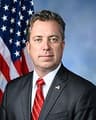
Andrew Ogles (R-TN)
Safeguarding Honest Speech Act of 2026
A Republican bill with 5 Republican cosponsors · See all 5 cosponsors
Last activity — Referred to the House Committee on Oversight and Government Reform.
In committee
Introduced and handed to a committee in the chamber it started in.
The committee holds it, and most bills are never heard from again. A hearing or a committee vote would be news; silence is the usual outcome, and it kills the bill without anyone voting against it.
Its path through Congress
- Introduced
- In Committee
What this bill would do
The ``Safeguarding Honest Speech Act of 2026'' aims to prevent the use of federal funds for policies that require employees or contractors to use preferred pronouns or names other than a person's legal name. It specifically prohibits the use of pronouns that are incompatible with an individual's sex. The bill requires federal agencies to provide a formal response to any employee or contractor who reports a violation within 30 days. It also establishes a private right of action for aggrieved employees or contractors to sue the responsible federal agency or department. If successful, courts can award relief such as injunctions, compensatory damages, or punitive damages up to $100,000.
Yes
- Scored +5
Does this protect the individual right to speak freely?
The bill prohibits the government from compelling employees to use specific language or pronouns that conflict with their sex.
- Scored +2
Does this make what the government does easier for the public to see?
The bill mandates that federal agencies must issue a formal response to notice of a violation within 30 days.
The opposite
- Scored -7
Would LGBTQ people be better off under this?
The bill limits the ability for individuals to have their preferred pronouns recognized in federal agency settings.
- Scored -7
Does this expand the rights of LGBTQ people?
The bill prohibits federal agencies from using funds to require the use of preferred pronouns that are incompatible with a person's biological sex.
Who it would affect, and how
Potential Positive Impacts for People
-
Protection against compelled language: The bill prohibits federal agencies from using funds to require employees or contractors to use preferred pronouns that are incompatible with their sex or names other than a person's legal name (Section 2(a)).
-
Accountability for federal agencies: The bill mandates that federal agencies must issue a formal response to a written notice of an alleged violation within 30 days (Section 2(b)(1)).
-
Legal recourse for employees: Employees or contractors who feel they have been victims of a violation have the right to commence a civil action against the responsible federal agency or department (Section 2(b)(2)).
-
Access to judicial relief: If an employee takes legal action, they may receive various forms of relief, including temporary, preliminary, or permanent injunctions, compensatory damages, punitive or exemplary damages up to $100,000, and reasonable attorney fees (Section 2(b)(3)).
Potential Negative Impacts for People
- Restrictions on pronoun and name usage: Federal employees and contractors may be prohibited from using preferred pronouns that are incompatible with a person's sex or using names other than a person's legal name (Section 2(a)).
Groups and Interests Ranking
Every group the model scored this bill for, from -10 to +10. Tap or hover a score for the reason it gave.
- Demographic And Interest Groups
- Would LGBTQ people be better off under this? — The bill limits the ability for individuals to have their preferred pronouns recognized in federal agency settings.
- Governance And Ideology
- Does this protect the individual right to speak freely? — The bill prohibits the government from compelling employees to use specific language or pronouns that conflict with their sex. Does this make what the government does easier for the public to see? — The bill mandates that federal agencies must issue a formal response to notice of a violation within 30 days.
- Social Issues And Justice
- Does this expand the rights of LGBTQ people? — The bill prohibits federal agencies from using funds to require the use of preferred pronouns that are incompatible with a person's biological sex.
- 4/29/2026
- Referred to the House Committee on Oversight and Government Reform.
- 5 Cosponsors added.
- Introduced in House
 Lauren Boebert
Republican · Colorado
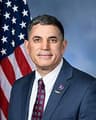 Andrew Clyde
Republican · Georgia
 Elijah Crane
Republican · Arizona
 Paul Gosar
Republican · Arizona
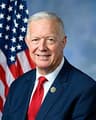 Randy Weber
Republican · Texas