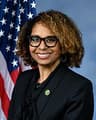
Sydney Kamlager-Dove (D-CA)
'Directly Impacted Child Rehab and Safety Act
A Democratic bill with 8 Democratic cosponsors · See all 8 cosponsors
Last activity — Referred to the Committee on the Judiciary, and in addition to the Committee on Ways and Means, for a period to be subsequently determined by the Speaker, in each case for consideration of such provisions as fall within the jurisdiction of the committee concerned.
In committee
Introduced and handed to a committee in the chamber it started in.
The committee holds it, and most bills are never heard from again. A hearing or a committee vote would be news; silence is the usual outcome, and it kills the bill without anyone voting against it.
Its path through Congress
- Introduced
- In Committee
What this bill would do
The "Directly Impacted Child Rehab and Safety Act" amends federal laws regarding how juveniles are treated within the justice system. It changes how the age of certain incarcerated juveniles is accounted for and modifies the criteria used when transferring juveniles to adult court. The bill also updates the legal standards for murder charges involving individuals under 18. Additionally, it directs the Bureau of Justice Statistics to conduct a comprehensive review of data regarding children in the federal system. Finally, it authorizes competitive grants for states to improve collaboration between child welfare and juvenile justice agencies.
Yes· 3 of 13
- Scored +5
Would children be better off under this?
The bill emphasizes rehabilitation, trauma consideration, and enhanced collaboration between welfare and justice systems for children.
- Scored +4
Does this shorten or soften prison sentences?
The bill requires courts to consider a juvenile's rehabilitative potential, trauma history, and best interests during proceedings.
- Scored +3
Does this make what the government does easier for the public to see?
The bill mandates comprehensive statistical reviews of incarcerated children to be published annually.
The opposite
- Scored -1
Does this reduce what the federal government spends?
The bill authorizes competitive grants for state agency collaboration, which represents new federal spending.
Who it would affect, and how
Potential Positive Impacts for People
-
Enhanced consideration for juvenile rehabilitation: The bill requires that when deciding on delinquency proceedings, officials must consider the juvenile's rehabilitative potential and the best interest of the child (Section 2(b)(6)).
-
Better understanding of childhood trauma: The law adds a requirement for officials to consider a juvenile's prior exposure to adverse childhood experiences and childhood trauma when determining legal proceedings (Section 2(b)(5)).
-
Improved data collection for justice oversight: The bill mandates a comprehensive statistical review by the Bureau of Justice Statistics to track the number, demographics, and sentences of children subject to federal prosecution and incarceration (Section 3(a)).
-
Increased collaboration for vulnerable children: The bill allows for competitive grants that enable state child welfare and juvenile justice agencies to collaborate on programs for children such as those in foster care and the juvenile justice system (Section 4(a)(2)(A)).
-
Targeted services for high-risk youth: Grants can be used to develop practices that provide targeted, evidence-based services, including educational and behavioral health interventions, for specific groups of children (Section 4(a)(3)(A)(iii)).
Potential Negative Impacts for People
-
Changes to crime transfer thresholds: The bill alters the age and specific crime criteria used for transferring juveniles to district courts for criminal prosecution (Section 2(b)(1)-(3)).
-
Potential for stricter murder liability standards: The bill introduces specific requirements that must be proven for a person under 18 to be held liable for murder (Section 2(d)).
Groups and Interests Ranking
Every group the model scored this bill for, from -10 to +10. Tap or hover a score for the reason it gave.
- Demographic And Interest Groups
- Would children be better off under this? — The bill emphasizes rehabilitation, trauma consideration, and enhanced collaboration between welfare and justice systems for children. Would households on low incomes be better off under this? — The bill provides targeted services and better data for children in the child welfare and foster care systems. Would Native Americans be better off under this? — The bill explicitly mentions involving tribal governments in developing policy and practice reforms. Would people with disabilities be better off under this? — The bill mandates the collection of demographic data specifically regarding individuals with disabilities in the justice system. Would Black Americans be better off under this? — The bill includes demographic tracking to monitor the treatment of diverse populations in the justice system. Would Asian Americans be better off under this? — The bill includes demographic tracking to monitor the treatment of diverse populations in the justice system. Would Hispanic Americans be better off under this? — The bill includes demographic tracking to monitor the treatment of diverse populations in the justice system. Would white Americans be better off under this? — The bill includes demographic tracking to monitor the treatment of diverse populations in the justice system.
- Social Issues And Justice
- Does this shorten or soften prison sentences? — The bill requires courts to consider a juvenile's rehabilitative potential, trauma history, and best interests during proceedings. Is this likely to lift people out of poverty? — The bill enhances support for children in the child welfare and foster care systems through agency collaboration. Does this narrow racial gaps in how people are treated? — The bill mandates statistical reviews that include demographic information to better understand outcomes for children.
- Governance And Ideology
- Does this make what the government does easier for the public to see? — The bill mandates comprehensive statistical reviews of incarcerated children to be published annually.
- Healthcare
- Does this make mental health care easier to get? — The bill supports grants for evidence-based behavioral health interventions for vulnerable children.
- Economy And Finance
- Does this reduce what the federal government spends? — The bill authorizes competitive grants for state agency collaboration, which represents new federal spending.
- 4/28/2026
- Referred to the Committee on the Judiciary, and in addition to the Committee on Ways and Means, for a period to be subsequently determined by the Speaker, in each case for consideration of such provisions as fall within the jurisdiction of the committee concerned.
- 8 Cosponsors added.
- Introduced in House
3 bills Congress.gov lists as related to this one — companions in the other chamber, earlier versions, and bills this one absorbed or was folded into.
 Steve Cohen
Democrat · Tennessee
 Henry Johnson
Democrat · Georgia
 Jonathan Jackson
Democrat · Illinois
 LaMonica McIver
Democrat · New Jersey
 Lateefah Simon
Democrat · California
 Rashida Tlaib
Democrat · Michigan
 Shri Thanedar
Democrat · Michigan
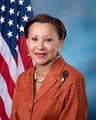 Nydia Velázquez
Democrat · New York