
Mike Carey (R-OH)
Supporting Energy and Economic Development (SEED) Act
A Republican bill with 5 Democratic cosponsors · See all 17 cosponsors
Last activity — Referred to the House Committee on Ways and Means.
In committee
Introduced and handed to a committee in the chamber it started in.
The committee holds it, and most bills are never heard from again. A hearing or a committee vote would be news; silence is the usual outcome, and it kills the bill without anyone voting against it.
Its path through Congress
- Introduced
- In Committee
What this bill would do
The SEED Act aims to amend the Internal Revenue Code of 1986. It focuses on extending incentives for biodiesel and renewable diesel. Specifically, the bill extends the expiration date for certain income tax credits and excise tax incentives from 2024 to 2029. It also introduces a provision to deny a double benefit for fuels that receive a credit under section 45Z(a). The changes apply to fuel sold or used on or after the date the Act is enacted.
Yes· 3 of 12
- Scored +6
Does this put more money into wind, solar and other renewable power?
Extends critical financial incentives that attract investment into the biodiesel and renewable diesel industries.
- Scored +6
Would farmers be better off under this?
Increases demand for agricultural feedstocks used in biodiesel and renewable diesel production.
- Scored +5
Does this cut the pollution that drives climate change?
Encourages the use of biodiesel and renewable diesel which generally have lower carbon footprints than petroleum diesel.
The opposite
- Scored -2
Does this reduce what the federal government owes?
Extending tax credits increases government expenditures/lost revenue, potentially increasing the deficit.
- Scored -2
Does this reduce what the federal government spends?
The bill extends tax-funded incentives rather than reducing spending.
- Scored -1
Does this make the government pay for what it commits to?
Extends tax expenditures without introducing new revenue offsets.
Who it would affect, and how
Potential Positive Impacts for People
- Extension of Incentives: The bill extends the timeline for biodiesel and renewable diesel incentives by changing the expiration year from 2024 to 2029 in several sections of the Internal Revenue Code (Section 2(a)(1) and Section 2(b)(1)(A) and (2)). This provides continued financial incentives for these fuels through the year 2029.
Potential Negative Impacts for People
- Denial of Double Benefit: The bill implements a rule where the credit amount for certain fuels will be zero if a credit is already allowed under section 45Z(a) for any taxable year (Section 2(a)(2)(B) and Section 2(b)(1)(B)(ii)). This prevents certain fuels from receiving multiple types of tax benefits.
Groups and Interests Ranking
Every group the model scored this bill for, from -10 to +10. Tap or hover a score for the reason it gave.
- Environment Energy And Infrastructure
- Does this put more money into wind, solar and other renewable power? — Extends critical financial incentives that attract investment into the biodiesel and renewable diesel industries. Does this cut the pollution that drives climate change? — Encourages the use of biodiesel and renewable diesel which generally have lower carbon footprints than petroleum diesel. Does this invest in rural communities? — Biodiesel production often relies on agricultural feedstocks, benefiting rural farming communities. Does this better protect air, water and wildlife? — Promotes the transition toward renewable energy sources for transportation. Does this reduce how much oil, gas and coal is produced? — Increases the viability of alternatives to traditional petroleum-based diesel.
- Demographic And Interest Groups
- Would farmers be better off under this? — Increases demand for agricultural feedstocks used in biodiesel and renewable diesel production. Would people in rural areas be better off under this? — Supports rural economies through agricultural demand and energy production facilities. Would business owners be better off under this? — Directly benefits owners of biodiesel and renewable diesel production facilities via tax credits.
- Economy And Finance
- Does this make it easier to run a small business? — Supports small-scale biofuel producers through extended tax credits. Does this cut taxes for small businesses? — Extends tax credits for biodiesel and renewable diesel which benefits small businesses in the fuel production sector. Is this likely to grow the economy? — Provides stability and financial incentives for the renewable diesel and biodiesel sectors. Is this likely to create jobs? — Extension of energy incentives typically supports employment in the biofuels production industry. Does this reduce what the federal government spends? — The bill extends tax-funded incentives rather than reducing spending. Does this reduce what the federal government owes? — Extending tax credits increases government expenditures/lost revenue, potentially increasing the deficit. Does this make the government pay for what it commits to? — Extends tax expenditures without introducing new revenue offsets.
- 9/14/2026
- 1 Cosponsor added.
- 7/16/2026
- 1 Cosponsor added.
- 6/3/2026
- 1 Cosponsor added.
- 5/19/2026
- 1 Cosponsor added.
- 5/12/2026
- 3 Cosponsors added.
- 4/27/2026
- Referred to the House Committee on Ways and Means.
- 10 Cosponsors added.
- Introduced in House
 Mike Bost
Republican · Illinois
 Nikki Budzinski
Democrat · Illinois
 Jim Costa
Democrat · California
 J. Correa
Democrat · California
 Salud Carbajal
Democrat · California
 Randy Feenstra
Republican · Iowa
 Brad Finstad
Republican · Minnesota
 Andrew Garbarino
Republican · New York
 Ashley Hinson
Republican · Iowa
 Dusty Johnson
Republican · South Dakota
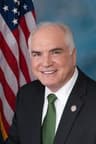 Mike Kelly
Republican · Pennsylvania
 Darin LaHood
Republican · Illinois
 Tracey Mann
Republican · Kansas
 Blake Moore
Republican · Utah
 Mariannette Miller-Meeks
Republican · Iowa
 Paul Tonko
Democrat · New York
 Claudia Tenney
Republican · New York