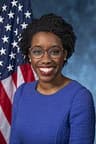
Lauren Underwood (D-IL)
Protecting Moms and Babies Against Climate Change Act
A Democratic bill with 71 Democratic cosponsors · See all 71 cosponsors
Last activity — Referred to the House Committee on Energy and Commerce.
In committee
Introduced and handed to a committee in the chamber it started in.
The committee holds it, and most bills are never heard from again. A hearing or a committee vote would be news; silence is the usual outcome, and it kills the bill without anyone voting against it.
Its path through Congress
- Introduced
- In Committee
What this bill would do
The Protecting Moms and Babies Against Climate Change Act aims to protect vulnerable individuals, including pregnant people and children under three, from risks like extreme heat and air pollution. It establishes a grant program for covered entities to provide services, support, and mitigation strategies to address these climate-related health risks. Additionally, the bill creates a grant program for health profession schools to integrate climate change education and training into their curricula. A new NIH Consortium will be established to coordinate research on climate-related risks to birth and maternal health. Furthermore, the Secretary of Health and Human Services is tasked with developing a strategy to identify specific geographic areas at high risk for adverse maternal and infant health outcomes due to climate change.
Yes· 3 of 12
- Scored +7
Would children be better off under this?
The bill specifically targets protections and health services for children under three years of age.
- Scored +7
Would women be better off under this?
The bill provides specific health protections and research funding for pregnant individuals.
- Scored +7
Does this put more money into medical research?
The bill establishes an NIH Consortium to coordinate and fund research on climate-sensed risks to birth and maternal health.
The opposite
- Scored -1
Does this reduce what the federal government spends?
The bill authorizes $105 million in new spending over four years for grant programs.
Who it would affect, and how
Potential Positive Impacts for People
-
Direct Support for Vulnerable Individuals: Grant funds may be used to provide essential items such as air conditioning units, weatherization support, filtration systems, and household appliances (Section 3(e)(1)(A)(i)).
-
Financial and Emergency Assistance: The bill allows for the provision of direct financial assistance, as well as support for housing, evacuation, transportation, and mental health counseling to help people prepare for or recover from extreme weather events (Section s 3(e)(1)(A)(ii)-(iii)).
-
Improved Healthcare Training: Health profession schools can receive grants to train providers to better identify and counsel patients regarding climate change risks (Section 4(d)).
-
Targeted Risk Mitigation: Funds can be used for community initiatives like expanding tree canopy coverage and improving infrastructure to mitigate environmental risks (Section 3(e)(2)(A)-(B)).
-
Advancing Scientific Knowledge: The establishment of an NIH Consortium is designed to coordinate research that identifies risks and strategies to reduce exposure to climate-related dangers (Section 5(b)(1)-(2)).
Potential Negative Impacts for People
-
Risk of Unintended Community Burdens: Grant applications must include strategies to prevent initiatives from causing the displacement of residents and businesses, or causing increases in rent and housing prices (Section 3(c)(4)).
-
Potential for Disproportionate Impacts: There is a requirement to ensure that initiatives do not result in disproportionate adverse impacts on racial and ethnic minority groups and other underserved populations (Section 3(c)(4)(D)).
Groups and Interests Ranking
Every group the model scored this bill for, from -10 to +10. Tap or hover a score for the reason it gave.
- Demographic And Interest Groups
- Would children be better off under this? — The bill specifically targets protections and health services for children under three years of age. Would women be better off under this? — The bill provides specific health protections and research funding for pregnant individuals. Would households on low incomes be better off under this? — The bill provides direct financial assistance, weatherization, and housing support for vulnerable individuals. Would Black Americans be better off under this? — The bill prioritizes addressing racial and ethnic disparities in maternal and infant health outcomes. Would Hispanic Americans be better off under this? — The bill prioritizes addressing racial and ethnic disparities in maternal and infant health outcomes. Would Native Americans be better off under this? — The bill includes support for Indian Tribes and Urban Indian organizations in its covered entity definitions.
- Healthcare
- Does this put more money into medical research? — The bill establishes an NIH Consortium to coordinate and fund research on climate-sensed risks to birth and maternal health. Does this make mental health care easier to get? — The bill allows grant funds to be used for mental health counseling to help people prepare for or recover from extreme weather events.
- Environment Energy And Infrastructure
- Does this better protect air, water and wildlife? — The bill funds initiatives to mitigate climate risks through tree canopy expansion and infrastructure improvements. Does this improve buses, trains and other public transport? — The bill allows for grant funds to provide transportation assistance to vulnerable individuals facing extreme weather.
- Social Issues And Justice
- Is this likely to lift people out of poverty? — The bill provides for direct financial assistance and support for housing and transportation to vulnerable individuals.
- Education And Technology
- Does this make college cost less? — The bill provides grants to health profession schools to integrate climate change education into their curricula.
- Economy And Finance
- Does this reduce what the federal government spends? — The bill authorizes $105 million in new spending over four years for grant programs.
- 8/24/2026
- 1 Cosponsor added.
- 5/20/2026
- 1 Cosponsor added.
- 4/23/2026
- 27 Cosponsors added.
- 4/21/2026
- Referred to the House Committee on Energy and Commerce.
- 42 Cosponsors added.
- Introduced in House
2 bills Congress.gov lists as related to this one — companions in the other chamber, earlier versions, and bills this one absorbed or was folded into.
 Alma Adams
Democrat · North Carolina
 Joyce Beatty
Democrat · Ohio
 Nanette Barragán
Democrat · California
 Wesley Bell
Democrat · Missouri
 Emanuel Cleaver
Democrat · Missouri
 Yvette Clarke
Democrat · New York
 Steve Cohen
Democrat · Tennessee
 André Carson
Democrat · Indiana
 Salud Carbajal
Democrat · California
 Angie Craig
Democrat · Minnesota
 Troy Carter
Democrat · Louisiana
 Herbert Conaway
Democrat · New Jersey
 Danny Davis
Democrat · Illinois
 Suzan DelBene
Democrat · Washington
 Mark DeSaulnier
Democrat · California
 Debbie Dingell
Democrat · Michigan
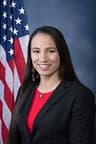 Sharice Davids
Democrat · Kansas
 Valerie Foushee
Democrat · North Carolina
 Shomari Figures
Democrat · Alabama
 Al Green
Democrat · Texas
 John Garamendi
Democrat · California
 Jesús García
Democrat · Illinois
 Adelita Grijalva
Democrat · Arizona
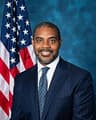 Steven Horsford
Democrat · Nevada
 Jahana Hayes
Democrat · Connecticut
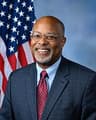 Glenn Ivey
Democrat · Maryland
 Henry Johnson
Democrat · Georgia
 Sara Jacobs
Democrat · California
 Jonathan Jackson
Democrat · Illinois
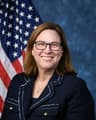 Julie Johnson
Democrat · Texas
 William Keating
Democrat · Massachusetts
 Raja Krishnamoorthi
Democrat · Illinois
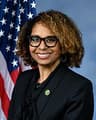 Sydney Kamlager-Dove
Democrat · California
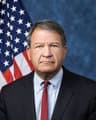 George Latimer
Democrat · New York
 Betty McCollum
Democrat · Minnesota
 Gwen Moore
Democrat · Wisconsin
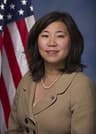 Grace Meng
Democrat · New York
 Seth Moulton
Democrat · Massachusetts
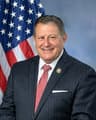 Joseph Morelle
Democrat · New York
 Lucy McBath
Democrat · Georgia
 Morgan McGarvey
Democrat · Kentucky
 Seth Magaziner
Democrat · Rhode Island
 Kevin Mullin
Democrat · California
 Jennifer McClellan
Democrat · Virginia
 LaMonica McIver
Democrat · New Jersey
 Christian Menefee
Democrat · Texas
 Eleanor Norton
Democrat · District of Columbia
 Chellie Pingree
Democrat · Maine
 Mark Pocan
Democrat · Wisconsin
 Jimmy Panetta
Democrat · California
 Ayanna Pressley
Democrat · Massachusetts
 Nellie Pou
Democrat · New Jersey
 Mike Quigley
Democrat · Illinois
 Robert Scott
Democrat · Virginia
 Adam Smith
Democrat · Washington
 Janice Schakowsky
Democrat · Illinois
 Marilyn Strickland
Democrat · Washington
 Terri Sewell
Democrat · Alabama
 Bradley Schneider
Democrat · Illinois
 Darren Soto
Democrat · Florida
 Mary Gay Scanlon
Democrat · Pennsylvania
 Haley Stevens
Democrat · Michigan
 Melanie Stansbury
Democrat · New Mexico
 Andrea Salinas
Democrat · Oregon
 Lateefah Simon
Democrat · California
 Mike Thompson
Democrat · California
 Rashida Tlaib
Democrat · Michigan
 Nydia Velázquez
Democrat · New York
 Marc Veasey
Democrat · Texas
 Frederica Wilson
Democrat · Florida
 Bonnie Watson Coleman
Democrat · New Jersey