
A Republican bill with 26 Republican cosponsors · See all 26 cosponsors
Last activity — Referred to the House Committee on Agriculture.
In committee
Introduced and handed to a committee in the chamber it started in.
The committee holds it, and most bills are never heard from again. A hearing or a committee vote would be news; silence is the usual outcome, and it kills the bill without anyone voting against it.
Its path through Congress
- Introduced
- In Committee
What this bill would do
The Equal Treatment for Farmers Act aims to strike all references to "socially disadvantaged farmers and ranchers" throughout various Federal laws. This involves amending several acts, including the Federal Crop Insurance Act and the Consolidated Farm and Rural Development Act. The bill removes specific language regarding these groups from numerous agricultural programs and statutes. Additionally, the legislation repeals certain existing sections of law. Finally, it establishes a broad prohibition on USDA programs providing preferences or enhanced benefits based on race or gender.
Yes
- Scored +3
Would white Americans be better off under this?
The bill eliminates race-based preferences in USDA programs, which may benefit the majority demographic of agricultural producers.
The opposite· 3 of 11
- Scored -7
Does this narrow racial gaps in how people are treated?
The bill removes the 'socially disadvantaged' designation which is used to target assistance toward racial equity in agriculture.
- Scored -6
Would Black Americans be better off under this?
The bill strips specific legal recognition and benefit preferences for socially disadvantaged farmers, a category that includes many Black farmers.
- Scored -6
Would Hispanic Americans be better off under this?
The bill removes targeted assistance and priority consideration for socially disadvantaged groups including Hispanic farmers.
Who it would affect, and how
Potential Positive Impacts for People
- Prohibition of Preferences: Under Section 3, no USDA program may provide any preference, priority consideration, or enhanced benefits to any individual or entity based on race or gender.
Potential Negative Impacts for People
-
Removal of Socially Disadvantaged Status: Section 2 strikes references to "socially disadvantaged farmers and ranchers" from various Federal laws, including the Federal Crop Insurance Act (7 U.S.C. 1524(a)(3)), the Agricultural Marketing Act of 1946 (7 U.S.C. 1627c), and the Consolidated Farm and Rural Development Act (7 U.S.C. 1921 et seq.). This removes the specific designation for these groups across multiple agricultural statutes.
-
Changes to Assistance and Preferences: The bill modifies how assistance is categorized and provided in several acts. For example, in the Food, Agriculture, Conservation, and Trade Act of 1990 (7 U.S.C. 2279), the bill strikes various paragraphs and subparagraphs that include "socially disadvantaged farmers and ranchers."
-
Elimination of Specific Program Provisions: Section 2 includes instructions to strike several existing sections of law, such as section 305 of 7 U.S.C. 2279a and section 623 of the Agricultural Credit Act of 1987 (7 U.S.C. 1985 note).
Groups and Interests Ranking
Every group the model scored this bill for, from -10 to +10. Tap or hover a score for the reason it gave.
- Demographic And Interest Groups
- Would white Americans be better off under this? — The bill eliminates race-based preferences in USDA programs, which may benefit the majority demographic of agricultural producers. Would Black Americans be better off under this? — The bill strips specific legal recognition and benefit preferences for socially disadvantaged farmers, a category that includes many Black farmers. Would Asian Americans be better off under this? — The bill strikes references to socially disadvantaged farmers which can include many Asian-American agricultural producers. Would Hispanic Americans be better off under this? — The bill removes targeted assistance and priority consideration for socially disadvantaged groups including Hispanic farmers. Would Native Americans be better off under this? — The bill removes the legal designation and associated benefits for socially disadvantaged farmers which impacts Native American communities. Would households on low incomes be better off under this? — Removing the socially disadvantaged status may reduce access to targeted agricultural assistance for lower-income demographics. Would women be better off under this? — The bill prohibits USDA programs from providing any preference or enhanced benefits based on gender. Would farmers be better off under this? — The bill removes specialized assistance programs and preferences previously available to socially disadvantaged farmers and ranchers. Would people in rural areas be better off under this? — The bill removes specific priority considerations in rural development programs for socially disadvantaged groups.
- Social Issues And Justice
- Does this narrow racial gaps in how people are treated? — The bill removes the 'socially disadvantaged' designation which is used to target assistance toward racial equity in agriculture. Does this narrow the gap between how men and women are treated? — The bill prohibits USDA programs from providing benefits or preferences based on gender.
- Environment Energy And Infrastructure
- Does this invest in rural communities? — The bill strikes provisions that provided specific assistance to socially disadvantaged farmers and ranchers in rural development programs.
- 5/19/2026
- 1 Cosponsor added.
- 4/28/2026
- 2 Cosponsors added.
- 4/20/2026
- Referred to the House Committee on Agriculture.
- 23 Cosponsors added.
- Introduced in House
 Lauren Boebert
Republican · Colorado
 James Baird
Republican · Indiana
 Tim Burchett
Republican · Tennessee
 Josh Brecheen
Republican · Oklahoma
 Earl Carter
Republican · Georgia
 Andrew Clyde
Republican · Georgia
 Ben Cline
Republican · Virginia
 Mike Collins
Republican · Georgia
 Randy Fine
Republican · Florida
 Andy Harris
Republican · Maryland
 Pat Harrigan
Republican · North Carolina
 Julia Letlow
Republican · Louisiana
 Mary Miller
Republican · Illinois
 Barry Moore
Republican · Alabama
 Tim Moore
Republican · North Carolina
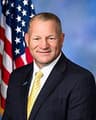 Troy Nehls
Republican · Texas
 Ralph Norman
Republican · South Carolina
 Andrew Ogles
Republican · Tennessee
 Scott Perry
Republican · Pennsylvania
 David Rouzer
Republican · North Carolina
 Chip Roy
Republican · Texas
 Adrian Smith
Republican · Nebraska
 W. Steube
Republican · Florida
 Keith Self
Republican · Texas
 Derrick Van Orden
Republican · Wisconsin
 Tony Wied
Republican · Wisconsin