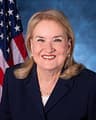
Sylvia Garcia (D-TX)
Improving Access to Financial Coaching Act of 2026
A Democratic bill with 8 Democratic cosponsors · See all 8 cosponsors
Last activity — Referred to the House Committee on Financial Services.
In committee
Introduced and handed to a committee in the chamber it started in.
The committee holds it, and most bills are never heard from again. A hearing or a committee vote would be news; silence is the usual outcome, and it kills the bill without anyone voting against it.
Its path through Congress
- Introduced
- In Committee
What this bill would do
The "Improving Access to Financial Coaching Act of 2026" directs the Secretary of the Treasury to establish a grant program for financial coaching services. This program is to be administered by the Director of the Office of Consumer Policy. The goal is to help various groups, including low- and moderate-income households, manage personal finances, debt, and savings. Eligible entities such as nonprofits and community-based organizations can receive these grants to provide coaching. Additionally, the Act seeks to develop standardized practices for certifying financial coaches and agencies.
Yes· 3 of 11
- Scored +5
Would households on low incomes be better off under this?
The bill prioritizes grants for individuals making at or below 120 percent of the Area Median Income.
- Scored +4
Would Black Americans be better off under this?
The bill specifically targets census tracts with high racial or ethnic minority populations.
- Scored +4
Would people in rural areas be better off under this?
The bill explicitly includes census tracts located in rural areas as eligible for the coaching program.
The opposite
No question was scored the opposite.
Who it would affect, and how
Potential Positive Impacts for People
-
Improved Financial Stability: Financial coaching services can help people improve their credit scores, build savings, and reduce debt (Section 2(a)(2)).
-
Increased Access to Guidance: The bill aims to increase consumer access to trusted, high-quality financial guidance (Section 2(b)(3)).
-
Support for Specific Communities: The grant program targets specific areas, including census tracts with low median family incomes, areas with high racial or ethnic minority populations, and rural areas (Section 3(b)(2)(D)(i)).
-
Standardized Service Quality: The program seeks to research and develop standardized practices for certifying financial coaches and the agencies that employ them (Section 2(b)(4) and Section 3(e)).
-
Language Accessibility: By requiring relationships with entities that provide non-English language services, the bill addresses the needs of those with limited English proficiency (Section 3(b)(2)(B)).
Potential Negative Impacts for People
- No negative impacts or burdens are explicitly mentioned in the provided text.
Groups and Interests Ranking
Every group the model scored this bill for, from -10 to +10. Tap or hover a score for the reason it gave.
- Demographic And Interest Groups
- Would households on low incomes be better off under this? — The bill prioritizes grants for individuals making at or below 120 percent of the Area Median Income. Would Black Americans be better off under this? — The bill specifically targets census tracts with high racial or ethnic minority populations. Would people in rural areas be better off under this? — The bill explicitly includes census tracts located in rural areas as eligible for the coaching program. Would Hispanic Americans be better off under this? — The bill emphasizes providing services to populations with high rates of non-English proficiency. Would middle-income households be better off under this? — The bill targets moderate-income households to help them manage personal finances and debt.
- Social Issues And Justice
- Is this likely to lift people out of poverty? — The bill provides financial coaching to help low- and moderate-income households build savings and manage debt. Does this narrow racial gaps in how people are treated? — The bill specifically targets census tracts where at least 50 percent of the population identifies as a racial or ethnic minority.
- Economy And Finance
- Is this likely to grow the economy? — By increasing household financial resilience, the bill aims to support long-term economic mobility. Is this likely to create jobs? — The bill funds organizations to expand their financial coaching programs and services. Does this make it easier to run a small business? — The bill provides support to community development financial institutions which often assist small businesses.
- Governance And Ideology
- Does this make what the government does easier for the public to see? — The bill authorizes the Office of Consumer Policy to oversee and evaluate the national grant program.
- 7/9/2026
- 1 Cosponsor added.
- 6/11/2026
- 2 Cosponsors added.
- 4/20/2026
- Referred to the House Committee on Financial Services.
- 5 Cosponsors added.
- Introduced in House
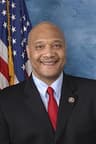 André Carson
Democrat · Indiana
 Al Green
Democrat · Texas
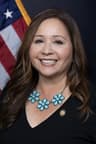 Adelita Grijalva
Democrat · Arizona
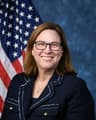 Julie Johnson
Democrat · Texas
 Eleanor Norton
Democrat · District of Columbia
 Emilia Sykes
Democrat · Ohio
 Dina Titus
Democrat · Nevada
 Rashida Tlaib
Democrat · Michigan