
A Republican bill with 24 Republican cosponsors · See all 24 cosponsors
Last activity — Referred to the House Committee on the Judiciary.
In committee
Introduced and handed to a committee in the chamber it started in.
The committee holds it, and most bills are never heard from again. A hearing or a committee vote would be news; silence is the usual outcome, and it kills the bill without anyone voting against it.
Its path through Congress
- Introduced
- In Committee
What this bill would do
This bill is known as the Stop Climate Shakedowns Act of 2026. It aims to protect energy businesses from lawsuits and state laws related to climate change and greenhouse gas emissions. The legislation declares that regulating interstate and international emissions belongs exclusively to the federal government. It prohibits the filing or maintenance of climate suits and energy penalty actions in any federal or state court. Any pending qualified liability actions must be immediately dismissed, and all state energy penalty laws are declared void. Furthermore, the bill establishes federal preemption over the regulation of greenhouse gas emissions and climate change.
Yes· 3 of 15
- Scored +8
Does this give the federal government more power?
Declares that greenhouse gas regulation is governed exclusively by federal law.
- Scored +7
Would billionaires be better off under this?
Protects high-value energy assets and corporations from massive liability payouts.
- Scored +6
Would business owners be better off under this?
Reduces legal risks and energy costs for businesses.
The opposite· 3 of 10
- Scored -9
Does this better protect air, water and wildlife?
Voids state energy penalty laws and removes private rights of action for climate harms.
- Scored -8
Does this cut the pollution that drives climate change?
Removes legal pressure on energy companies to reduce emissions by prohibiting climate lawsuits.
- Scored -8
Does this leave more decisions to the states?
Voids state laws and prohibits state courts from hearing climate liability actions.
Who it would affect, and how
Potential Positive Impacts for People
-
Promotion of affordable energy: Section 2 outlines purposes and findings to promote and preserve affordable, abundant, and reliable energy resources for families and businesses in the United States, which may help maintain energy supplies.
-
Protection of industries: Section 2 notes that the bill prevents the destabilization of industries engaged in lawful commerce by stopping certain civil actions, state tort laws, and climate superfund laws.
Potential Negative Impacts for People
-
Elimination of legal recourse: Section 4 prohibits the filing or maintenance of qualified liability actions in any federal or state court, and mandates the immediate dismissal of any such actions pending on the date of enactment, which prevents individuals or groups from seeking damages or relief for climate change harms.
-
Nullification of state laws: Section 4 declares that each energy penalty law is void and of no effect, and establishes that no private right of action or claim can be maintained under any State law regarding climate change-related harms from greenhouse gas emissions.
Groups and Interests Ranking
Every group the model scored this bill for, from -10 to +10. Tap or hover a score for the reason it gave.
- Environment Energy And Infrastructure
- Is this likely to lower the price at the pump? — Aims to promote and preserve affordable energy for families. Does this better protect air, water and wildlife? — Voids state energy penalty laws and removes private rights of action for climate harms. Does this cut the pollution that drives climate change? — Removes legal pressure on energy companies to reduce emissions by prohibiting climate lawsuits. Does this reduce how much oil, gas and coal is produced? — Explicitly protects and promotes the production of oil, gas, and coal. Does this improve help for people hit by a disaster? — Prevents recovery of costs from energy companies for climate-driven disasters. Does this put more money into wind, solar and other renewable power? — Focuses on protecting traditional energy sources (oil, gas, coal) over transitioning to renewables.
- Demographic And Interest Groups
- Would billionaires be better off under this? — Protects high-value energy assets and corporations from massive liability payouts. Would business owners be better off under this? — Reduces legal risks and energy costs for businesses. Would people in rural areas be better off under this? — Protects the energy industry which is a major employer in rural areas. Would union members be better off under this? — Protects jobs in the traditional energy extraction and production sectors. Would veterans be better off under this, taking everything together? — Ensures energy readiness and deployment capabilities for the Armed Forces. Would households on low incomes be better off under this? — Aims to keep energy prices affordable. Would middle-income households be better off under this? — Aims to keep energy prices affordable. Would children be better off under this? — Reduces corporate accountability for climate change which disproportionately affects future generations. Would people in their twenties and thirties be better off under this? — Reduces corporate accountability for climate change which disproportionately affects future generations.
- Economy And Finance
- Is this likely to grow the economy? — Seeks to increase U.S. economic productivity and international trade position. Does this make it easier to run a small business? — Promotes affordable energy resources for businesses. Is this likely to create jobs? — Protects energy industry stability which may support job retention in that sector. Is this likely to slow the rise in prices? — Aims to preserve affordable energy costs for families and businesses. Does this give people more protection from unfair business practices? — Eliminates the ability of consumers to sue energy companies for climate-related harms.
- National Security And Foreign Policy
- Does this make trade with other countries easier? — Seeks to strengthen the position of the United States in international trade.
- Governance And Ideology
- Does this give the federal government more power? — Declares that greenhouse gas regulation is governed exclusively by federal law. Does this make it easier to do business across state lines? — Prevents destabilizing state-level lawsuits from burdening interstate commerce. Does this leave more decisions to the states? — Voids state laws and prohibits state courts from hearing climate liability actions. Does this protect the right to fair treatment by the courts? — Immediately dismisses pending legal actions without further trial on the merits.
- 9/21/2026
- 1 Cosponsor added.
- 9/10/2026
- 2 Cosponsors added.
- 8/3/2026
- 1 Cosponsor added.
- 7/15/2026
- 3 Cosponsors added.
- 7/13/2026
- 1 Cosponsor added.
- 7/9/2026
- 1 Cosponsor added.
- 6/30/2026
- 1 Cosponsor added.
- 6/29/2026
- 5 Cosponsors added.
- 6/23/2026
- 2 Cosponsors added.
- 6/2/2026
- 1 Cosponsor added.
- 4/29/2026
- 1 Cosponsor added.
- 4/21/2026
- 1 Cosponsor added.
- 4/16/2026
- Referred to the House Committee on the Judiciary.
- 4 Cosponsors added.
- Introduced in House
One bill Congress.gov lists as related to this one — companions in the other chamber, earlier versions, and bills this one absorbed or was folded into.
 Nicholas Begich
Republican · Alaska
 Dan Crenshaw
Republican · Texas
 Mike Collins
Republican · Georgia
 Jeff Crank
Republican · Colorado
 Warren Davidson
Republican · Ohio
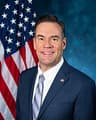 Russ Fulcher
Republican · Idaho
 Paul Gosar
Republican · Arizona
 Craig Goldman
Republican · Texas
 Brandon Gill
Republican · Texas
 James Gallagher
Republican · California
 Wesley Hunt
Republican · Texas
 Trent Kelly
Republican · Mississippi
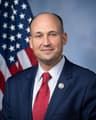 Nicholas Langworthy
Republican · New York
 Mary Miller
Republican · Illinois
 Barry Moore
Republican · Alabama
 August Pfluger
Republican · Texas
 Scott Perry
Republican · Pennsylvania
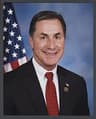 Gary Palmer
Republican · Alabama
 Pete Stauber
Republican · Minnesota
 W. Steube
Republican · Florida
 Derek Schmidt
Republican · Kansas
 Beth Van Duyne
Republican · Texas
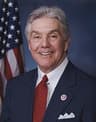 Roger Williams
Republican · Texas
 Rudy Yakym
Republican · Indiana