
A Republican bill with 4 Democratic cosponsors · See all 7 cosponsors
Last activity — Referred to the House Committee on Education and Workforce.
In committee
Introduced and handed to a committee in the chamber it started in.
The committee holds it, and most bills are never heard from again. A hearing or a committee vote would be news; silence is the usual outcome, and it kills the bill without anyone voting against it.
Its path through Congress
- Introduced
- In Committee
What this bill would do
This bill, known as the ``HBCU Research Capacity Act,'' proposes the creation of a Federal Clearinghouse on Grant Opportunities for Historically Black Colleges and Universities. The Clearinghouse will serve as a central resource to provide comprehensive information on federal grant opportunities related to research, development, and building institutional capacity. The Secretary of Education will establish this entity in coordination with several other federal agencies. It aims to address historical underfunding and barriers that limit HBCU access to federal research funding. Additionally, the bill mandates notifications to institutions and annual reports to Congress.
Yes· 3 of 9
- Scored +7
Would Black Americans be better off under this?
The bill specifically targets the support and research capacity of Historically Black Colleges and Universities.
- Scored +6
Does this narrow racial gaps in how people are treated?
The bill aims to address historical underfunding and barriers that limit HBCU access to federal research funding.
- Scored +5
Does this put more money into scientific research?
The bill establishes a clearinghouse to help institutions access and secure federal research and development funding.
The opposite
- Scored -1
Would high-income households be better off under this?
The bill does not directly benefit high-income earners but focuses on institutional capacity building.
Who it would affect, and how
Potential Positive Impacts for People
-
Improved Access to Funding Information: The Clearinghouse will act as a primary resource to identify and provide comprehensive information on federal grant opportunities that support research and development or building institutional capacity (Section 3, subsection a, paragraph 2).
-
Capacity Building Support: The Clearinghouse will include best practices and recommendations specifically designed to help part B institutions build their institutional research capacity and access federal research funding (Section 3, subsection b).
-
Institutional Updates: Part B institutions will have the option to receive quarterly updates regarding the contents of the Clearinghouse to stay informed (Section 4, subsection c, paragraph 1).
Potential Negative Impacts for People
-
Reduced Oversight Protections: The Paperwork Reduction Act shall not apply to any rulemaking or information collection required under this section, which could impact standard information collection procedures (Section 3, subsection a, paragraph 4, subparagraph A).
-
Exemption from Advisory Standards: The Federal Advisory Committee Act shall not apply for the purposes of carrying out the establishment of the Clearinghouse (Section 3, subsection a, paragraph 4, subparagraph B).
Groups and Interests Ranking
Every group the model scored this bill for, from -10 to +10. Tap or hover a score for the reason it gave.
- Demographic And Interest Groups
- Would Black Americans be better off under this? — The bill specifically targets the support and research capacity of Historically Black Colleges and Universities. Would students be better off under this? — Increasing the research capacity of HBCUs can lead to better academic and professional opportunities for their students. Would high-income households be better off under this? — The bill does not directly benefit high-income earners but focuses on institutional capacity building.
- Education And Technology
- Does this put more money into scientific research? — The bill establishes a clearinghouse to help institutions access and secure federal research and development funding. Does this put more money into public schools? — The bill facilitates better access to federal grant opportunities for higher education institutions like HBCUs.
- Social Issues And Justice
- Does this narrow racial gaps in how people are treated? — The bill aims to address historical underfunding and barriers that limit HBCU access to federal research funding.
- Economy And Finance
- Is this likely to grow the economy? — The bill notes that expanding research diversity is strategically important for economic growth and innovation. Is this likely to create jobs? — By increasing research capacity at HBCUs, the bill may indirectly support the growth of the research-driven workforce.
- Governance And Ideology
- Does this make what the government does easier for the public to see? — The bill mandates annual reports to Congress and provides information to institutions to improve accountability and transparency in grant access.
- National Security And Foreign Policy
- Does this better protect the country from computer attacks? — The bill notes that research diversity is strategically important for national security.
- 5/20/2026
- 2 Cosponsors added.
- 5/12/2026
- 2 Cosponsors added.
- 4/14/2026
- Referred to the House Committee on Education and Workforce.
- 3 Cosponsors added.
- Introduced in House
One bill Congress.gov lists as related to this one — companions in the other chamber, earlier versions, and bills this one absorbed or was folded into.
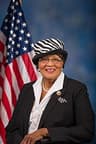 Alma Adams
Democrat · North Carolina
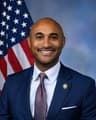 Shomari Figures
Democrat · Alabama
 Michael Lawler
Republican · New York
 Richard McCormick
Republican · Georgia
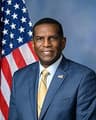 Burgess Owens
Republican · Utah
 Bennie Thompson
Democrat · Mississippi
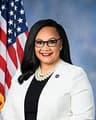 Nikema Williams
Democrat · Georgia