
A Republican bill with 4 Republican cosponsors · See all 4 cosponsors
Last activity — Referred to the House Committee on the Judiciary.
In committee
Introduced and handed to a committee in the chamber it started in.
The committee holds it, and most bills are never heard from again. A hearing or a committee vote would be news; silence is the usual outcome, and it kills the bill without anyone voting against it.
Its path through Congress
- Introduced
- In Committee
What this bill would do
The "Federal Enhancement for Tactical Canine Help Act of 2026," also known as the "FETCH Act of 2026," proposes to amend the Omnibus Crime Control and Safe Streets Act of 1968. It would allow funds from the Edward Byrne Memorial Justice Assistance Grant Program to be used for police dog programs. These funds would cover the acquisition, training, and general care of police dogs. The bill also includes funding for equipment, housing, and care for dogs after they retire from service.
Yes· 3 of 8
- Scored +3
Does this put more money into stopping terrorism?
Funding for dogs to detect explosives enhances counter-terrorism capabilities.
- Scored +3
Does this tighten control of the border?
Canine units are frequently used for contraband and explosive detection at borders.
- Scored +2
Would people in cities be better off under this?
Increased law enforcement capabilities often provide a perceived increase in safety for urban centers.
The opposite· 3 of 4
- Scored -2
Does this protect people from being watched or searched?
Increased funding for narcotics and contraband detection dogs can lead to more frequent searches.
- Scored -1
Does this reduce what the federal government owes?
The bill expands the allowable uses of federal grant funds, which may increase government spending.
- Scored -1
Does this reduce what the federal government spends?
The bill authorizes additional expenditures from the Edward Byrne Memorial Justice Assistance Grant Program.
Who it would affect, and how
Potential Positive Impacts for People
-
Enhanced Law Enforcement Capabilities: The bill allows funds for training dogs to detect narcotics, contraband, and explosives under Section 2 (J)(ii), which may assist in public safety.
-
Improved Animal Welfare: Section 2 (J) provides for veterinary care, emergency services, medications, dietary supplements, and quality dog food, ensuring police dogs remain healthy.
-
Support for Officers: Section 2 (J)(viii) provides for home-care stipends for law enforcement officers who care for police dogs at their homes.
-
Post-Service Care: Section 2 (J)(x) ensures that retired dogs receive coverage for service-related injuries and chronic conditions, as well as provisions for formal adoption by handling officers.
Potential Negative Impacts for People
- No negative impacts for individuals or groups are explicitly mentioned in the provided text.
Groups and Interests Ranking
Every group the model scored this bill for, from -10 to +10. Tap or hover a score for the reason it gave.
- Demographic And Interest Groups
- Would people in rural areas be better off under this? — Rural police departments can benefit from federal funding for canine programs they otherwise couldn't afford. Would people in cities be better off under this? — Increased law enforcement capabilities often provide a perceived increase in safety for urban centers.
- National Security And Foreign Policy
- Does this put more money into stopping terrorism? — Funding for dogs to detect explosives enhances counter-terrorism capabilities. Does this give the government more power to monitor people inside the country? — Increasing the number of detection dogs effectively increases the capacity for scent-based surveillance.
- Economy And Finance
- Does this make the government pay for what it commits to? — Expanding grant usage categories typically increases total fiscal outlay. Does this reduce what the federal government spends? — The bill authorizes additional expenditures from the Edward Byrne Memorial Justice Assistance Grant Program. Does this reduce what the federal government owes? — The bill expands the allowable uses of federal grant funds, which may increase government spending.
- Social Issues And Justice
- Does this tighten control of the border? — Canine units are frequently used for contraband and explosive detection at borders.
- Healthcare
- Does this do more about addiction and overdose deaths? — Funding for dogs trained to detect narcotics may assist in opioid interdiction.
- Governance And Ideology
- Does this leave more decisions to the states? — Provides local law enforcement agencies with more federal funding for their canine programs. Does this give the federal government more power? — The bill expands the scope of federal grant programs used by local agencies. Does this protect people from being watched or searched? — Increased funding for narcotics and contraband detection dogs can lead to more frequent searches.
- 4/2/2026
- Referred to the House Committee on the Judiciary.
- 4 Cosponsors added.
- Introduced in House
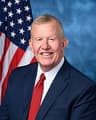 Mike Ezell
Republican · Mississippi
 Nicole Malliotakis
Republican · New York
 Richard McCormick
Republican · Georgia
 Jefferson Van Drew
Republican · New Jersey