
A Democratic bill with 28 Democratic cosponsors · See all 28 cosponsors
Last activity — Referred to the Committee on Education and Workforce, and in addition to the Committees on Oversight and Government Reform, House Administration, and the Judiciary, for a period to be subsequently determined by the Speaker, in each case for consideration of such provisions as fall within the jurisdiction of the committee concerned.
In committee
Introduced and handed to a committee in the chamber it started in.
The committee holds it, and most bills are never heard from again. A hearing or a committee vote would be news; silence is the usual outcome, and it kills the bill without anyone voting against it.
Its path through Congress
- Introduced
- In Committee
What this bill would do
The Reproductive Healthcare Leave Act is designed to provide Americans with paid leave to address reproductive health conditions and procedures. Under this bill, employers must grant employees 96 hours of paid leave at the start of each calendar year. This leave can be used for symptoms related to conditions like menstruation or menopause, as well as for procedures such as fertility treatments or tubal ligations. The Act establishes protections against employer interference and discrimination regarding the use of this time. It also grants enforcement authority to the Secretary of Labor and allows employees to take legal action for violations.
Yes· 3 of 20
- Scored +9
Would women be better off under this?
The bill directly addresses health needs and procedures primarily affecting women, such as menstruation and menopause.
- Scored +7
Does this narrow the gap between how men and women are treated?
The bill provides specific paid leave for reproductive health needs like menstruation, menopause, and pregnancy termination.
- Scored +6
Would people in middle age be better off under this?
The bill covers health conditions like menopause that often affect middle-aged individuals.
The opposite
- Scored -3
Would business owners be better off under this?
The bill imposes new mandatory paid leave costs and potential civil fines on employers.
Who it would affect, and how
Potential Positive Impacts for People
-
Access to Paid Time Off for Health Needs: Employees receive 96 hours of paid leave at the start of each year to address specific reproductive health needs. This includes symptoms from conditions like endometriosis or menopause, and procedures like hysterectomies or vasectomies (Section 3).
-
Protection Against Job Loss or Discipline: The bill makes it unlawful for employers to fire, discriminate against, or retaliate against individuals for using their paid leave. It also prevents employers from using leave as a negative factor in hiring, promotions, or reducing hours (Section 5).
-
Employee Legal Recourse: If an employer violates the Act, employees have the right to bring civil actions in court to recover lost wages, benefits, or seek equitable relief such as reinstatement or promotion (Section 6).
-
Standardized Information: Employers are required to notify employees about their available leave and their rights, ensuring workers know what they are entitled to (Section s4).
Potential Negative Impacts for People
-
No Carryover of Leave: Employees cannot carry over any unused paid leave time from one calendar year to the next (Section 3).
-
No Payout Upon Leaving a Job: Employers are not required to pay out or reimburse employees for any unused paid leave time when an employee resigns, retires, or is terminated (Section 3).
-
Employer Notice Penalties: Employers that willfully fail to meet specific notice requirements regarding employee rights can be subject to civil fines of up to $100 per day (Section 4).
Groups and Interests Ranking
Every group the model scored this bill for, from -10 to +10. Tap or hover a score for the reason it gave.
- Demographic And Interest Groups
- Would women be better off under this? — The bill directly addresses health needs and procedures primarily affecting women, such as menstruation and menopause. Would people in middle age be better off under this? — The bill covers health conditions like menopause that often affect middle-aged individuals. Would LGBTQ people be better off under this? — The bill provides leave for fertility treatments which can be utilized by the LGBTQ community. Would households on low incomes be better off under this? — The bill provides paid leave which helps protect income for workers facing health issues. Would middle-income households be better off under this? — The bill provides paid leave which helps protect income for workers facing health issues. Would Black Americans be better off under this? — The bill provides health-related financial protections that can benefit all workers. Would Asian Americans be better off under this? — The bill provides health-related financial protections that can benefit all workers. Would Hispanic Americans be better off under this? — The bill provides health-related financial protections that can benefit all workers. Would Native Americans be better off under this? — The bill provides health-related financial protections that can benefit all workers. Would people with disabilities be better off under this? — The bill provides leave for managing various health conditions. Would union members be better off under this? — The bill provides explicit job protections against discrimination and retaliation. Would white Americans be better off under this? — The bill provides health-related financial protections that can benefit all workers. Would people in their twenties and thirties be better off under this? — The bill provides leave that may be relevant to individuals managing reproductive health early in their careers. Would men be better off under this? — The bill includes leave for vasectomies, which can benefit men. Would business owners be better off under this? — The bill imposes new mandatory paid leave costs and potential civil fines on employers.
- Governance And Ideology
- Does this protect the right to fair treatment by the courts? — The bill establishes legal recourse and civil action rights for employees facing violations. Does this give the federal government more power? — The bill expands the Secretary of Labor's investigative and enforcement authority over employers. Does this make what the government does easier for the public to see? — The bill requires employers to provide specific notice and information about employee rights.
- Social Issues And Justice
- Does this narrow the gap between how men and women are treated? — The bill provides specific paid leave for reproductive health needs like menstruation, menopause, and pregnancy termination.
- Healthcare
- Does this make health care easier to get in general? — The bill provides paid time off specifically for various reproductive health procedures and conditions.
- Economy And Finance
- Does this strengthen the rights of workers to organise? — The bill protects employees from employer retaliation and interference regarding their leave rights.
- 4/13/2026
- 2 Cosponsors added.
- 4/2/2026
- 2 Cosponsors added.
- 3/30/2026
- Referred to the Committee on Education and Workforce, and in addition to the Committees on Oversight and Government Reform, House Administration, and the Judiciary, for a period to be subsequently determined by the Speaker, in each case for consideration of such provisions as fall within the jurisdiction of the committee concerned.
- 24 Cosponsors added.
- Introduced in House
 Suzanne Bonamici
Democrat · Oregon
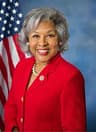 Joyce Beatty
Democrat · Ohio
 Julia Brownley
Democrat · California
 Wesley Bell
Democrat · Missouri
 Yvette Clarke
Democrat · New York
 Troy Carter
Democrat · Louisiana
 Herbert Conaway
Democrat · New Jersey
 Lizzie Fletcher
Democrat · Texas
 Daniel Goldman
Democrat · New York
 Adelita Grijalva
Democrat · Arizona
 Henry Johnson
Democrat · Georgia
 Pramila Jayapal
Democrat · Washington
 Jonathan Jackson
Democrat · Illinois
 Raja Krishnamoorthi
Democrat · Illinois
 Timothy Kennedy
Democrat · New York
 Morgan McGarvey
Democrat · Kentucky
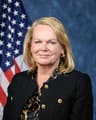 April McClain Delaney
Democrat · Maryland
 Eleanor Norton
Democrat · District of Columbia
 Ayanna Pressley
Democrat · Massachusetts
 Deborah Ross
Democrat · North Carolina
 Lateefah Simon
Democrat · California
 Paul Tonko
Democrat · New York
 Rashida Tlaib
Democrat · Michigan
 Lori Trahan
Democrat · Massachusetts
 Shri Thanedar
Democrat · Michigan
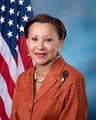 Nydia Velázquez
Democrat · New York
 Nikema Williams
Democrat · Georgia
 Frederica Wilson
Democrat · Florida