
A Republican bill with 3 Republican cosponsors · See all 3 cosponsors
Last activity — Referred to the House Committee on Energy and Commerce.
In committee
Introduced and handed to a committee in the chamber it started in.
The committee holds it, and most bills are never heard from again. A hearing or a committee vote would be news; silence is the usual outcome, and it kills the bill without anyone voting against it.
Its path through Congress
- Introduced
- In Committee
What this bill would do
The "Access to LARCs Act" requires the Secretary of Health and Human Services to study how women in need access different contraceptive methods at community health centers located in health care deserts. The study will look at barriers like provider training, patient education, inventory stocking, and reimbursement. It will also identify which of these centers receive funding under title X of the Public Health Service Act. The Secretary must provide a report on the study's findings to Congress within 180 days of the law's enactment.
Yes· 3 of 15
- Scored +4
Would women be better off under this?
The bill is specifically designed to improve contraceptive access for women in need.
- Scored +3
Would households on low incomes be better off under this?
Specifically targets women eligible for Federal health care programs in underserved areas.
- Scored +2
Would people in their twenties and thirties be better off under this?
Increases potential access to contraception for young women in need.
The opposite
No question was scored the opposite.
Who it would affect, and how
Potential Positive Impacts for People
-
Identifying Barriers to Care: By analyzing reimbursement, provider training, patient education, and inventory stocking, the study may uncover why women in health care deserts lack access to contraceptives (Section 2(a)(1)).
-
Focus on Underserved Areas: The bill specifically targets "health care deserts," which are areas with fewer than 1 community health center for every 1,000 women in need (Section 2(c)(3)).
-
Support for Low-Income Individuals: The study focuses on "women in need," defined as those eligible for benefits under a Federal health care program (Section 2(c)(5)).
Potential Negative Impacts for People
- Exclusion of Emergency Contraceptives: The definition of "contraceptive method" explicitly excludes drugs, devices, or combination products when used as an emergency contraceptive (Section 2(c)(2)(A)).
Groups and Interests Ranking
Every group the model scored this bill for, from -10 to +10. Tap or hover a score for the reason it gave.
- Demographic And Interest Groups
- Would women be better off under this? — The bill is specifically designed to improve contraceptive access for women in need. Would households on low incomes be better off under this? — Specifically targets women eligible for Federal health care programs in underserved areas. Would people in middle age be better off under this? — Increases potential access to contraception for middle-aged women in need. Would people in rural areas be better off under this? — Targets health care deserts, which are often located in rural regions. Would people in their twenties and thirties be better off under this? — Increases potential access to contraception for young women in need. Would Black Americans be better off under this? — Marginalized communities are disproportionately affected by health care deserts. Would Asian Americans be better off under this? — Marginalized communities are disproportionately affected by health care deserts. Would Hispanic Americans be better off under this? — Marginalized communities are disproportionately affected by health care deserts. Would Native Americans be better off under this? — Marginalized communities are disproportionately affected by health care deserts.
- Healthcare
- Does this make health care easier to get in general? — The bill directs a study to identify and remove barriers to contraceptive access in health care deserts. Does this put more money into medical research? — The bill mandates a federal study on contraceptive access barriers.
- Governance And Ideology
- Does this make what the government does easier for the public to see? — The bill requires a public report to be submitted to Congress. Does this give the federal government more power? — The bill mandates an action by the Secretary of Health and Human Services.
- Environment Energy And Infrastructure
- Does this invest in rural communities? — The bill targets health care deserts, which often overlap with rural areas.
- Social Issues And Justice
- Does this narrow the gap between how men and women are treated? — The bill focuses on improving healthcare access specifically for women in need.
- 3/25/2026
- Referred to the House Committee on Energy and Commerce.
- 3 Cosponsors added.
- Introduced in House
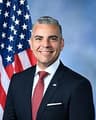 Juan Ciscomani
Republican · Arizona
 Nicole Malliotakis
Republican · New York
 Mariannette Miller-Meeks
Republican · Iowa