
Ashley Hinson (R-IA)
End Special Treatment for Congress at Airports Act of 2026
A Republican bill with 1 Democratic cosponsor · See all 2 cosponsors
Last activity — Referred to the Subcommittee on Transportation and Maritime Security.
In committee
Introduced and handed to a committee in the chamber it started in.
The committee holds it, and most bills are never heard from again. A hearing or a committee vote would be news; silence is the usual outcome, and it kills the bill without anyone voting against it.
Its path through Congress
- Introduced
- In Committee
What this bill would do
This bill, known as the "End Special Treatment for Congress at Airports Act of 2026," aims to stop Members of Congress from getting special treatment during airport security. It prohibits the Transportation Security Administration from using funds to give Members of Congress expedited or preferential access to security screenings. Specifically, it forbids them from being exempt from passenger and baggage screening or receiving priority access based on their official position. The law does not prevent Members from using public programs like Global Entry or PreCheck as long as they aren't using their office to get that access. The Administrator of the TSA must update policies to ensure this happens and provide a report to Congress on compliance within 180 days.
Yes· 3 of 9
- Scored +2
Does this make what the government does easier for the public to see?
The bill increases transparency by requiring a report on implementation and compliance regarding security procedures.
- Scored +1
Would households on low incomes be better off under this?
The bill ensures that government officials do not receive preferential treatment over the general public at security checkpoints.
- Scored +1
Would Black Americans be better off under this?
The bill promotes equal treatment of all passengers regardless of official status.
The opposite
No question was scored the opposite.
Who it would affect, and how
Potential Positive Impacts for People
-
Equality in Security Procedures: By preventing Members of Congress from receiving priority or expedited access based on their official position, the bill ensures that no official gets to skip the line ahead of regular citizens (Section 3(b)).
-
Prohibition of Special Access Funds: The bill ensures that TSA funds are not used to facilitate preferential access for Members of Congress, maintaining that resources are used according to standard procedures (Section 3(a)).
Potential Negative Impacts for People
- No specific negative impacts are identified in the text.
Groups and Interests Ranking
Every group the model scored this bill for, from -10 to +10. Tap or hover a score for the reason it gave.
- Demographic And Interest Groups
- Would Black Americans be better off under this? — The bill promotes equal treatment of all passengers regardless of official status. Would Asian Americans be better off under this? — The bill promotes equal treatment of all passengers regardless of official status. Would Hispanic Americans be better off under this? — The bill promotes equal treatment of all passengers regardless of official status. Would households on low incomes be better off under this? — The bill ensures that government officials do not receive preferential treatment over the general public at security checkpoints. Would Native Americans be better off under this? — The bill promotes equal treatment of all passengers regardless of official status. Would people in cities be better off under this? — The bill promotes egalitarian treatment at travel hubs. Would white Americans be better off under this? — The bill promotes equal treatment of all passengers regardless of official status.
- Governance And Ideology
- Does this make what the government does easier for the public to see? — The bill increases transparency by requiring a report on implementation and compliance regarding security procedures.
- Social Issues And Justice
- Does this narrow racial gaps in how people are treated? — The bill promotes equality by ensuring Members of Congress follow the same security protocols as all other citizens.
- 3/26/2026
- 1 Cosponsor added.
- 3/25/2026
- Referred to the Subcommittee on Transportation and Maritime Security.
- 3/24/2026
- Referred to the House Committee on Homeland Security.
- 1 Cosponsor added.
- Introduced in House
One bill Congress.gov lists as related to this one — companions in the other chamber, earlier versions, and bills this one absorbed or was folded into.
 Diana Harshbarger
Republican · Tennessee
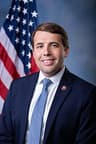 Chris Pappas
Democrat · New Hampshire