
A Republican bill with 5 Democratic cosponsors · See all 7 cosponsors
Last activity — Referred to the Subcommittee on Commodity Markets, Digital Assets, and Rural Development.
In committee
Introduced and handed to a committee in the chamber it started in.
The committee holds it, and most bills are never heard from again. A hearing or a committee vote would be news; silence is the usual outcome, and it kills the bill without anyone voting against it.
Its path through Congress
- Introduced
- In Committee
What this bill would do
This bill, known as the "Event Contract Enforcement Act," seeks to amend the Commodity Exchange Act. It aims to prohibit the listing or trading of event contracts based on specific occurrences like terrorism, assassination, war, gaming, and illegal activity. Additionally, it restricts contracts based on election results or government conduct. The Commodity Futures Trading Commission would also have the power to prohibit other activities deemed contrary to the public interest. However, the bill allows States to exempt themselves from the prohibition on gaming contracts.
Yes· 3 of 4
- Scored +5
Does this give people more protection from unfair business practices?
The bill restricts trading on highly sensitive and potentially volatile subjects like terrorism and elections.
- Scored +4
Does this leave more decisions to the states?
The bill allows states to exempt themselves from the prohibition on gaming contracts.
- Scored +3
Does this protect the right to vote?
The bill prohibits the trading of contracts based on election results or ballot initiatives.
The opposite
No question was scored the opposite.
Who it would affect, and how
Potential Positive Impacts for People
-
Prohibition of specific event contracts: The bill prohibits contracts based on terrorism, assassination, war, illegal activity, election outcomes, or government conduct, which may prevent the trading of agreements tied to these events (Section 2(a)(1)).
-
Commission oversight: The Commodity Futures Trading Commission can determine that other similar activities are contrary to the public interest and prohibit them via rule or regulation (Section 2(a)(1)(viii)).
Potential Negative Impacts for People
-
Restrictions on trading: It would be unlawful to list or make available for trading contracts based on various occurrences such as election results, government activities, or gaming (Section 2(a)(1)).
-
Impact on gaming: The bill prohibits contracts based on "gaming," which is defined as any aspect of a live, simulated, or virtual physical or mental challenge or game of chance (Section 2(a)(1)(v)).
Groups and Interests Ranking
Every group the model scored this bill for, from -10 to +10. Tap or hover a score for the reason it gave.
- Governance And Ideology
- Does this leave more decisions to the states? — The bill allows states to exempt themselves from the prohibition on gaming contracts. Does this make what the government does easier for the public to see? — The bill restricts contracts related to government conduct to prevent speculation on government actions.
- Economy And Finance
- Does this give people more protection from unfair business practices? — The bill restricts trading on highly sensitive and potentially volatile subjects like terrorism and elections.
- Social Issues And Justice
- Does this protect the right to vote? — The bill prohibits the trading of contracts based on election results or ballot initiatives.
- 10/22/2026
- 4 Cosponsors added.
- 5/26/2026
- 1 Cosponsor added.
- 4/21/2026
- 1 Cosponsor added.
- 4/3/2026
- Referred to the Subcommittee on Commodity Markets, Digital Assets, and Rural Development.
- 3/18/2026
- Sponsor introductory remarks on measure. (CR H2588-2589)
- 3/5/2026
- Referred to the House Committee on Agriculture.
- 1 Cosponsor added.
- Introduced in House
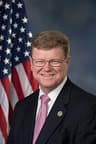 Mark Amodei
Republican · Nevada
 Jodey Arrington
Republican · Texas
 Salud Carbajal
Democrat · California
 Steven Horsford
Democrat · Nevada
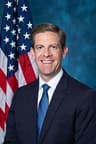 Mike Levin
Democrat · California
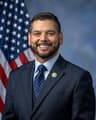 Raul Ruiz
Democrat · California
 Gabe Vasquez
Democrat · New Mexico